




















In high-load loading scenarios, bucket capacity is often compared as an isolated number: the bigger the bucket, seemingly the more loaded per pass and the faster the truck leaves. But loading is a cycle—dig, lift a full bucket, swing, align with the truck bed, dump, return. If any step slows down, a larger bucket merely shifts the waiting time elsewhere. To decide which capacity tier to choose, you first need to see how three things mesh: material, truck bed, and shift rhythm.
First Distinguish "Filling a Bucket" from "Filling a Truck"
Bucket capacity is usually stated as a range; the SH520 data gives 2.5–3.5m³. The same machine fitted with different bucket types corresponds to different material states and loading targets. Loose earth and blasted ore have different actual fill levels at the same bucket capacity; wet sticky material tends to cling to the bucket, while large hard rock fragments may prevent a full load. Therefore, the first step in capacity selection is not to pick the maximum value, but to judge whether the material can form a stable full bucket inside the bucket.
The second step is the truck bed. The efficiency of the loading cycle depends on "how many buckets fill a truck" and "dumping cleanly in one alignment." If bucket capacity and truck bed volume do not match, two kinds of repetition easily occur: if the bucket is too small, the truck bed waits a long time for material and the excavator's swing count increases; if the bucket is too large, each dump overflows or requires a second repositioning, which likewise slows the cycle. The data does not give a specific transport truck configuration; this item needs to be calculated against actual truck bed dimensions at the time of inquiry.
Dump Height Determines Whether Bucket Capacity Can Actually Be Used
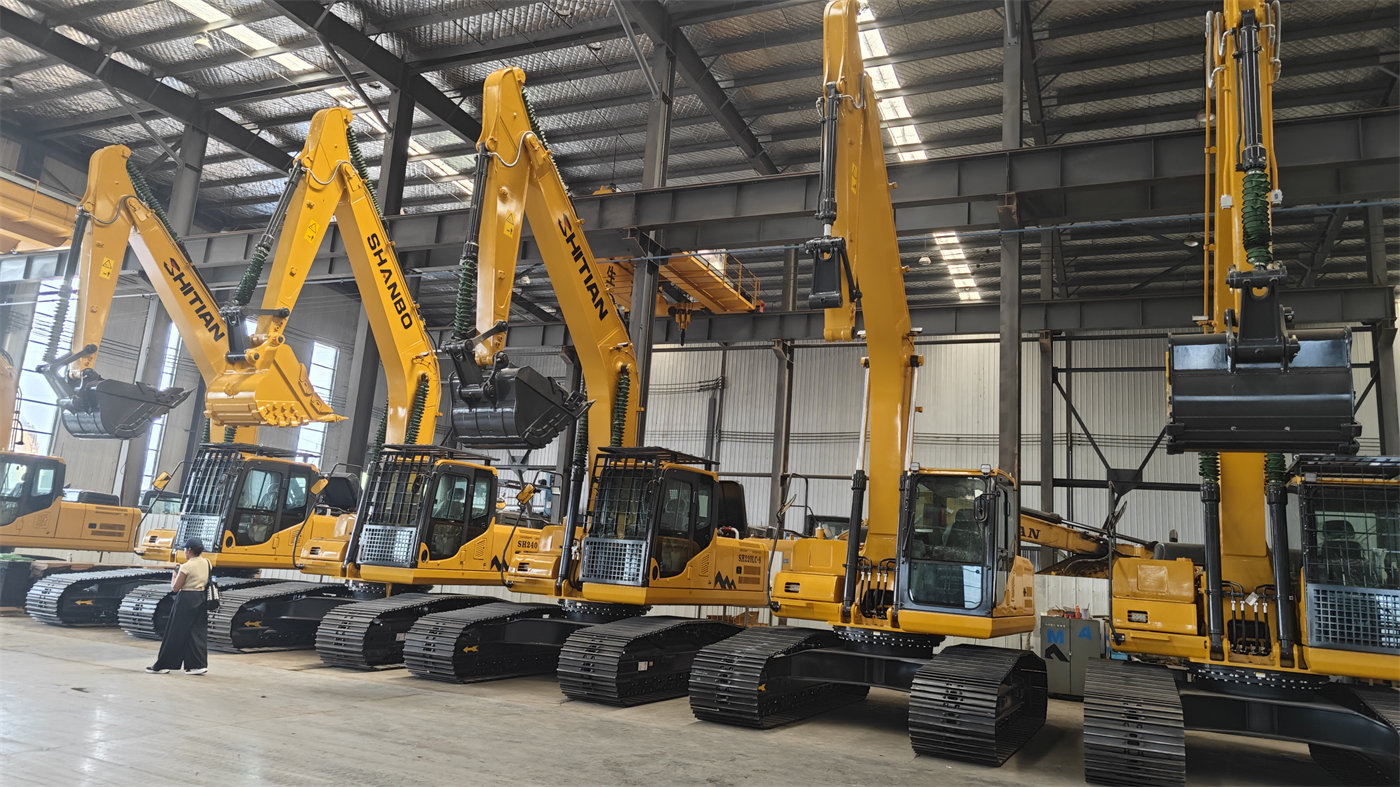
With a larger bucket, the bucket's center of gravity is also farther out during dumping, raising the requirements for dump height and swing alignment. The SH520's maximum dump height is 7814mm, maximum digging height 11220mm, and maximum digging radius 11774mm. These figures indicate some margin in the high-dump direction, but whether it can align smoothly with the truck bed also depends on the transport truck's sideboard height, parking position, and ground levelness. If the truck bed is too high or the ground is sloped, the actually usable dump height is reduced, and choosing a larger bucket may instead increase the number of alignment adjustments.
Loading site layout also affects capacity selection. If multiple trucks are parked within the excavator's swing radius at the same time, or if material must be dumped across a trench, the swing angle and parking position will compress the effective working range. The SH520 has a tail swing radius of 4110mm and an overall width of 3490mm; site access and truck queuing arrangements need to be planned in advance, otherwise the per-bucket benefit of a larger bucket will be offset by repositioning and waiting for a spot.
Digging Force and Hydraulic Response: The Supporting Conditions Behind Capacity
Bucket capacity is an outcome, not an isolated configuration. The SH520's bucket digging force is 292kN, arm digging force 251kN, hydraulic system 2×360+27L/min, and system pressure 31.4MPa. The judgment corresponding to this set of data is: in hard soil, compacted stockpiles, or material containing boulders, can a larger bucket capacity maintain the digging rhythm? If the material requires impact or repeated loosening to fill the bucket, the larger the bucket capacity, the longer each bucket takes, and the loading cycle instead slows down.
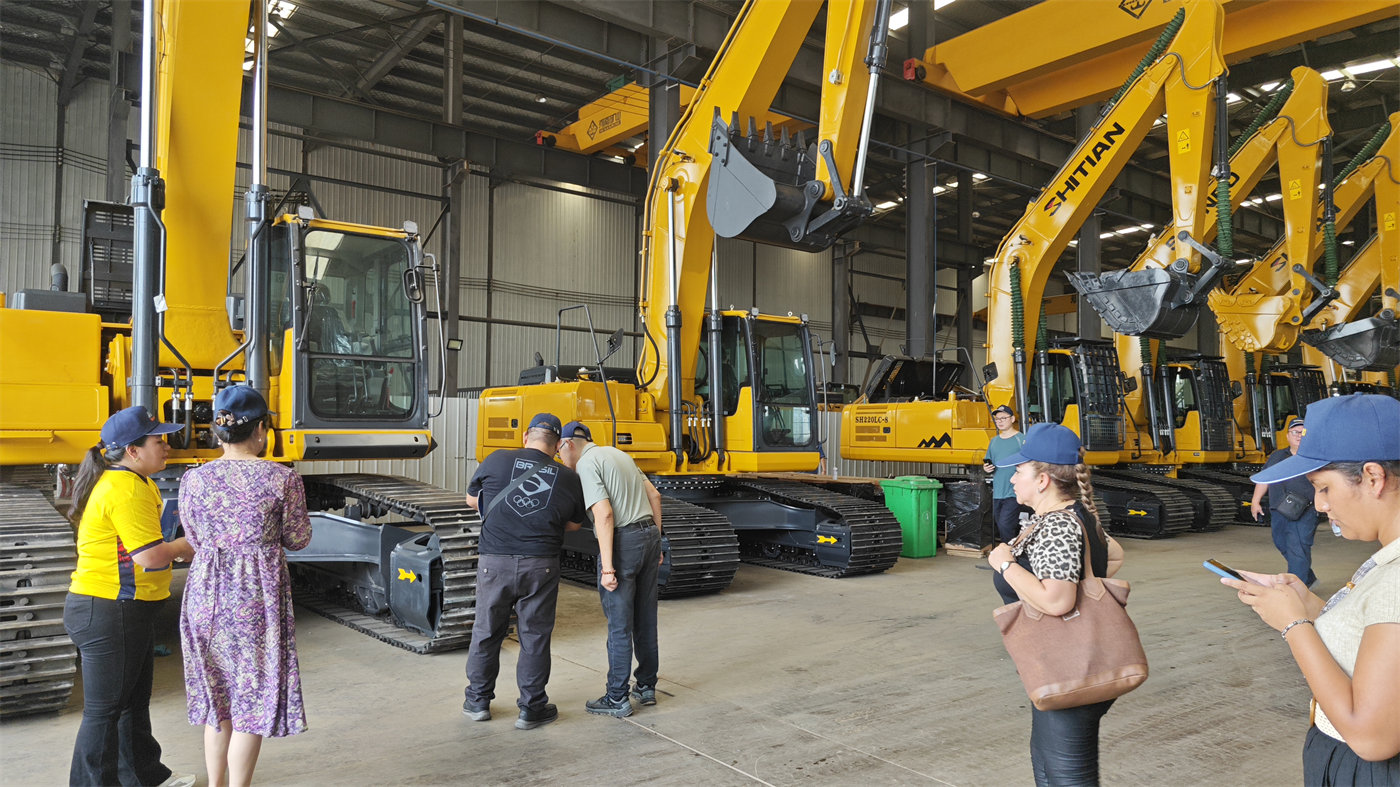
The Linde load-sensing hydraulic system and Toshiba main valve are described in the data as supporting compound operations and regeneration circuits; the coordination of boom, arm, and swing affects the cycle time per bucket. However, the data does not give cycle seconds under specific material conditions, so shift output cannot be calculated from it. The final determination of capacity tier still needs on-site verification combined with material state and operator habits.
Supporting Conditions for Continuous High-Load Operation
- Fuel and shifts: The SH520 has a fuel tank capacity of 650L, with a Cummins QSM11 engine rated at 280kW. High-load loading usually involves continuous operation; refueling intervals and site fuel supply arrangements need to be calculated together with shift length.
- Ground bearing: Operating weight is 50500kg, ground pressure 84kPa. Soft ground, backfill areas, or rainy-season sites need assessment of bearing capacity and sinkage risk, with travel routes or matting plans adjusted as necessary.
- Travel and repositioning: Travel speed is 3.2/5.3km/h, gradeability 70% (35°). When the loading point is far from the stockpile, repositioning time must also be included in the shift rhythm.
- Structural durability: The data mentions a reinforced central load-bearing structure, X-shaped track frame cross-section strength increased by 35%, and wear-resistant plates welded onto key wear areas of the heavy-duty bucket. These are reference items for long-term high-load operation, but they cannot replace judgment of the specific material's abrasiveness.
Checklist for Capacity Tier and Operating Conditions
| Check Item | What to Confirm | Impact on Capacity Selection |
|---|---|---|
| Material state | Loose soil, hard soil, rock fragments, or blasted material; whether it clings to the bucket | Determines fill level and time per bucket |
| Transport truck bed capacity | Actual bed volume and sideboard height | Determines buckets per truck and whether frequent repositioning is needed |
| Site layout | Swing space, parking positions, ground bearing | Affects effective dump height and cycle smoothness |
| Shift arrangement | Continuous operation duration, refueling, and shift handover | Affects whether the capacity tier can be sustained |
Which Conclusions the Data Cannot Make for You
The SH520 data gives a bucket capacity range of 2.5–3.5m³, 292kN digging force, and 7814mm dump height, which can indicate the capacity and working-range foundation this 50-ton-class crawler excavator has for high-load loading. However, the data does not give fill factors under specific materials, cycle time per bucket, matching results with a particular transport truck model, or customer loading cases. Therefore, it cannot be directly concluded that a certain bucket capacity tier is the optimal solution.

What can be determined is the selection sequence: first screen out clearly unsuitable bucket types based on material state, then verify matching using transport truck bed capacity and dump height, and finally check supporting conditions using shift continuity and ground bearing. If any step lacks data, it should be listed as an item to confirm before inquiry, rather than replaced with rule-of-thumb numbers.
Conditions to Provide at Inquiry
If bucket capacity is to be finalized, the more specific the information provided to the equipment supplier, the more grounded the configuration recommendation will be. It is recommended to prepare: main material type and state, transport truck model and bed dimensions, distance between loading point and stockpile, site ground conditions, planned daily work shifts and continuous operation duration, and whether crushing or other attachment work also needs to be accommodated. If attachments involve a hydraulic breaker, working weight, hydraulic flow and pressure, connection dimensions, and piping data must be verified separately; suitability cannot be judged solely by the host machine model.