
















Loading operations in steep-slope quarries have a difficulty that is easily underestimated: the equipment does not climb a slope only occasionally; rather, it repeatedly travels, swings, and dumps between the crushing platform and the loading point, cycling many times in one shift. Slope gradient, material lump size, truck bed height, and shift continuity are constraints that exist simultaneously. Looking only at bucket capacity or maximum digging force often fails to select a machine truly suited to continuous loading.
Using verified data for the SH600 crawler excavator on this site as a reference, this article breaks “continuous loading in steep-slope quarries” into several verifiable conditions: whether power can be output continuously, whether the working range can cover positioning above and below the slope, whether the travel system can handle ramps, whether hydraulic response supports combined operations, and which boundary data cannot replace on-site answers.
First, three practical constraints of continuous loading
The difference between continuous loading in quarries and ordinary earthmoving loading lies mainly in the continuity of the working condition and the slope of the site. Three constraints can be considered:
- Material and lump size: Crushed stone has uneven lump size, and the resistance when the bucket penetrates and lifts a full load is greater than with loose soil, so the equipment needs sufficient digging force reserve.
- Ramp and positioning: There is often a height difference between the loading point and the crushing platform, and the equipment must travel and turn on ramps, so climbing ability, traction force, and ground pressure must all be considered.
- Cycle rhythm: Continuous loading means repeated swinging, dumping, and returning; whether the dump height can align with the truck bed and whether hydraulic combined operations are smooth directly affect whether the cycle remains continuous.
These three constraints each correspond to different equipment conditions and cannot be replaced by a single parameter.
Power and hydraulics: underlying conditions for continuous high-load operation
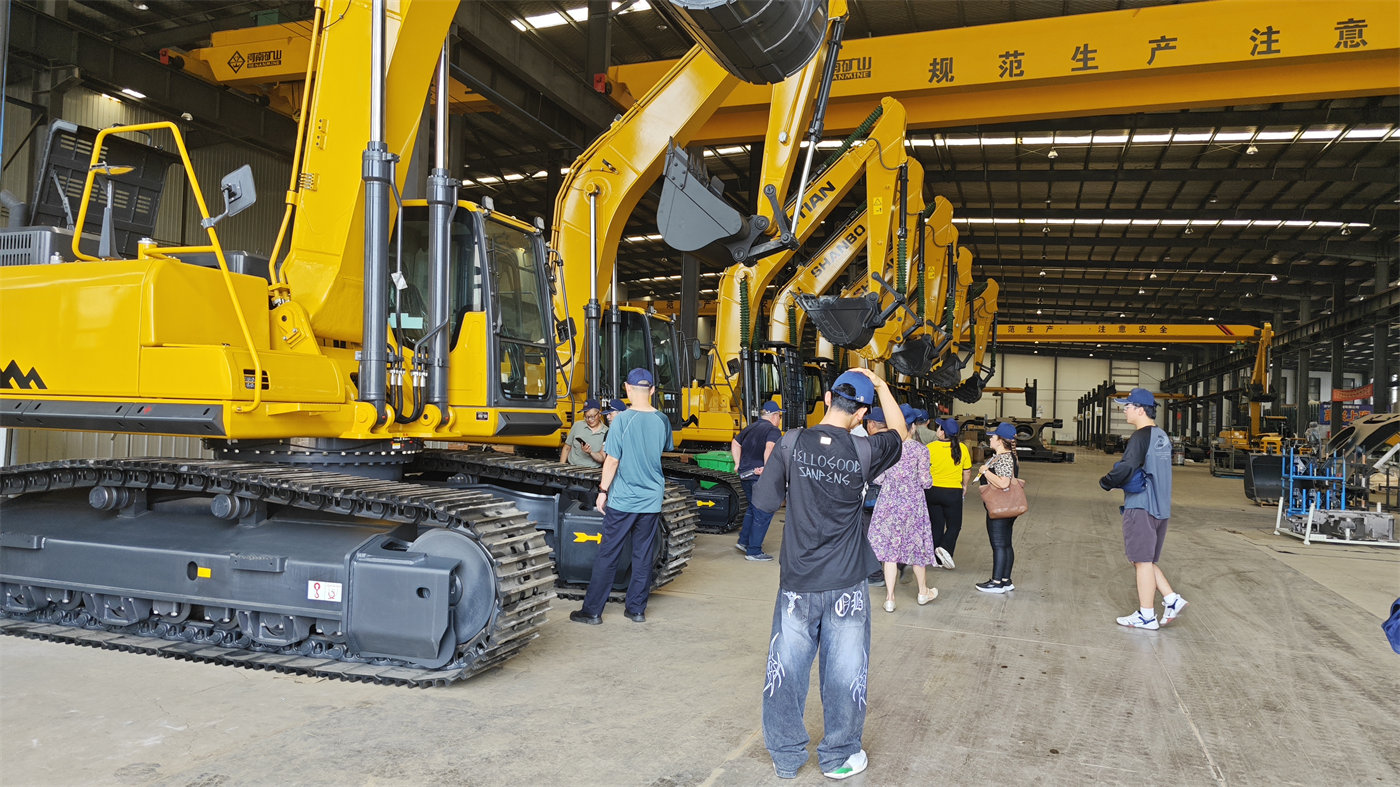
During continuous loading, the engine remains under relatively high load for long periods, and the hydraulic system must also continuously supply the boom, arm, swing, and travel. SH600 data show that it is equipped with a Cummins QSM11-C400 engine with rated power of 298 kW/1800 rpm, maximum hydraulic system operating flow of 874 L/min, and negative flow control.
These figures correspond to “sustained output” rather than “instantaneous peak”: rated power and hydraulic flow indicate that the equipment is designed with continuity in high-intensity material loading in mind. However, the data do not provide fuel consumption, cycle time, or loading volume per unit time, so it is not possible to calculate how many trucks can be loaded in one shift at a given quarry; this part still needs to be verified in combination with material, truck bed, and on-site organization.
Working range and dump height: can loading positioning be completed in one pass
In steep-slope quarries, it is common for trucks to stop at a lower position while the equipment stands on a higher platform to dump. In this case, maximum dump height and maximum digging radius determine whether direct positioning is possible and reduce secondary rehandling.
The working range parameters in the SH600 data are: maximum digging height 10252 mm, maximum dump height 7150 mm, maximum digging depth 7114 mm, and maximum digging radius 11406 mm. For continuous loading, the 7150 mm dump height and 11406 mm digging radius provide considerable positioning margin, but whether they can actually be used still depends on truck bed height, parking position, and platform width. The data do not provide adaptation conclusions for different truck bed heights, so this must be verified on site according to the actual truck model.
Climbing and ground contact: passage conditions for steep-slope sites
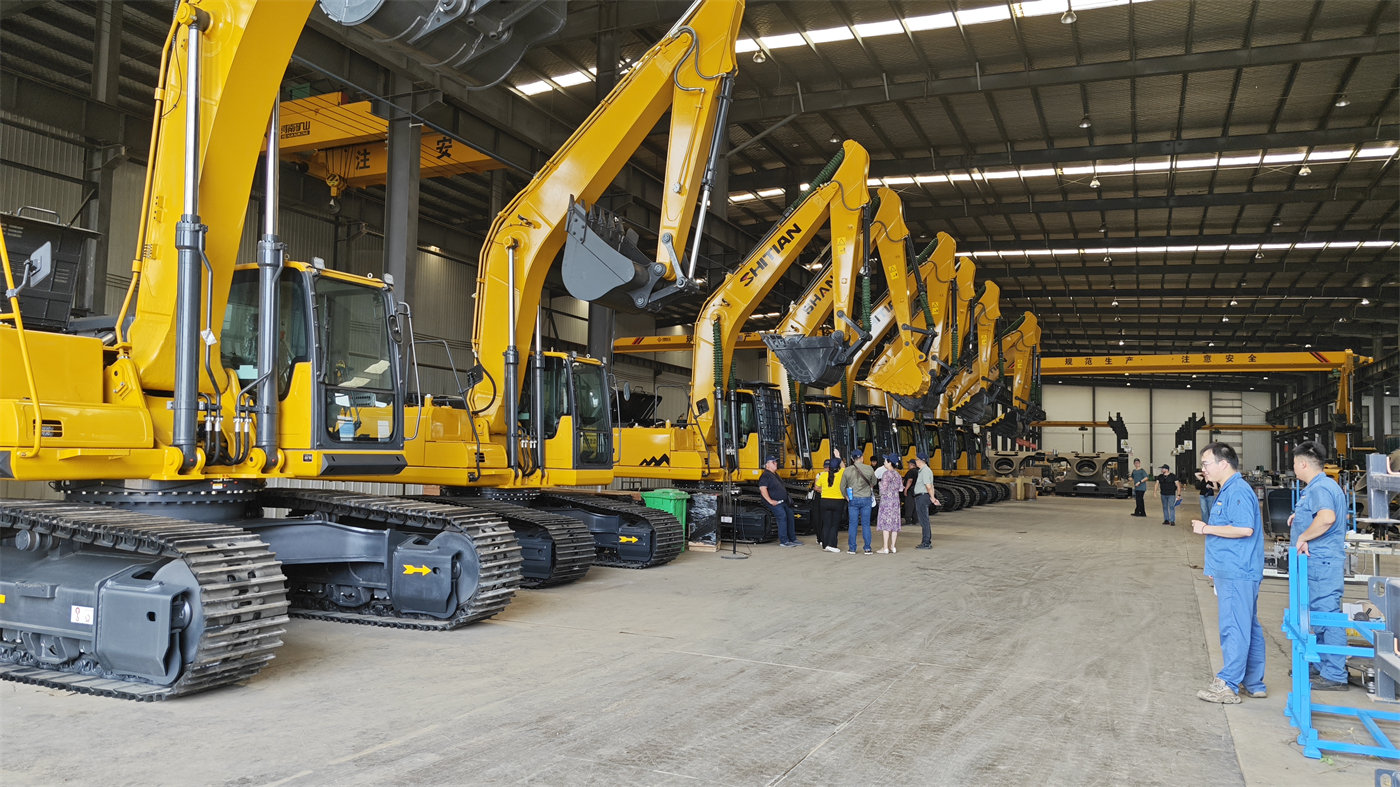
Slope is an unavoidable condition when selecting equipment for steep-slope quarries. The SH600 has an operating weight of 55900 kg, climbing ability of 70% (35°), traction force of 349 kN, ground pressure of 85.3 kPa, track shoe width of 600 mm, and 9 track rollers per side.
Climbing ability and traction force indicate that the equipment is designed with rugged terrain and ramp travel in mind; ground pressure relates to the stability of the equipment on the crushing platform and ramps. However, 85.3 kPa is data under a specific configuration, and actual ground pressure will vary with bucket configuration, material loading, and ground conditions. The actual slope gradient, whether the road surface is gravel or compacted soil, and whether it is muddy in the rainy season all need on-site verification; whether a given ramp can be traversed cannot be judged solely by climbing angle.
Bucket capacity and digging force: matching material and truck bed
The SH600 has a bucket capacity of 2.5–3.5 m³, bucket digging force of 328 kN, and arm digging force of 271 kN. The bucket capacity has a range, indicating that the same machine can be configured with different bucket capacities according to material and truck bed size. For continuous loading, bucket capacity selection must consider both material lump size and truck bed capacity: too small a bucket means more cycles; too large a bucket may not match the truck bed, causing spillage during dumping or waiting.
The digging force data correspond to the ability to penetrate hard material and broken rock layers, but the data do not provide actual digging performance under different rock types, nor do they specify the concrete material conditions corresponding to a given bucket capacity. This part is content that needs to be confirmed against on-site materials during selection.

Supporting conditions and items to be confirmed for continuous operation
Equipment parameters only answer the conditions of the machine itself; continuous loading also depends on supporting arrangements. The following items need to be verified before inquiry and site entry:
- Truck matching: Truck bed height, truck bed capacity, and parking position determine whether dump height and bucket capacity can work together efficiently.
- Ramp and platform conditions: Actual slope gradient, road surface material, platform width, and swing space determine whether the equipment can stand and turn stably.
- Shift and refueling: Fuel tank capacity is 630 L; continuous operation shifts and refueling arrangements need to be planned according to on-site organization; the data do not provide fuel consumption data, so specific endurance cannot be calculated.
- Material and rock type: The lump size distribution and hardness after crushing affect whether bucket capacity selection and digging force reserve are sufficient.
- Attachment matching: If the quarry needs a hydraulic breaker to handle large blocks, the matching of the carrier and attachment must be verified based on operating weight, hydraulic flow and pressure, attachment weight, connection dimensions, and piping data; the data in this article are insufficient to determine specific compatibility.
Situations not suitable for direct primary selection based on continuous loading
Continuous loading in steep-slope quarries places relatively high demands on equipment power, travel, and working range, but not all quarry scenarios are suitable for taking this type of configuration as the primary selection. If the site slope is too steep, the platform is too narrow to satisfy the swing radius, or the truck bed height does not match the dump height and frequent secondary rehandling is required, or if shifts are not continuous and the equipment is idle most of the time, the selection logic should return to the specific work cycle for re-verification rather than simply configuring for the high-load conditions of continuous loading. The data do not provide quantitative thresholds for these boundary situations, and they need to be confirmed item by item according to on-site conditions.
Conditions to provide at inquiry
To bring the selection discussion to a verifiable level, it is recommended to provide the following at inquiry: quarry material type and lump size after crushing, height difference and ramp conditions between the loading point and the crushing platform, truck model and bed height, planned loading volume or operating hours per shift, site platform width and swing space, and whether a hydraulic breaker is required along with corresponding piping data. Without these conditions, only conditional judgments can be given, and the bucket capacity level or configuration cannot be directly determined.