
















When selecting equipment for quarry loading, buyers often look first at bucket capacity and digging force, but these two figures only answer “can it dig and how much per bucket.” What really affects whether loading can proceed continuously is whether the machine can complete a full cycle at a fixed loading point: digging from the pile or working face, lifting a full bucket, swinging, aligning with the truck bed to dump, and returning. The maximum digging radius, maximum dump height, and maximum digging depth in the working range table correspond exactly to several key positions in this cycle. Using the verified data of the SH470 as a reference, this article explains how to read these figures according to the loading sequence and which conditions the data itself cannot confirm for the site.
First clarify what the working range answers in the loading cycle
Quarry loading usually does not involve digging in place and dumping directly; the machine must be positioned on a loading platform or at the edge of the working face, with the haul truck parked beside or slightly higher. At this point, the working range must answer three questions: how far the pile can be from the swing center and still be reached; how high a full bucket must be lifted to clear the truck bed sideboards; and whether sufficient digging depth can still be maintained after the working face drops. These three correspond respectively to maximum digging radius, maximum dump height, and maximum digging depth; missing any one may mean the machine cannot reach or dump cleanly during a given shift.
The corresponding values given in the SH470 data are: maximum digging radius 12,016 mm, maximum digging radius at ground level 11,814 mm, maximum dump height 7,615 mm, maximum digging depth 7,800 mm, and maximum digging height 10,924 mm. These values should be judged in the context of the specific loading point and cannot be taken alone as a conclusion about loading capability.
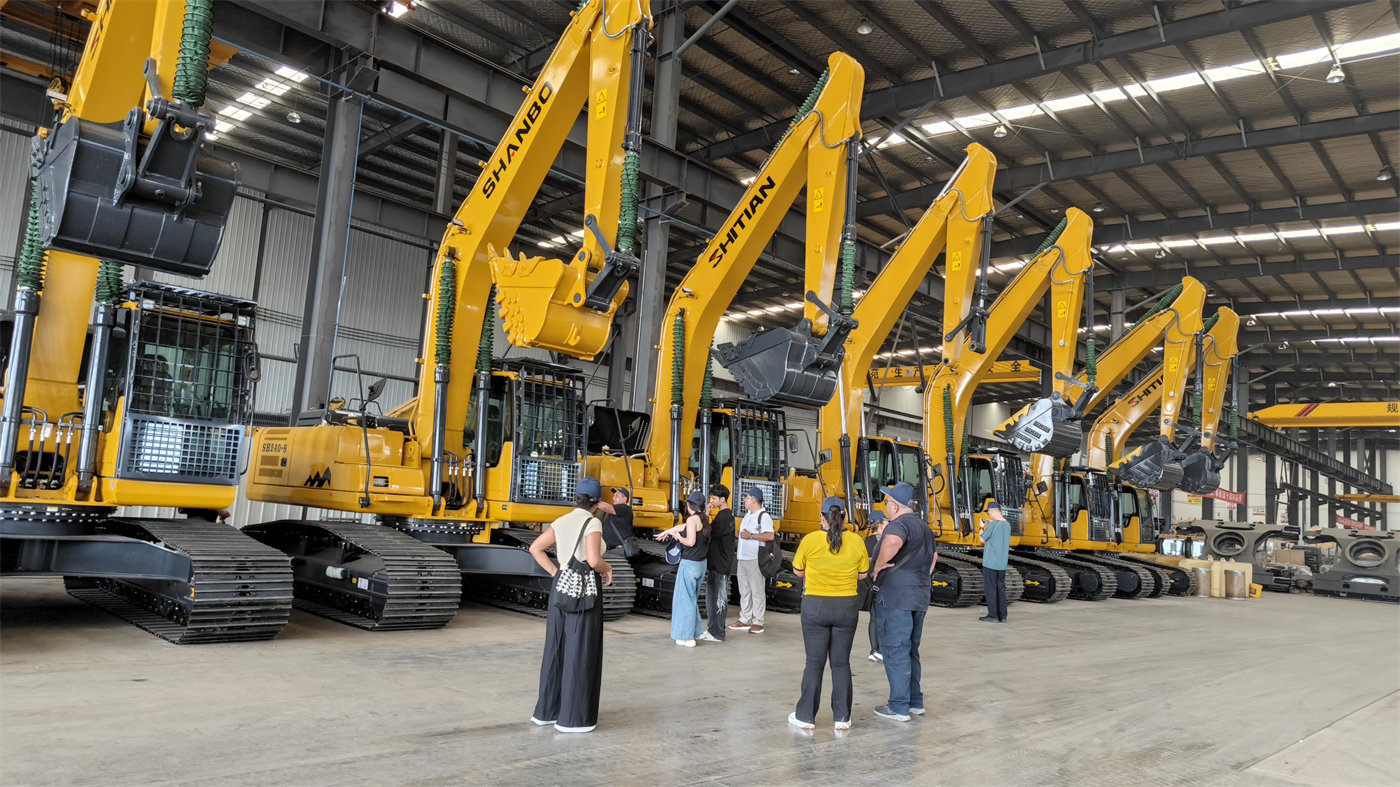
Put working range data back into loading positioning
Digging radius and the relative positions of pile and truck
The maximum digging radius of 12,016 mm indicates how far the machine can reach at theoretical maximum extension. In actual loading, the pile changes as loading progresses, and the truck's parking position also moves forward and backward. If the distance from the pile edge to the swing center remains close to this upper limit for long periods, the margin for lifting a full bucket and swinging into position is very small, and the loading rhythm is easily slowed by positioning movements. Therefore, radius data is better used to judge whether the loading point layout leaves margin, rather than being directly converted into truckloads per shift.
Dump height and haul truck bed
The maximum dump height of 7,615 mm should be compared with the truck bed sideboard height and the ground level difference at the parking position. Quarry haul trucks may park on a platform slightly lower or higher, and the actual required dump height changes accordingly. The data does not give cycle times for different truck bed heights, nor does it specify a truck model, so it can only serve as a reference for whether positioning is feasible and cannot be used to judge loading efficiency.
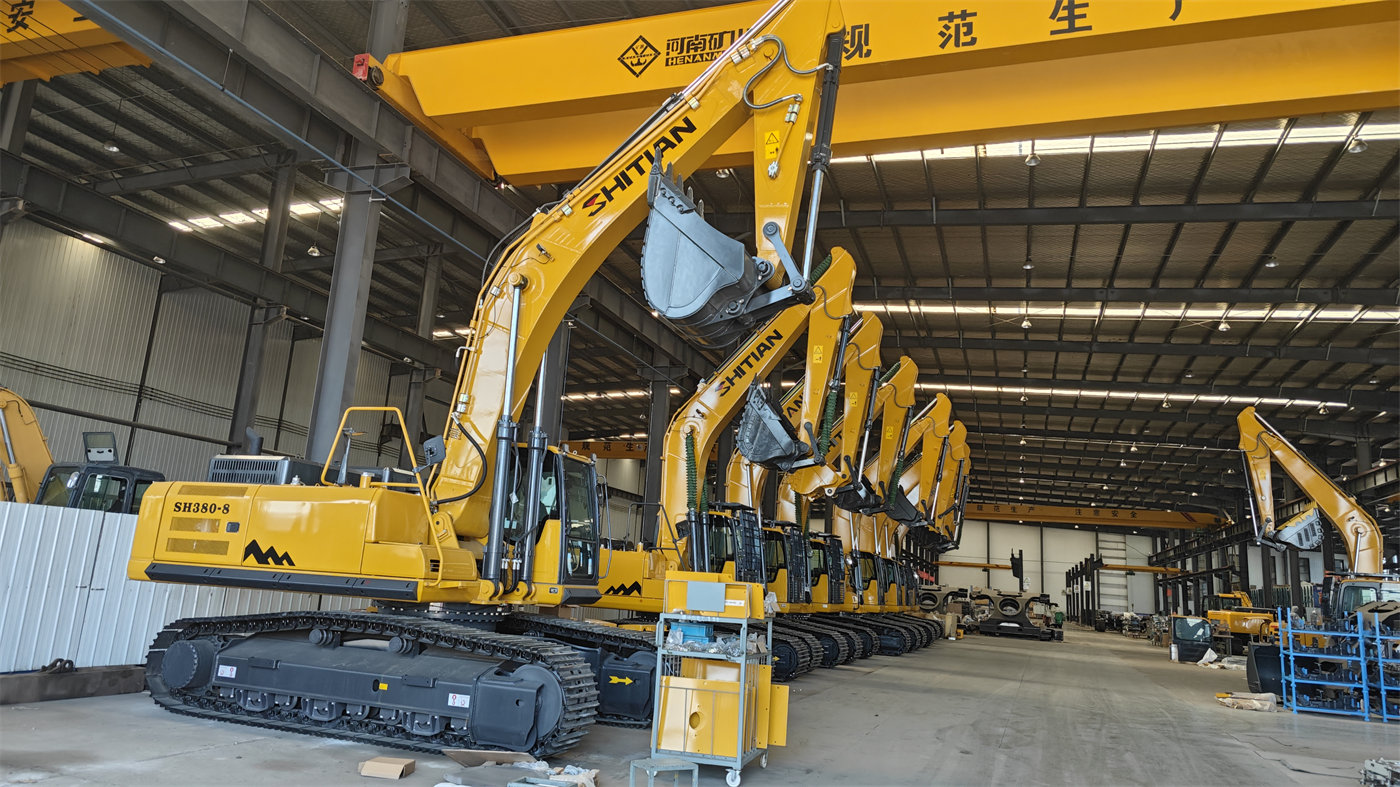
Digging depth and working face descent
The maximum digging depth of 7,800 mm and maximum vertical digging depth of 7,066 mm correspond to digging capability as the working face gradually drops. If the quarry loading point advances downward from a higher platform, the machine needs to maintain downward digging capability for a period; if the working face quickly drops to a depth where the machine cannot dig effectively, layered layout or adjustment of the loading platform should be considered. This point needs to be verified against the actual bench height and advance method at the quarry.
What material conditions do bucket capacity and digging force correspond to
The SH470 has a bucket capacity of 2.0–2.2 m³, bucket digging force of 290 kN, and arm digging force of 236 kN. Quarry materials may be blasted crushed stone, weathered material, or soil-rock mixture, with great differences in lump size and looseness. Bucket capacity ratings and digging force only indicate the digging capability the machine has under the conditions given in the data; they cannot replace judgment about the specific material lump size, stockpile state, and whether secondary breaking is needed. If material lump size is too large or frequent breaking is required, the loading cycle will change, and attachment matching and work organization should be checked separately.

What other machine conditions should be considered for continuous loading
- Power and hydraulics: Cummins QSM11 engine rated power 250 kW/2000 rpm, Linde load-sensing hydraulic system, maximum operating flow 2×360+27 L/min. These are the underlying conditions for continuous high-load operation, but the data does not give measured fuel consumption or cycle times for quarry work, so productivity cannot be calculated from them.
- Travel and gradeability: travel speed 3.2/5.3 km/h, gradeability 70% (35°), drawbar pull 330 kN. Transfer between loading points and ramp passability at the quarry need to be verified against road conditions.
- Ground pressure and undercarriage: operating weight 44,900 kg, ground pressure 80.2 kPa, track shoe width 600 mm, track gauge 2,760 mm. The bearing conditions of the loading platform and haul roads should be checked against this ground pressure, especially for loose stockpiles and sites after rain.
- Fuel tank and shifts: fuel tank capacity 650 L. Refueling arrangements for continuous shifts need to be planned according to on-site refueling conditions and operating hours; the data does not give endurance time.
Situations requiring cautious judgment
If the loading point is cramped, the truck parking position changes frequently, or the distance from the pile to the machine's swing center often approaches the maximum digging radius, selection based only on the working range table may not be sufficient; loading point layout and truck dispatch should be considered together. If the material requires frequent breaking or the working face drops quickly, attachment matching and layered mining arrangements should also be checked first. The data does not cover operating results under these specific conditions, so it cannot be directly asserted that a certain model is suitable for all quarry loading scenarios.
Conditions recommended before inquiry
- Material type, lump size range, and stockpile state;
- Truck bed sideboard height and the level difference between the parking ground and the machine platform;
- Typical distance and variation range from the loading point pile to the swing center;
- Working face bench height and advance method;
- Site bearing conditions, ramp conditions, and rainy season effects;
- Daily shifts, continuous operating hours, and refueling conditions;
- Whether a hydraulic breaker is needed, and verification data for main machine hydraulic flow, pressure, and attachment connection dimensions.
Only by comparing these conditions item by item with the SH470's working range, bucket capacity, digging force, and ground pressure can it be judged whether this machine is worth considering for a specific quarry loading point and which parameters still need on-site measurement and confirmation.