




















In the loading stage of mid-sized quarries, a common selection tendency emerges: converting production targets directly into larger tonnage and larger bucket capacity equipment, assuming that larger specifications are safer. However, quarry loading is a cycle composed of digging, swinging, positioning, dumping, and returning, and equipment specification is only one variable. Material lump size, truck bed height, working face layout, and site bearing capacity also change the actual rhythm. This article focuses on these conditions to explain when a 37-ton crawler excavator is worth including in the comparison and when separate verification is needed.
First, clarify: where do the constraints on mid-sized quarry loading come from?
Quarry loading is not entirely the same as ordinary earthmoving loading. After blasting, stone lump sizes vary greatly, and the resistance encountered when the bucket penetrates is discontinuous; trucks are often matched by bed capacity, and bed height and parking position affect the dumping angle; the working face changes continuously as mining advances, and the equipment needs to repeatedly travel and swing within a certain range. These conditions together determine that equipment cannot be judged by bucket capacity alone.
The work objective can first be broken down into four types of constraints: whether the material can be effectively dug, whether one bucket can fill the truck bed, whether dumping and positioning can be completed in one pass, and whether the site can support continuous operation of the equipment. Each item corresponds to different equipment information, and the order of judgment also differs.
Several data points in the SH380 information corresponding to quarry loading
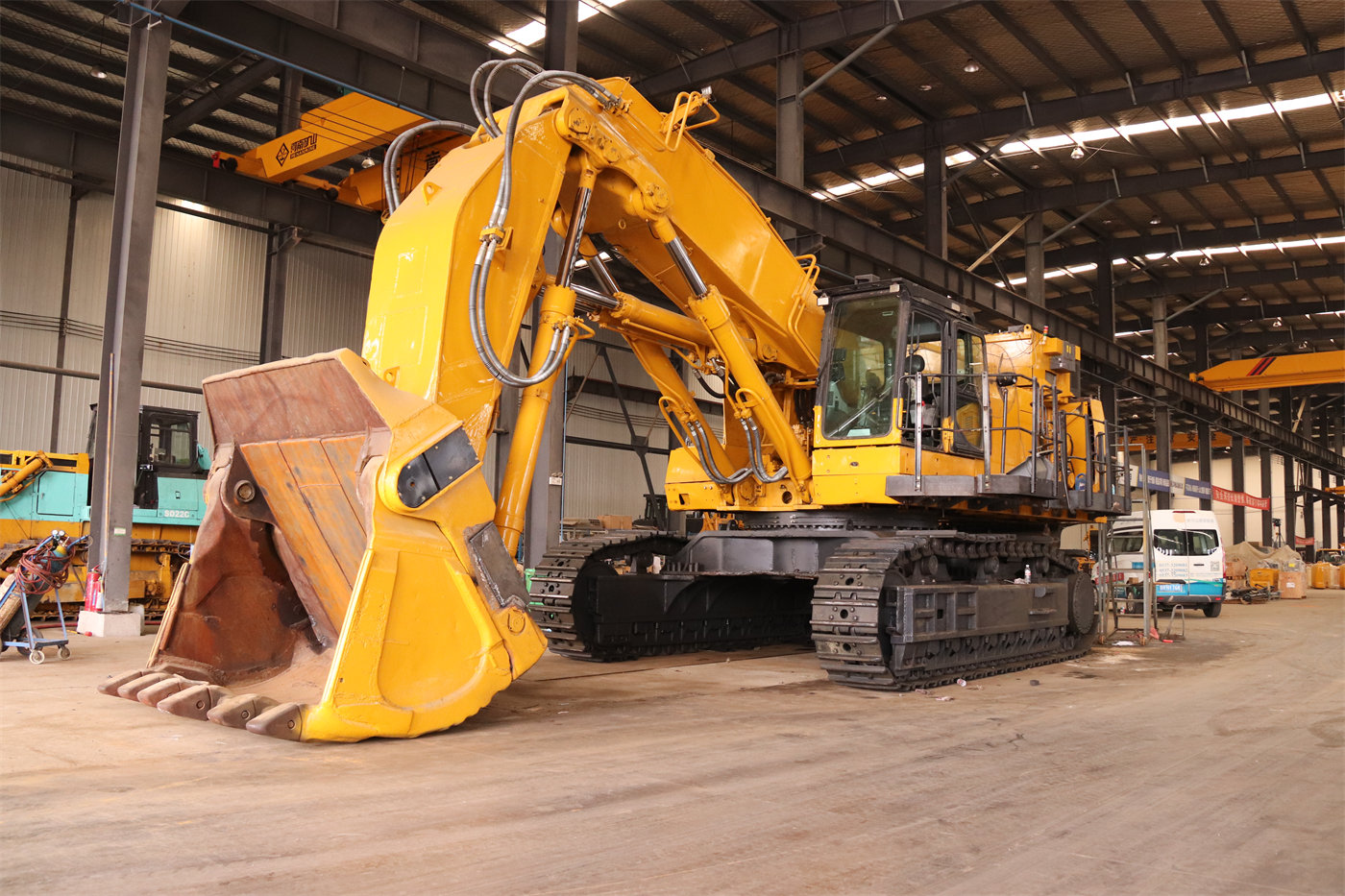
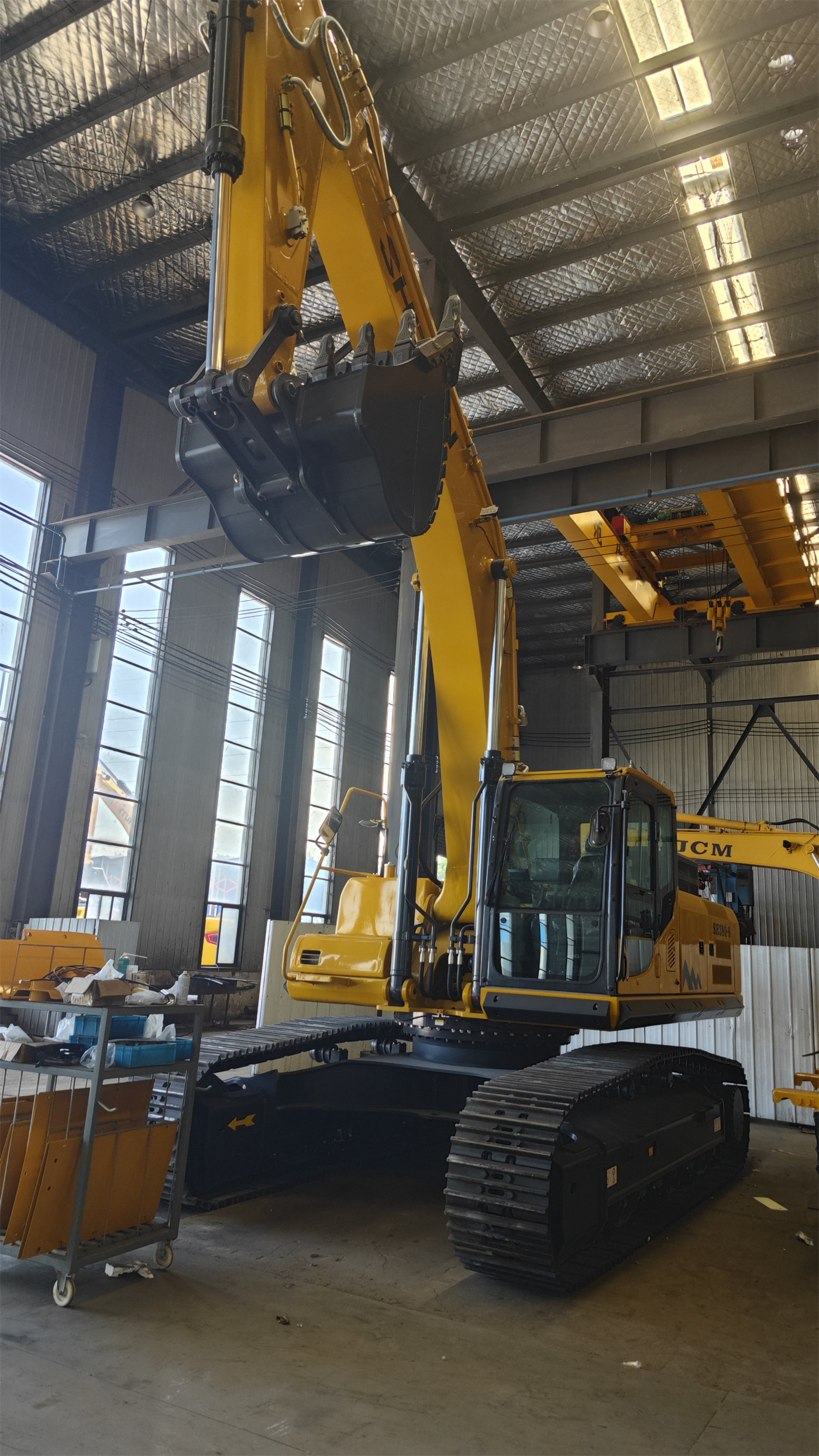
The SH380 is a 37-ton crawler excavator on this site, with an operating weight of 37000kg, equipped with a Cummins 6LTAA8.9-325 engine, rated power 242kW, bucket capacity 1.62–1.82m³, digging force 230kN, and hydraulic flow 660L/min. The information lists open-pit mining, quarrying, and large infrastructure as the main application directions. Below, these data are placed back into the specific problems of quarry loading for explanation.
Bucket capacity and material conditions
The 1.62–1.82m³ bucket capacity corresponds to a medium-batch loading rhythm. If the truck bed capacity matches it, the number of buckets in a loading cycle is relatively fixed, and waiting time is easier to control. However, bucket capacity itself does not indicate whether the material can fill the bucket: when stone lump size is large and gradation is uneven, the actual fill rate will be affected. This point needs to be confirmed on site in combination with blast fragmentation and bucket wear conditions; the information cannot replace this.
Digging force and hard rock penetration
The 230kN digging force is one of the conditions for judging whether the equipment can handle harder materials. If there are large pieces of insufficiently broken stone on the quarry working face, insufficient digging force will lead to repeated probing and prolong the single-bucket time. However, digging force is only an overall machine capability indicator; actual penetration effect is also related to tooth condition, operating method, and material fractures. The information does not provide test data for specific rock strength, so material hardness should be treated as a condition to be verified during selection.
Hydraulic flow and combined actions
The 660L/min hydraulic flow corresponds to response capability during simultaneous multiple actions. In the loading cycle, boom lifting and swinging often occur simultaneously, and insufficient flow will slow positioning. The information describes the hydraulic system as a dual variable piston pump configuration, emphasizing smooth multifunctional synchronization. For continuous quarry loading, this item affects the cycle rhythm rather than single-digging force.
Dump height and truck positioning
The information does not list the SH380's maximum dump height and maximum digging radius, so it is impossible to judge its positioning relationship with specific truck bed heights based on this. This is a parameter that needs to be supplemented and confirmed with the supplier before purchase and cannot be inferred from tonnage. If the truck bed is high or the parking position is restricted, working range data should be obtained first before judgment.
Gradeability and site passage
The information gives a gradeability of 70% (35°) and a minimum ground clearance of 565mm, an operating weight of 37000kg, and a track shoe width of 600mm. Quarry working faces often have temporary ramps and crushed stone accumulation, and gradeability and ground clearance affect whether the equipment can move itself between locations. However, track ground pressure information is not listed, and the bearing conditions of soft soil or muddy sites in the rainy season need separate verification.
When there is no need to directly select by maximum specification
If the quarry's designed production capacity, truck configuration, and working face width do not require larger bucket capacity, directly choosing larger-specification equipment may bring two problems: first, equipment width and swing radius impose higher requirements on working face layout; second, the loading rhythm per unit time may not increase linearly with bucket capacity. The SH380 has an overall width of 3200mm and a tail swing radius of 3438mm, and these dimensions determine the working space it requires. When the working face is narrow or truck turnover is restricted, the equipment class should be judged together with site conditions rather than by production targets alone.

Conversely, if material lump size is large, truck beds are high, and shift intensity is continuously high, the 37-ton class may only be a starting point, and working range and hydraulic configuration need further verification. The information does not provide matching conclusions for different production capacities; only the order of judgment is provided here.
Conditions recommended for verification before purchase
- Material conditions: lump size distribution after blasting, hardness, and whether secondary crushing is needed.
- Truck parameters: bed capacity, bed height, parking position, and swing angle.
- Site conditions: working face width, ramp gradient, ground bearing capacity, and muddy conditions in the rainy season.
- Work organization: shift duration, number of loading points, and whether the equipment needs frequent relocation.
- Information gaps: parameters not listed in the existing information, such as maximum dump height, maximum digging radius, and ground pressure, need to be confirmed with the supplier.
- Matching attachments: if large rock crushing is involved, matching information for the hydraulic breaker and carrier, including flow, pressure, weight, and connection dimensions, needs separate verification and cannot be presumed directly from tonnage.
Information to provide when requesting a quotation
When requesting a quotation from the supplier, it is recommended to include material type and lump size, planned daily loading volume, truck bed capacity and bed height, working face dimensions and gradient, shift arrangements, whether crushing attachments are needed, and on-site power supply or maintenance conditions. The more specific this information is, the easier it is to judge whether 37-ton equipment falls within a reasonable range, and it can also reduce repeated communication caused by mismatches in working range or hydraulic configuration.
The equipment class for a mid-sized quarry should ultimately be determined jointly by materials, truck beds, site, and shifts. The SH380 information provides bucket capacity, digging force, hydraulic flow, and some passage data, which can serve as a reference for comparison, but key items such as working range and ground pressure still need to be completed before drawing a conclusion.