
















In heavy-load dozing, equipment selection often faces a dilemma: insufficient traction means the machine cannot push hard material or climb slopes, or cannot push a full load; excessively high ground pressure means it is prone to sinking or slipping on soft soil, backfill areas, or loose material surfaces. One indicator points to "can it push," the other to "can it stand firm," and the two are not fully aligned. This article focuses on this trade-off, explaining which conditions should be examined first in heavy-load dozing operations, and then judging whether the data for a high-horsepower crawler dozer such as the SD46-6 can correspond.
First, clarify the actual constraints of heavy-load dozing
Heavy-load dozing is not a one-time pushing action but a repeated cycle: cutting into the material pile, pushing a full blade, dumping, and returning. In each cycle, the equipment must overcome material resistance, slope resistance, and travel resistance. Traction determines how much material can be pushed per pass, while ground pressure affects the contact state between the tracks and the ground. The softer the ground and the looser the material surface, the more pronounced the effect of ground pressure.
Therefore, judging whether a dozer is suitable for heavy-load dozing cannot rely only on horsepower or blade capacity; material state, ground bearing capacity, dozing distance, and slope must be considered together.
What operating conditions traction corresponds to
Verified data for the SD46-6 shows an operating weight of 54,000 kg, a Cummins KT419-C525 turbocharged and intercooled diesel engine, rated power of 340 kW/600 hp, and rated speed of 2,000 rpm. The data also states that this model uses a hydraulic power-shift transmission with a planetary final drive structure, can adjust power output according to changes in external load, and incorporates hydraulic cushioning in the drivetrain to absorb impact loads.
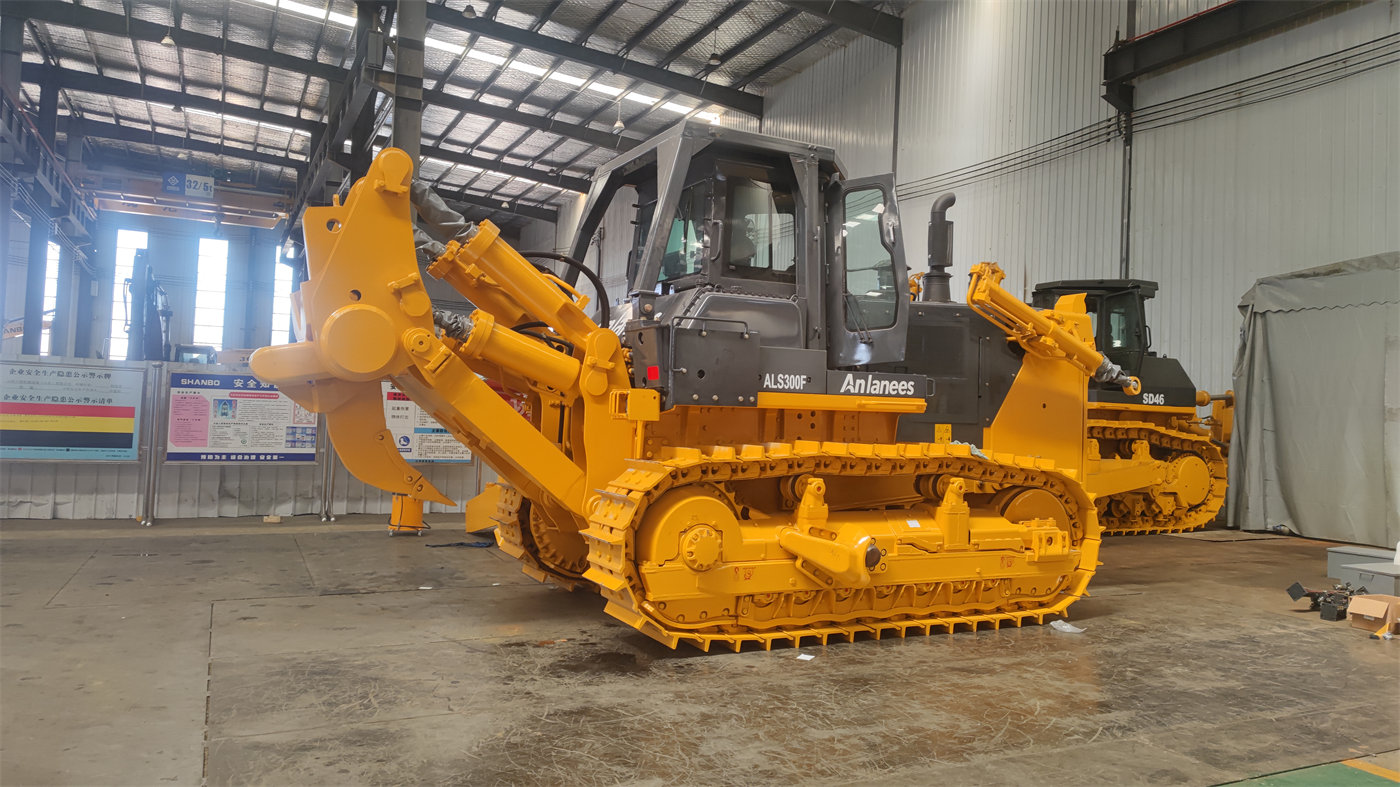
These conditions correspond to the operating requirements of: in heavy-load scenarios such as mine stripping and large-scale earthwork dozing, the equipment needs to continuously output relatively high traction while withstanding impact loads during dozing. Only with sufficient traction is it possible to push a full blade of material to the designated location; whether the power transmission structure can stably withstand the load relates to the reliability of continuous operation.
It should be noted that the data does not provide specific traction values, so it cannot be used to infer the actual dozing capability of this model under a given slope and material condition. These still need to be verified against site conditions.
Ground pressure and site passability conditions
The SD46-6 data gives a ground pressure of 0.123 MPa, an operating weight of 54,000 kg, a minimum ground clearance of 525 mm, and a gradeability of 30°. Ground pressure is the result of the machine's weight being distributed over the track ground contact area, and it directly affects the degree of sinking on soft ground, backfill areas, or loose material surfaces.
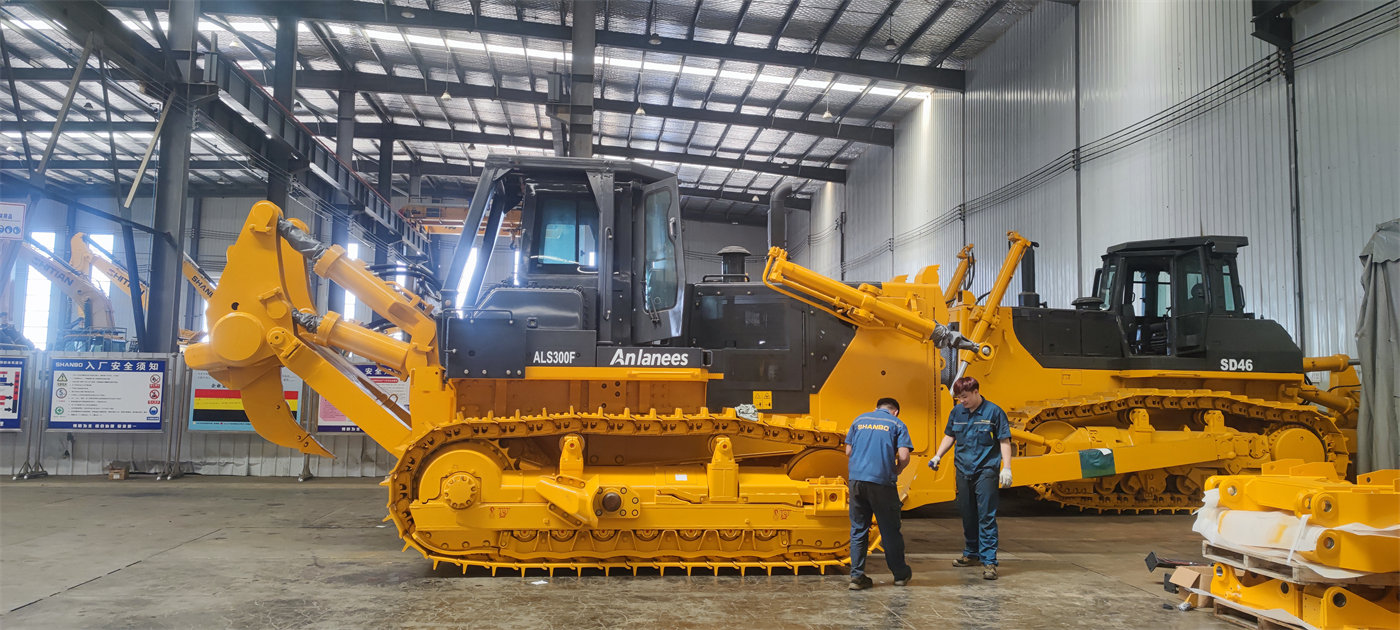
In heavy-load dozing, the significance of ground pressure is not just "whether it will get stuck." Changes in the contact state between the tracks and the ground affect adhesion, which in turn affects whether traction can be effectively transmitted to the ground. When ground pressure is high, even if engine output is sufficient, the efficiency of actually pushing material may decline.
This model uses a K-type suspension floating drive structure and an integral articulated undercarriage; the data states that it can cushion impact loads during travel and operation. This type of undercarriage design corresponds to the travel stability requirements of complex ground such as mountainous areas, rocky terrain, and mining areas, but it cannot be assumed from this that it is suitable under any soft-ground condition.
How to consider traction and ground pressure together
| Judgment dimension | Corresponding data | Conditions to verify |
|---|---|---|
| Whether heavy material can be pushed | 600 hp engine, hydraulic power-shift transmission | Material lump size, slope, dozing distance |
| Whether it can stand firm on soft surfaces | Ground pressure 0.123 MPa, operating weight 54,000 kg | Ground bearing capacity, moisture state, looseness of material surface |
| Whether continuous operation is stable | Forced circulation lubrication, hydraulic cushioning structure, intelligent monitoring and alarm | Shift length, maintenance conditions, oil management |
The three are not independent. No matter how high the traction, if ground pressure does not match ground conditions and adhesion is insufficient, actual dozing performance will still be limited; if ground pressure is suitable but traction is insufficient, full-blade dozing will be difficult to sustain. In selection judgment for heavy-load dozing, material and ground conditions should first be clearly described, and then it should be seen which values in the equipment data can correspond.

What work stages the blade and ripper correspond to
The SD46-6 is standard-equipped with a large-capacity semi-U bulldozer blade; the data specifies a blade capacity of 16 m³, blade width of 4,314 mm, blade height of 1,841 mm, maximum cutting depth of 700 mm, and maximum blade tilt of 1,000 mm. The semi-U blade corresponds to large-area earthwork and rock stockpiling and bulk material handling, and blade capacity is directly related to dozing efficiency.
The rear attachment is an adjustable-angle single-shank heavy-duty ripper; the data states that it is used for deep ripping, rock breaking, and ripping hard ground. Before heavy-load dozing, if the material surface or rock layer needs to be loosened in advance, the ripper can be considered as a supporting element. However, whether the ripper is suitable for a particular rock layer—the data does not provide corresponding information such as lithology or hardness—is a matter that needs to be confirmed against site conditions before purchase.
Which conditions documentation cannot confirm on site's behalf
- Specific traction values: not listed in the data and cannot be directly converted from horsepower.
- Actual sinking degree under soft-ground conditions: 0.123 MPa is the machine's ground pressure; on-site ground bearing capacity must be assessed separately.
- Stability of slope dozing: gradeability of 30° is a whole-machine indicator; actual performance when dozing uphill with a full load must be judged in combination with slope, material, and operating conditions.
- Coordination with transport vehicles or other equipment: the data does not cover supporting operation arrangements.
- Fuel consumption and maintenance costs: the data includes a rated-condition fuel consumption rate item but does not give a complete value, so operating costs cannot be calculated from it.
Conditions recommended to prepare before requesting a quote
If the SD46-6 is being considered for heavy-load dozing operations, the following should be provided as far as possible when requesting a quote: material type and lump size, dozing distance and slope, ground bearing capacity and moisture state, single-shift operating duration and shift arrangements, whether a ripper is needed as a supporting attachment, and how the work connects with existing transport or subsequent processes. These conditions explain whether the equipment matches better than horsepower alone. Documentation can answer questions about whole-machine specifications and structural configuration, but it cannot replace actual on-site judgment of materials and ground.