


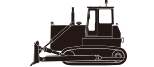
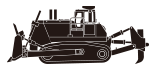















After rough grading of an earthwork site is completed, construction teams often face a scheduling question: should the bulldozer continue to finish the surface, or should another machine be brought in for fine grading? Switch too early, and the bulldozer has not yet eliminated large material piles and undulations, so a fine-grading machine will struggle to achieve results through repeated leveling. Switch too late, and the bulldozer repeatedly travels over a surface already close to design elevation, potentially disturbing the compacted surface layer. To judge whether a switch is needed, first check whether the goals of the rough grading stage have been met, then examine the specific equipment requirements of the fine grading process.
What rough grading and fine grading each address in the process
The rough grading stage involves pushing flat the major undulations, material piles, and obvious elevation differences left after backfilling or excavation, providing a relatively uniform working surface for subsequent compaction and fine grading. This stage focuses more on dozing efficiency, blade cutting capability, and the machine's trafficability across the site. The fine grading stage involves thin-layer leveling on a surface close to design elevation, placing higher demands on the operator's leveling experience, the precision of the machine's fine adjustment movements, and survey coordination.
The two cannot be clearly divided by a single parameter. Whether to switch equipment actually depends on three conditions: how much elevation difference remains after rough grading, how strict the design requirements for flatness are, and whether fine-grading equipment is already on site in terms of construction organization. If the elevation difference is still large, it is more reasonable for the bulldozer to continue working; if the difference has been reduced to the point where fine control is needed, switching equipment or process becomes meaningful.
The SD16's role in rough grading and transitional leveling
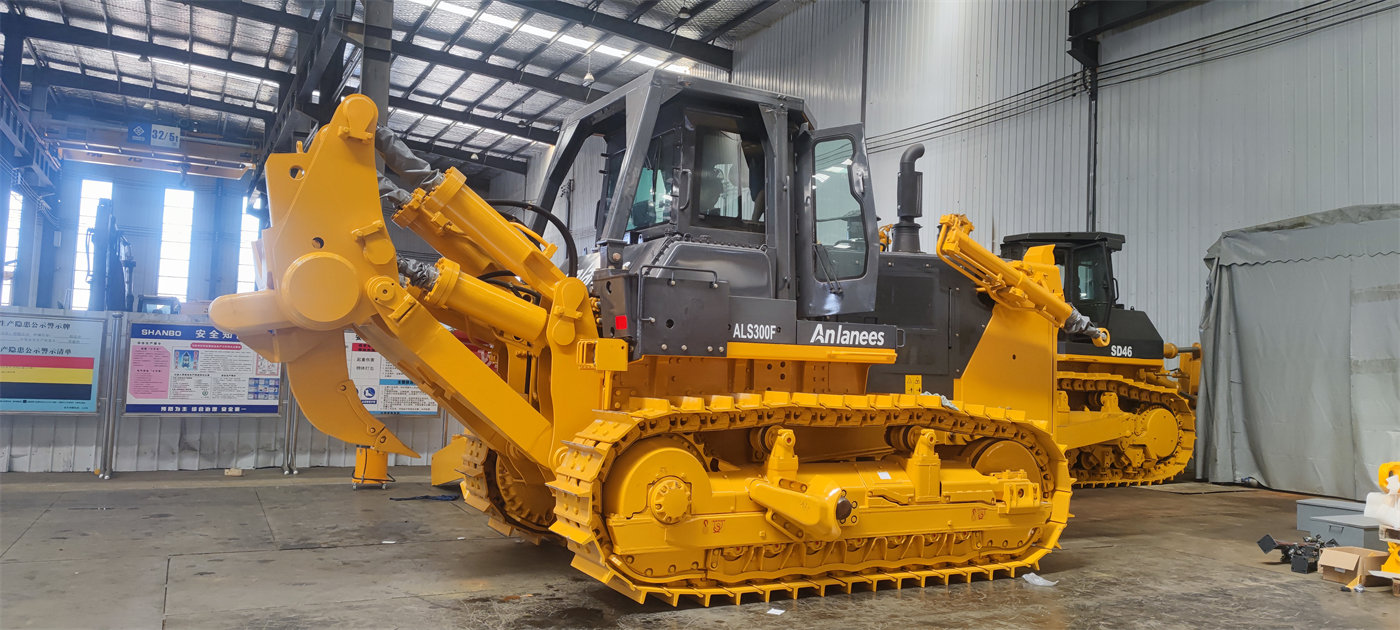
The SD16 is a 178 hp crawler bulldozer with a rated power of 131 kW and a standard-version operating mass of 17,000 kg. Its information relevant to rough grading and transitional leveling includes: standard straight blade, with angle blade and U-blade optional; blade width of 4,011 mm, 3,455 mm, or 3,556 mm depending on configuration; blade lift height of 1,005 mm and blade depth of 540 mm; ground pressure of 58 kPa; track shoe width of 510 mm; ground contact length of 2,635 mm; minimum turning radius of 4,466 mm. These parameters indicate it is suited to dozing, spreading, and preliminary leveling, but they cannot directly establish whether it can meet a given fine-grading standard.
From a work-logic perspective, the straight blade suits conventional dozing and spreading, the angle blade serves different purposes in slope or edge trimming, and the U-blade corresponds to larger dozing volumes. Different blade configurations affect rough-grading efficiency and the final surface condition, but the information does not provide flatness data for each configuration, so fine-grading capability cannot be judged on that basis.
When the bulldozer should continue and when to consider switching equipment
The following conditions can be used for a preliminary triage. This is only a work-judgment approach, not a field-measured conclusion:
- Obvious material piles, trenches, or large elevation differences remain after rough grading: it is more reasonable for the bulldozer to continue dozing and spreading.
- The site is close to design elevation but loose material and slight undulations remain locally: the bulldozer can perform transitional leveling while survey follow-up is arranged, then a decision can be made on whether fine-grading equipment is needed.
- The design has explicit numerical flatness requirements and thin-layer repeated leveling is needed: the configuration and operating method of fine-grading equipment should be verified; the SD16 information is insufficient to prove it meets such accuracy requirements.
- Site bearing capacity is low and the surface is soft after rain: ground pressure and travel conditions should be verified first before deciding whether the machine is suitable to continue working on the surface.
Applicability boundaries in terms of site and configuration
The standard SD16 has a ground pressure of 58 kPa, while the super-wetland version SD16L has 22 kPa; the two have different applicability conditions on soft-ground sites. If the rough-graded area contains soft soil, unconsolidated backfill, or high-moisture sections, whether the standard version is suitable to enter must be verified against site bearing capacity; the super-wetland version uses 960 mm track shoes and pontoon track shoes with lower ground pressure, but its information corresponds to soft-soil marsh and wetland improvement working conditions and cannot be directly equated with all soft-ground fine-grading scenarios. The coal version SD16C is equipped with a coal blade, mainly intended for power plant and port bulk material stockyards, and is not the same type of configuration as earthwork fine grading.
In addition, the SD16's steering and fine adjustment rely on differential track steering, with a minimum turning radius of 4,466 mm. In fine-grading work requiring frequent small-range adjustment of blade attitude, this travel method differs from the operating characteristics of wheeled equipment or dedicated grading equipment; whether it is suitable must be judged by the construction party based on operating experience and accuracy requirements.

Configuration and working-condition information to verify before purchase
If considering the SD16 for rough grading and transitional leveling, the following conditions should be clearly stated during inquiry to facilitate configuration verification:
- Work content: whether it is dozing, spreading, or leveling, and the expected remaining elevation difference range after rough grading.
- Material type: ordinary earthwork, clay, frozen soil, or backfill with higher moisture content; whether a three-shank ripper is involved.
- Site conditions: bearing capacity, whether soft-ground sections must be entered, and working surface slope.
- Blade configuration: straight blade, angle blade, or U-blade; different configurations correspond to different work stages and should be selected according to the actual process.
- Flatness requirements: design elevation and acceptance method; the construction party should judge whether the SD16 performs fine grading in the process or only rough grading and transitional leveling.
- Shifts and supporting equipment: daily working hours, coordination pace with transport trucks or compaction equipment, and whether lighting is needed for night work.
- Emissions and registration requirements: the information states that the WP10 engine meets China's National Stage IV emission standards for non-road machinery; local access requirements at the specific project location still need to be verified.
There is no universal answer to whether equipment should be switched for fine grading after rough earthwork grading. The SD16 information supports its work positioning in dozing, spreading, and transitional leveling, but whether fine-grading accuracy is met, whether soft-ground sections can be entered, and whether the blade configuration matches all need to be confirmed separately based on site conditions and acceptance requirements.