




















When comparing equipment for small and medium earthmoving push projects, procurement personnel often first compare engine fuel consumption. However, shift costs are the sum of multiple factors: whether the equipment can continuously push at full load, whether the tracks slip or sink on soft ground, whether blade capacity matches the pace of transport vehicles, and how much time maintenance and relocation take. The engine is only the power source; what truly determines the cost per unit of earth moved is whether these conditions can be stably maintained within the same shift.
First, clarify: the cost composition of small and medium earthmoving push operations
Breaking it down by work process, the cost of a bulldozer on a small or medium earthmoving project roughly falls into the following areas:
- Load factor during pushing: if the blade is not full or slipping occurs repeatedly, the pushing volume per unit time decreases;
- Site trafficability: on soft soil, backfill areas, or sites after rain, high ground pressure can cause sinking and extra dragging;
- Matching of blade and haul distance: with long haul distances and scattered material piles, blade capacity and pushing speed affect the number of cycles;
- Maintenance and breakdown downtime: the wear pace of the undercarriage, tracks, and hydraulic components;
- Relocation and auxiliary time: equipment entry and exit, leveling, and cleaning the work face.
Engine fuel consumption is only one input among the above factors. Comparing it in isolation makes it easy to overlook differences caused by load factor and downtime.
Several conditions in the SD10 data corresponding to cost-sensitive factors
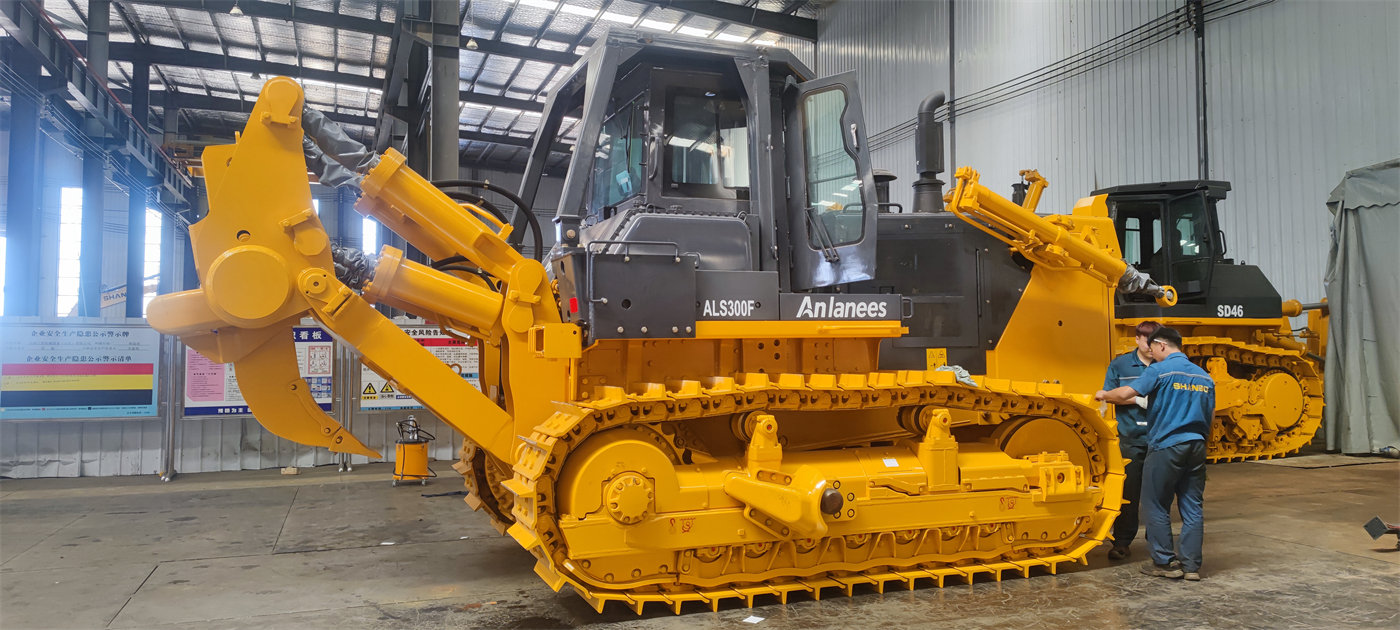
The verified data for the SD10 provides the following values that can be used for judgment:
| Condition | SD10 Data | What operational issue it corresponds to |
|---|---|---|
| Operating weight and tractive force | 10000 kg, maximum tractive force 95 kN | Determines traction capability during heavy-load pushing and whether the blade can be kept full |
| Ground pressure | 54.4 kPa, track shoe width 450 mm | Corresponds to trafficability conditions on soft soil, backfill areas, and sites with high moisture content |
| Engine | Cummins 4BT3.9-C125, 81 kW (125 HP)/2300 r/min, maximum torque 400 N·m | Power output level, one of the supports for load factor, not the entirety of cost |
| Blade | 2960×960 mm, maximum lift height 830 mm, maximum digging depth 350 mm | Corresponds to single-pass pushing volume and material pile handling method |
| Travel speed | Forward 2.6–10.4 km/h, reverse 3.7–6.7 km/h, 4F+2R mechanical transmission | Corresponds to haul distance and cycle time |
| Dimensions | 4400×2960×3030 mm | Corresponds to narrow sites and relocation layout |
These data indicate the equipment's capability boundaries under specific conditions and cannot be directly converted into shift fuel consumption or cost per unit of earth moved.
Load factor is more worth calculating first than nominal fuel consumption
In push operations, the equipment is mostly under partial load or on empty return trips. The load factor depends on material density, haul distance, whether the blade is full, and whether the ground is slippery. The SD10's maximum tractive force of 95 kN corresponds to the upper limit of the machine's traction and power output; whether it can be fully utilized in actual operation depends on the looseness of the material and the traction conditions between the tracks and the ground.
The data gives fuel consumption ≤242 g/kW·h, which is an engine fuel consumption indicator and cannot be directly equated to on-site fuel consumption per cubic meter of earth or per shift. On-site fuel consumption is also affected by load factor, travel distance, idle time, and operating habits. If fuel cost needs to be estimated during procurement, a more reliable approach is to calculate cycle time based on the project's actual haul distance and material conditions, rather than only comparing engine fuel consumption figures.
Soft-ground trafficability boundaries corresponding to ground pressure
The SD10 has a ground pressure of 54.4 kPa and a track shoe width of 450 mm. In small and medium earthmoving projects, this value is mainly used to judge whether the equipment is likely to sink on backfill soil, farmland improvement sites, or sites with high moisture content. If the site surface is soft and bearing capacity is low, even if tractive force is sufficient, the tracks may slip or sink, leading to reduced pushing efficiency and the need for extra dragging.
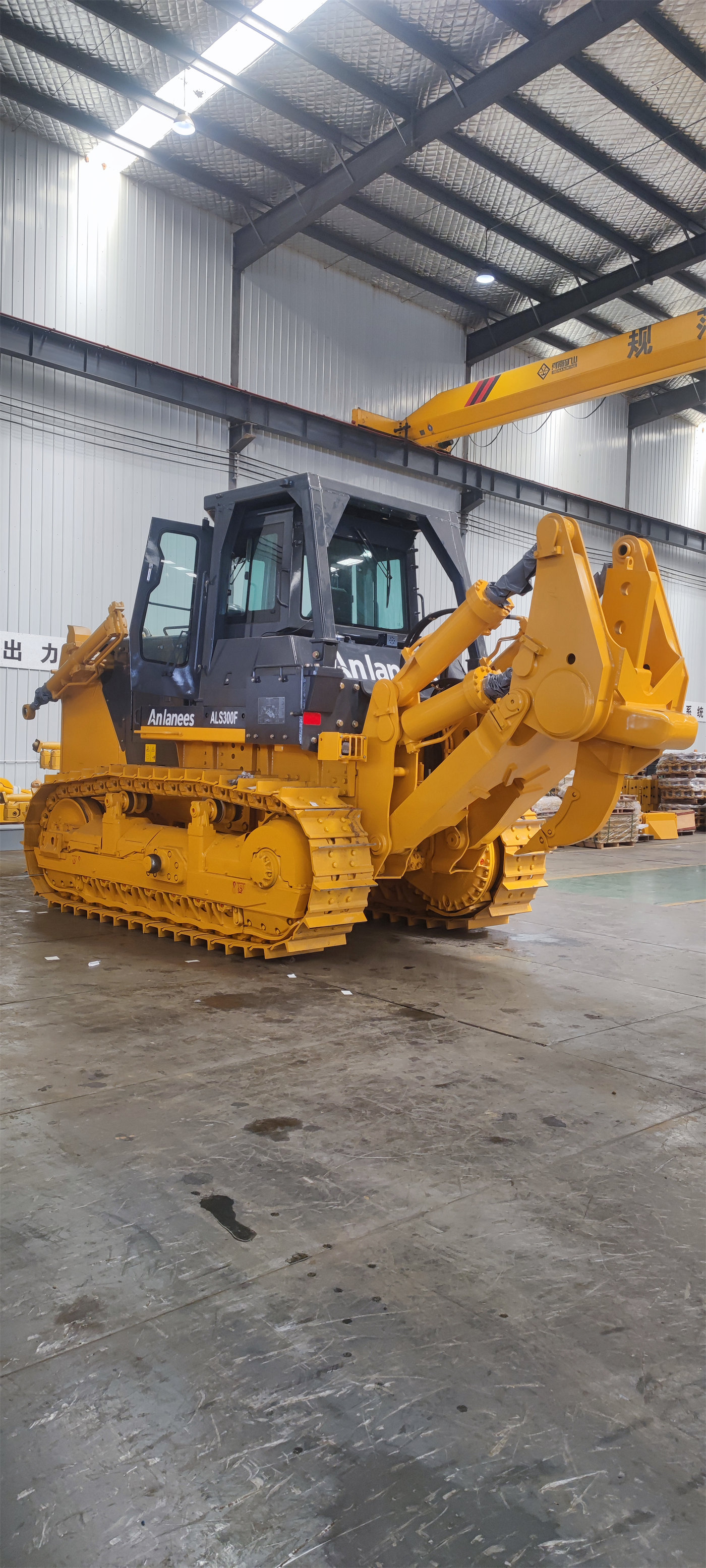
It should be noted that ground pressure is a static reference value; the actual degree of sinking is also related to soil type, moisture content, track wear condition, and operating method. If soft-ground operations exceed the range that can be judged from the data, site bearing conditions should be verified separately rather than drawing conclusions solely from 54.4 kPa.
Correspondence between blade configuration and work stages
The SD10's standard configuration has a blade width of 2960 mm, height of 960 mm, maximum lift height of 830 mm, and maximum digging depth of 350 mm. Straight, curved, and coal blades are optional, and a fixed drawbar or three-shank ripper can be selected at the rear.
- Straight blades are suitable for pushing and site leveling;
- Curved blades facilitate material rolling in front of the blade when pushing loose materials;
- Coal blades correspond to bulk material stockyard operations;
- Three-shank rippers are used for loosening soil before operation or handling compacted and weathered surface layers.
The data does not provide specific blade capacity values. During selection, the material bulk density and haul distance should be considered, and the supplier should be asked to confirm the pushing capability corresponding to the selected blade type; self-conversion is not advisable.
Maintenance and relocation: the parts easily overlooked in shift costs
The data mentions that the SD10 uses a reinforced undercarriage and optimized travel mechanism, but does not provide maintenance intervals, track life, or undercarriage component replacement intervals. When such data is missing, the purchaser should request a maintenance item list, wear part specifications, and recommended maintenance intervals during the inquiry stage, and then estimate downtime in conjunction with the project's shift schedule.

Regarding relocation, the SD10's dimensions are 4400×2960×3030 mm, and the operating weight is 10000 kg. Small and medium projects often involve multi-point relocation, so the transport method, loading and unloading conditions, and access road width need to be confirmed in advance. The data does not provide transport dimensions or lifting point information; this part must be verified separately with the supplier.
Conditions that data cannot replace on-site confirmation
- Actual bulk density and lump size of the material, and whether it contains large rocks or construction waste;
- Site surface bearing capacity and changes in moisture content during the rainy season;
- Pushing volume per shift and haul distance, and whether multiple machines are needed;
- Transport truck bed height and loading/unloading pace, and the division of labor between the bulldozer and loading equipment;
- Local emission requirements and fuel supply conditions;
- Actual use and connection dimensions of rear attachments.
The above conditions determine whether the SD10 is suitable for a specific project. The data itself only provides reference values on the equipment side and cannot replace on-site judgment.
Information recommended to prepare before inquiry
If the SD10 is to be included in the comparison scope for a small or medium earthmoving push project, it is recommended to provide the following during inquiry: material type and approximate bulk density, push distance, site bearing and drainage conditions, single-shift working hours and shift arrangements, whether a ripper or towing device is needed, relocation method and road conditions, and local emission and fuel requirements. The supplier can then confirm the blade configuration, rear attachments, and delivery status, and the purchaser can also compare shift costs more accurately rather than making judgments solely around engine fuel consumption.