


















When scheduling crawler excavator work in wetland sections of backfill areas, discussions on site often begin with whether the bucket capacity is sufficient and whether the machine can dig effectively. What actually holds up progress is another set of issues: whether the equipment can travel steadily to the work point, whether it will continue to sink after positioning, and where the excavated wet material will be placed. Backfill soil has not been fully consolidated, and surface hardness is uneven. Bearing capacity is lower in sections affected by rain or high groundwater levels. Before arranging a machine on site, these constraints should first be listed as a checklist, and then a judgment should be made about which equipment specifications and configurations are worth including in the comparison.
First, clarify: what must be checked for work in soft, wet backfill areas
The work objectives in wetland sections of backfill areas are usually excavation, transfer, leveling, or coordination with off-site transport, but the constraints come from the ground rather than the material. The following items are recommended for confirmation one by one before equipment enters the site:
- Bearing capacity of the travel route: From the site access road to the work point, which section is undisturbed soil, which is backfill, and which has standing water or mud must be assessed section by section rather than treating the entire site as a single condition.
- Positioning area at the work point: Space must be reserved for the tail swing radius when the crawler excavator rotates. The more concentrated the positioning on soft ground, the higher the risk of local sinking.
- Digging depth and unloading position: Whether wet material is stockpiled on site, loaded onto trucks for off-site transport, or transferred short distances determines the required working radius and unloading height of the equipment.
- Shift continuity: Work on soft ground often requires matting, replacement fill, or phased advancement. Whether the equipment can operate continuously is directly related to the site treatment plan.
- Drainage and weather window: The moisture content of backfill areas is significantly affected by rainfall, and work arrangements must allow time for drainage and recovery of bearing capacity.
Without confirming these conditions, it is difficult to judge from a specification sheet alone whether a machine can work in a given section.
What verified SH210-8 data can provide for judgment
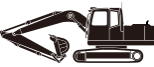
The Shanbo SH210-8 is a 21-ton-class crawler excavator. The main information provided on this site includes: optional 129/153 kW engines (WP4.6NG175 / 6BTAA5.9), a 1.0 m³ bucket, a 34.3 MPa high-pressure dual-pump hydraulic system, hydraulic flow of 2×231.7 L/min, digging force of 126/134 kN, maximum digging depth of 6350 mm, maximum digging radius of 9700 mm, maximum digging height of 10600 mm, minimum ground clearance of 345 mm, wheelbase of 2900 mm, travel speed of 28–35 km/h, and gradeability of ≥70%.
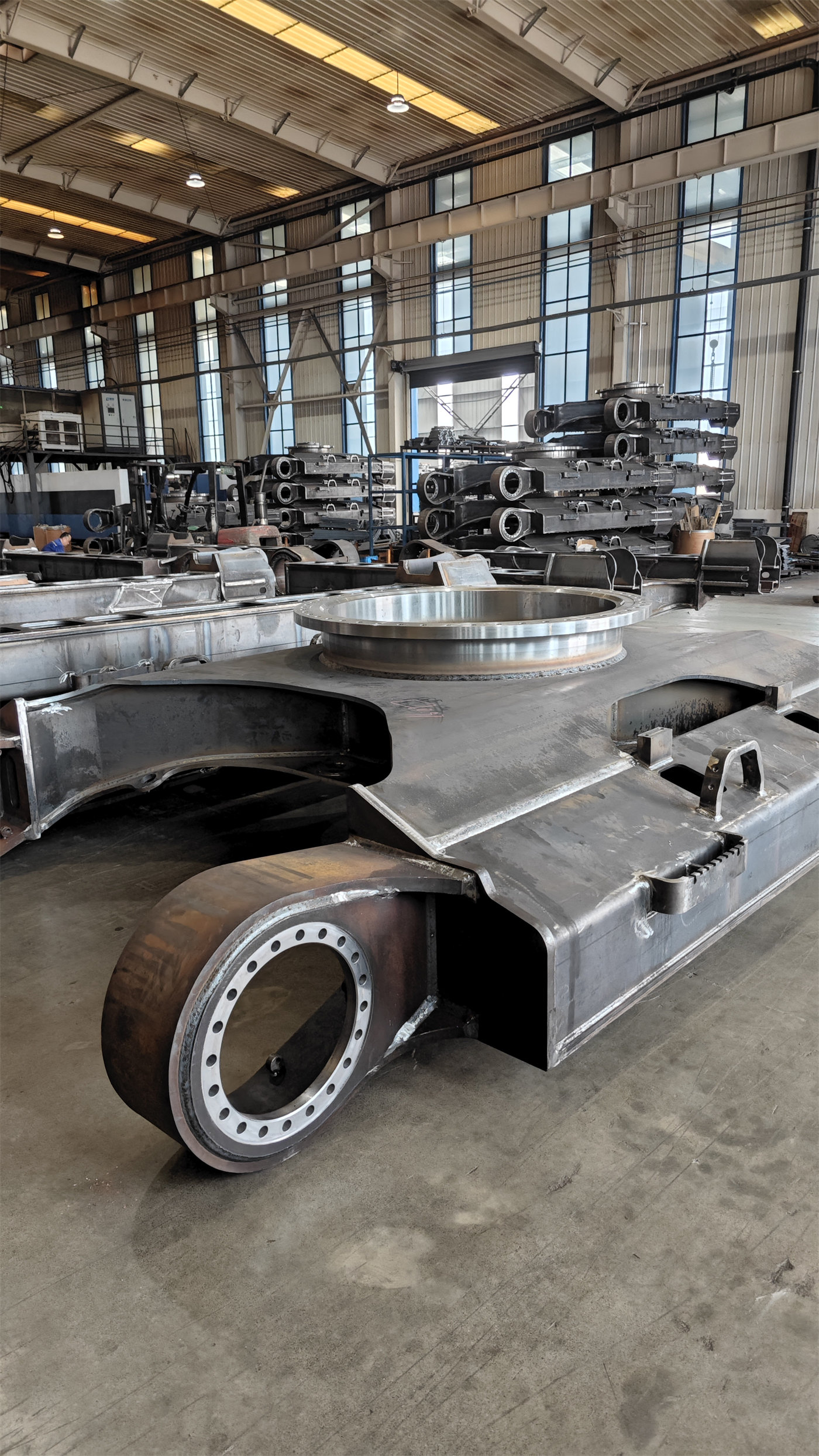
Putting these data back into the work issues of soft, wet backfill areas, they can be understood from three directions:
Working range corresponds to excavation and transfer layout
The maximum digging depth of 6.35 m and maximum digging radius of 9.7 m determine how large an excavation area the equipment can cover from a single positioning point. In wetland sections, reducing the number of machine travel movements and completing excavation over a larger area from positions with relatively better bearing capacity is a practically meaningful way to organize work. The maximum digging height of 10.6 m is related to unloading into higher truck beds or temporary stockpiles. Whether it is sufficient must be checked against the actual transport vehicle type and stockpile height on site.
Ground clearance and wheelbase correspond to passage conditions
The minimum ground clearance of 345 mm and wheelbase of 2900 mm are two basic data points related to the machine's passage capability. If there are local depressions, standing water, or matting layers in the backfill area, ground clearance affects the distance between undercarriage components and the ground, while wheelbase affects the machine's attitude when crossing uneven terrain. The data does not provide ground pressure, so it cannot be used to judge the degree of sinking of this model on a specific soft foundation. This must be confirmed separately based on measured site bearing capacity or a matting plan.
Gradeability corresponds to site access routes
Gradeability of ≥70% is an overall machine indicator provided in the data, but the test conditions corresponding to this value are not explained in the data and cannot be directly equated with actual passage capability on any wet or slippery slope. If site access to the backfill area passes through temporary earth slopes or compacted roads, the slope gradient, slope surface material, and moisture condition must all be verified separately.
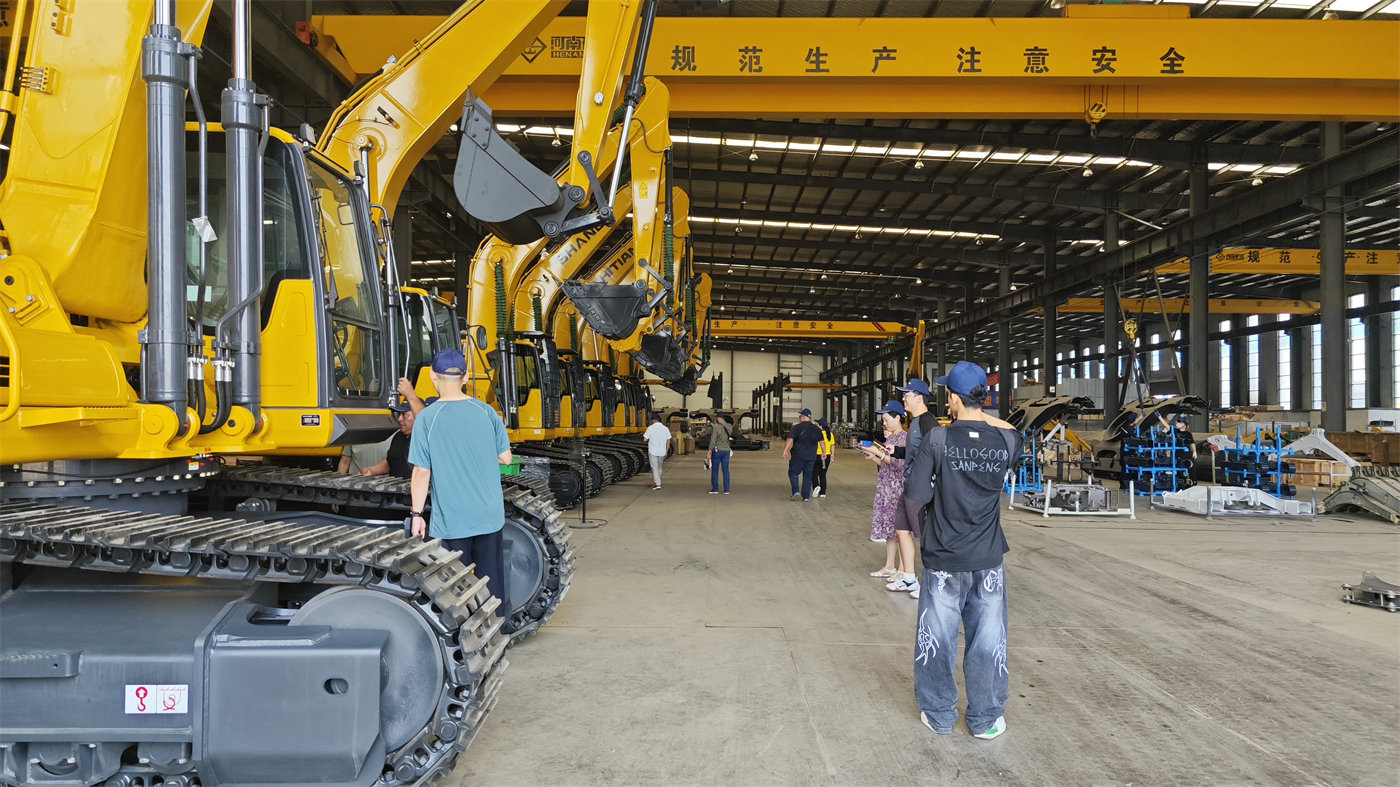
Applicable boundaries of 21-ton-class specifications in backfill area work
A 21-ton-class crawler excavator with a 1.0 m³ bucket is positioned on this site for earthwork and infrastructure construction. In wetland sections of backfill areas, its applicable conditions can be understood roughly as follows:
- In sections where the excavation depth is within the 6-meter class and the transfer radius is within the 9-meter class, the working range data can be used directly for layout judgment.
- For scenarios requiring unloading into dump trucks, the relationship between truck bed height and maximum digging height should first be checked, and then whether there are obstacles along the swing path.
- Sections where bearing capacity has improved after matting, replacement fill, or zoned drainage treatment are closer to the conditions under which this model can operate normally.
- If the entire area has long-term standing water, very low surface bearing capacity, and no treatment plan, this is not a problem that excavator selection alone can solve. The foundation treatment method must first be determined.
It should be noted that the above judgments are based on overall machine parameters and work logic and do not constitute a conclusion about the passage capability or productivity of this model in a specific wetland section.
Checklist recommended before site entry
| Check item | Why it must be checked | Can the data replace it? |
|---|---|---|
| Zoned bearing conditions | Determines travel route and positioning points | No, on-site judgment or testing is required |
| Groundwater level and extent of standing water | Affects work surface stability and drainage arrangements | No |
| Excavation depth and transfer radius | Compare with maximum digging depth and digging radius | Can be compared, but on-site setting out is required for confirmation |
| Transport truck bed height | Compare with maximum digging height | Can be compared, based on the actual vehicle type |
| Site access slope and road surface condition | Compare with gradeability indicator | On-site verification is required |
| Ground pressure | Judge the risk of sinking on soft ground | Not provided on this site; separate confirmation is required |
| Attachment and piping configuration | If supporting work such as breaking is involved | Must be checked against actual attachment data |
The "Can the data replace it?" column in the table emphasizes that overall machine parameters can help narrow the comparison scope but cannot replace site investigation and bearing capacity judgment.
Supporting conditions and items to be confirmed
Work in wetland sections of backfill areas is not only about the excavator itself. Whether transport trucks can enter soft, wet areas, whether steel plates or crushed stone mats are needed, how drainage ditches and sumps should be arranged, and how shifts should coordinate with weather windows will all change the actual usability of the equipment. If a hydraulic breaker is required on site to handle concrete blocks or hard interlayers in the backfill layer, whether the carrier and attachment match must be verified based on data such as operating weight, hydraulic flow and pressure, attachment weight, and connection dimensions. The current data on this site is insufficient to directly determine compatibility and should be listed as an item to be confirmed before purchase.

In addition, the 129/153 kW listed in the SH210-8 data are optional dual-engine configurations. The data does not elaborate on which type of work conditions each configuration is more suitable for. During selection, the specific configuration and corresponding working conditions should be confirmed with the supplier.
Conditions to provide when requesting a quotation
If preparing to request equipment quotations for work in wetland sections of backfill areas, it is recommended to provide the following information together so that the other party can judge the configuration and delivery arrangements:
- Backfill area size, zoned bearing conditions, and extent of standing water;
- Planned excavation depth, transfer radius, and unloading method;
- Transport vehicle type and truck bed height;
- Planned daily work shifts and project duration;
- Site access road slope and road surface condition;
- Whether a hydraulic breaker and other attachments are required;
- Whether matting, drainage, or foundation treatment plans already exist on site.
The more specific these conditions are, the easier it is to judge whether a 21-ton-class crawler excavator falls within the applicable scope, and the easier it is to identify which stages require site treatment before arranging equipment entry.