





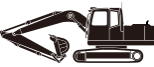













Loading points are not fixed. Moving the crushing station forward, adjusting stockpile locations, or rerouting temporary roads all change the excavator's pick-up and dumping points. Equipment that previously positioned smoothly may, after a location change, be unable to reach the material, require a larger swing angle, or face a dumping height gap. Such changes do not necessarily require replacing the machine, but the equipment configuration does need to be re-verified for compatibility.
This article focuses on configuration decisions after the distance between the loading point and crushing station changes. Using the verified data of the SH220 as a reference, it explains which requirements can be matched with data and which must be determined by site conditions.
First, clarify what has changed after relocation
The loading cycle consists of digging, lifting a full bucket, swinging, aligning with the truck bed to dump, and returning. Relocating the loading point affects three positional relationships:
- The distance between the pick-up point and the equipment's parking position, corresponding to whether the maximum digging radius can reach the stockpile.
- The height difference between the equipment and the haul truck or the crushing station feed opening, corresponding to whether the maximum dumping height can smoothly discharge into the truck bed or hopper.
- The swing angle and the haul truck's turning space, corresponding to whether the machine's tail swing radius conflicts with the site layout.
When the distance increases, operators often compensate by extending the swing or repositioning the machine multiple times, which changes the cycle time. Whether the equipment configuration needs adjustment depends on whether these actions can be completed within a single positioning at the new location.
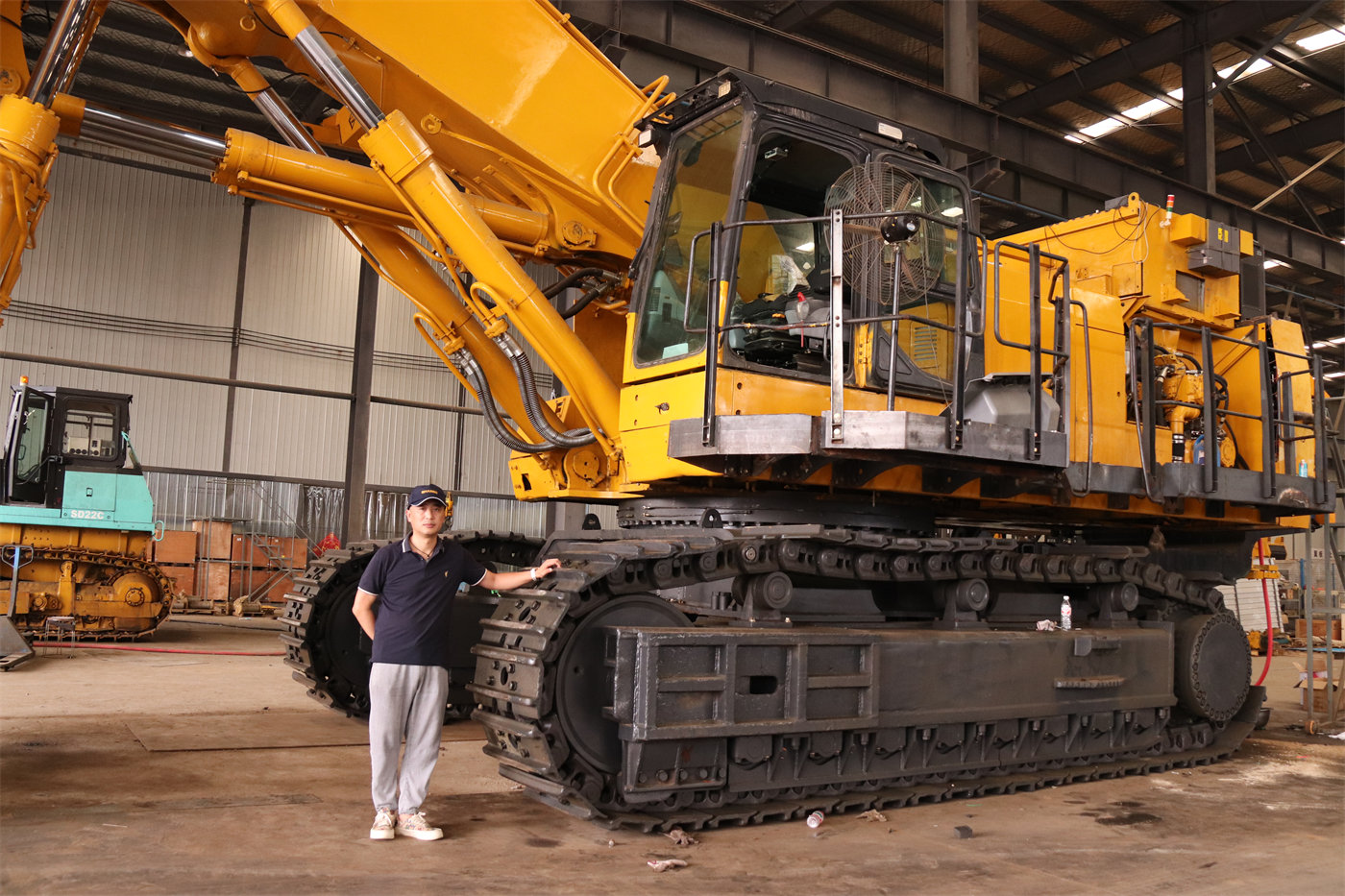
How working range data corresponds to loading positioning
The SH220 has a maximum digging radius of 9860 mm, maximum digging depth of 6490 mm, maximum digging height of 10950 mm, and maximum dumping height of 7190 mm. When the loading point is relocated, these values are mainly used to judge three things.
Digging radius determines how far the equipment can park from the stockpile
If the stockpile is farther from the parking position after relocation, check whether the new distance is still within the maximum digging radius, while also leaving space for lifting a full bucket and swinging. When the working radius approaches the limit, the digging action tends to become dragging, and the time to fill a bucket increases. Such effects are not visible in the parameter table and need to be verified on site based on actual positioning.
Dumping height corresponds to the truck bed and feed opening
The higher the crushing station feed opening or haul truck bed, the higher the dumping height requirement. The maximum dumping height of 7190 mm is an upper reference; actual operation must also consider the effective height of the bucket in the dumping posture, whether material sticks to the bucket, and the truck bed side height. If a taller haul truck or feed platform is used after relocation, this item should be re-measured.
Digging depth corresponds to stockpile drawdown and working face excavation
After the stockpile is drawn down or the working face is excavated, the maximum digging depth of 6490 mm determines whether the equipment can continue to pick up material from the same parking position. Beyond that, the machine must be moved forward or the working face adjusted, which changes the loading rhythm.
The role of bucket capacity and digging force at the new location
The SH220 is matched with a 1.06 m³ bucket, with a maximum bucket digging force of 146 kN and arm digging force of 140 kN. A change in loading point distance does not directly change these two indicators, but it affects the conditions under which they are used.
- When the distance increases and the swing angle becomes larger, the actual cycle time per bucket increases, making the effect of bucket capacity on truck loading time more pronounced.
- If the new stockpile is hard soil or contains blocky rock, whether the digging force can penetrate smoothly determines the fill factor; no matter how large the bucket capacity, failing to fill it will slow down truck cycles.
- The matching relationship between the 1.06 m³ bucket capacity and common haul truck beds should be verified against truck bed dimensions and material looseness. The data does not include corresponding haul truck specifications, so direct inference is not possible.
Supporting conditions for power, hydraulics, and continuous loading
The SH220 uses a Cummins 6BTAA5.9 engine with a rated power of 133 kW and maximum torque of 708 N·m; the hydraulic system uses variable dual piston pumps with a maximum flow of 2×224 L/min, and the travel system pressure is 34.3 MPa. These conditions correspond to whether power and hydraulic response can keep up with combined actions during continuous loading. After the loading point is relocated, if the equipment needs to travel and reposition more frequently, the maximum travel speed of 5.1 km/h and traction force of 214 kN also affect repositioning efficiency, but the actual effect depends on ground levelness and road conditions.
Site and undercarriage conditions need re-verification
Moving the loading point to a new location often comes with changes to temporary roads and working platforms. The SH220 has an operating weight of 21200 kg, track shoe width of 600 mm, ground pressure of 49.8 kPa, and gradeability of 70% (35°). These data can be used for a preliminary judgment of whether the equipment can enter the new site, but cannot replace confirmation of actual ground bearing capacity, ramp width, and turning space. Backfill areas, soft wet ground, or steep temporary roads should be evaluated separately.

| Change after relocation | Data items to verify | Still requires on-site confirmation |
|---|---|---|
| Pick-up point becomes farther | Maximum digging radius 9860 mm | Actual parking distance, full-bucket swing space |
| Feed opening or truck bed becomes higher | Maximum dumping height 7190 mm | Effective height in dumping posture, material sticking to bucket |
| Stockpile drawn down or excavated | Maximum digging depth 6490 mm | Whether machine repositioning is needed after working face lowers |
| Temporary road becomes softer or steeper | Ground pressure 49.8 kPa, gradeability 70% | Actual ground bearing capacity, ramp width and turning radius |
Applicable boundaries and items to be confirmed
After the distance between the loading point and crushing station changes, if the new location is still within the SH220's working range, the haul truck bed height matches the dumping height, and the site bearing capacity meets tracked travel conditions, then the original configuration may not need major changes, with focus placed on positioning and haul truck scheduling. Conversely, if the distance exceeds the digging radius, frequent repositioning is needed to complete loading, or the new site's slope and bearing capacity are clearly unfavorable, the equipment specifications should be re-evaluated rather than relying on operator habits.
The data does not include haul truck specifications, crushing station feed opening dimensions, or specific site layout, so it is not possible to directly judge whether the SH220 is suitable for a specific project. The following items should be verified before purchase: material type and lump size, haul truck bed height and capacity, fixed distance between loading point and stockpile, shift and workload, site ground conditions, and entry/exit routes.
Conditions to provide when requesting a quote
When contacting a supplier, it is recommended to provide: material type and loose density, single-shift workload and truck cycle arrangements, haul truck model and bed dimensions, a sketch of the loading point layout, site ground conditions, whether continuous high-load operation is required, and the configuration of existing equipment. This information helps the supplier judge whether the working range, bucket capacity, and undercarriage conditions correspond, rather than quoting based only on tonnage.