


















The difficulty of heavy-duty mining dozing usually lies not in the distance of a single push, but in the equipment having to face uneven ground, rock impacts, and continuous operation over the long term. Tire-based equipment tends to suffer from insufficient traction on soft or gravelly ground. Track undercarriages, because of their large ground contact area and relatively controllable ground pressure, have become a commonly discussed running gear form under such working conditions. However, a track undercarriage is not a blanket advantage; whether it is suitable still depends on the material, ground, shifts, and supporting conditions.
First Look at Operational Objectives: Push It, Push It Steadily, Withstand It
Heavy-duty mining dozing typically includes overburden pushing, bulk material stockpiling, rough leveling of bench working faces, and hard-ground ripping. Site constraints mainly fall into several categories: limited ground bearing capacity, making equipment prone to sinking; large fluctuations in pushing resistance, imposing requirements on traction and drivetrain impact; long operating hours, subjecting the undercarriage and running gear to repeated impacts; and narrow working faces or many slopes, where steering and braking cannot rely on speed alone.
When these problems are combined, selection is not just about engine power, but about the machine's traction, ground contact, structural strength, and continuous operation capability under heavy loads.
Why Track Undercarriages Are Repeatedly Mentioned in Such Scenarios
Track undercarriages distribute the machine's weight over a larger ground contact area, and their passability on soft and gravelly ground usually receives more attention. Their traction does not depend on friction between tires and the ground, making them more suitable for continuous pushing rather than frequent relocation. With a floating or articulated undercarriage structure, they can also cushion impact loads during travel and operation, reducing instantaneous stress on undercarriage components.
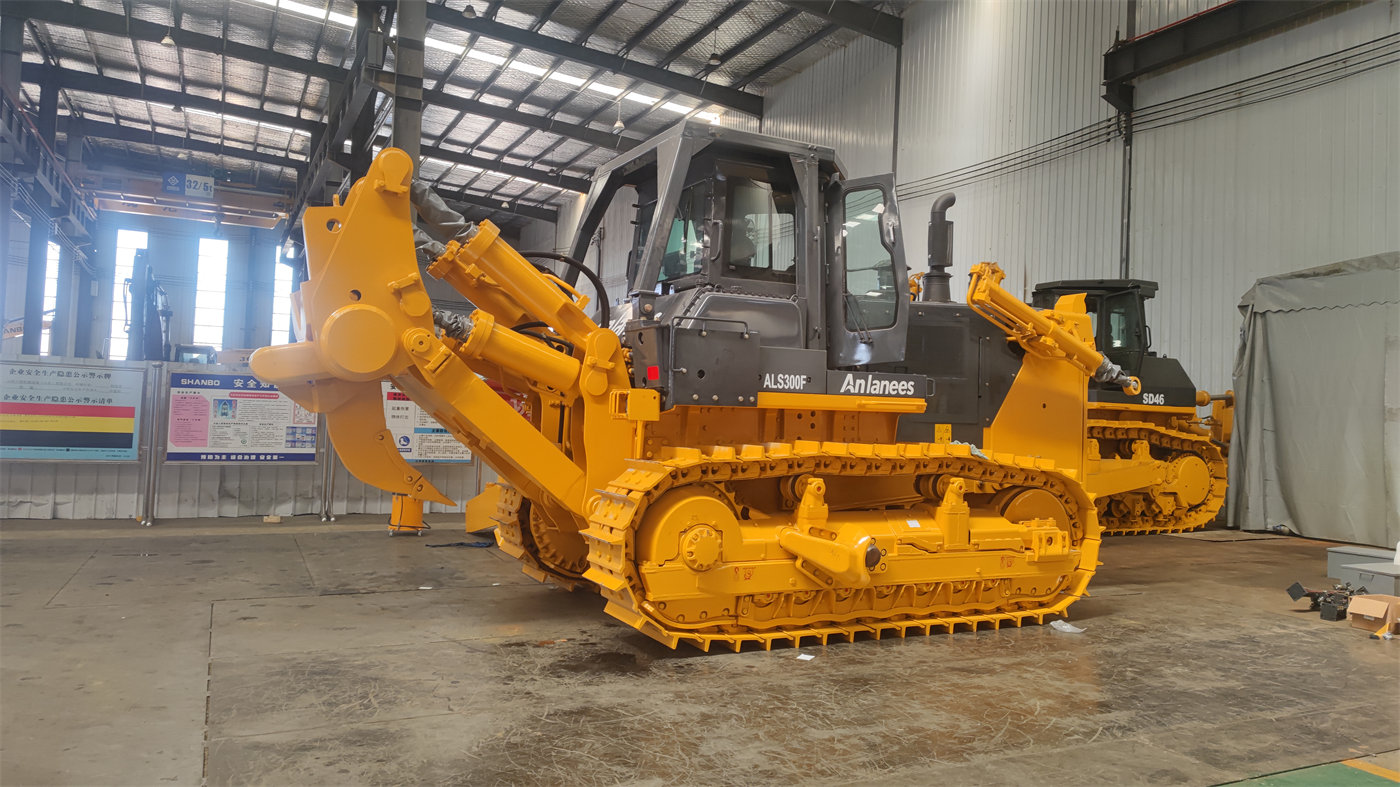
However, track undercarriages also have boundaries: low relocation speed, inconvenience for long-distance transfers, and track chains and track rollers requiring maintenance according to working conditions. If a project mainly involves short-distance frequent relocations, or if the ground is already hardened and has sufficient bearing capacity, the relative advantages of a track undercarriage will diminish. These issues should be calculated together with workload, relocation distance, and ground conditions before selection.
Which Features in the SD46-6 Data Correspond to These Requirements
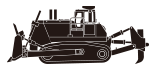
According to the product information on this site, the SD46-6 is a 600 hp large track-type dozer with an operating weight of 54000 kg, ground pressure of 0.123 MPa, gradeability of 30°, and is equipped with a K-type floating undercarriage and an integral articulated undercarriage design. The information states that this structure is used to cushion impact loads during travel and operation, improve traction performance, and extend the service life of core undercarriage components. This directly corresponds to the problems of "uneven ground and repeated impacts" in heavy-duty mining dozing.
In terms of power, this model adopts a Cummins KTA19-C525 turbocharged and intercooled diesel engine, with rated power of 340 kW/600 hp, rated speed of 2000 r/min, and displacement of 18.9 L. The information states that the hydraulic power shift transmission, combined with planetary final drives, can adjust power output according to changes in external load, and has a built-in hydraulic cushioning structure to absorb drivetrain impacts. For heavy-duty dozing, whether the drivetrain can withstand fluctuations in pushing resistance is more meaningful than simply looking at peak power.
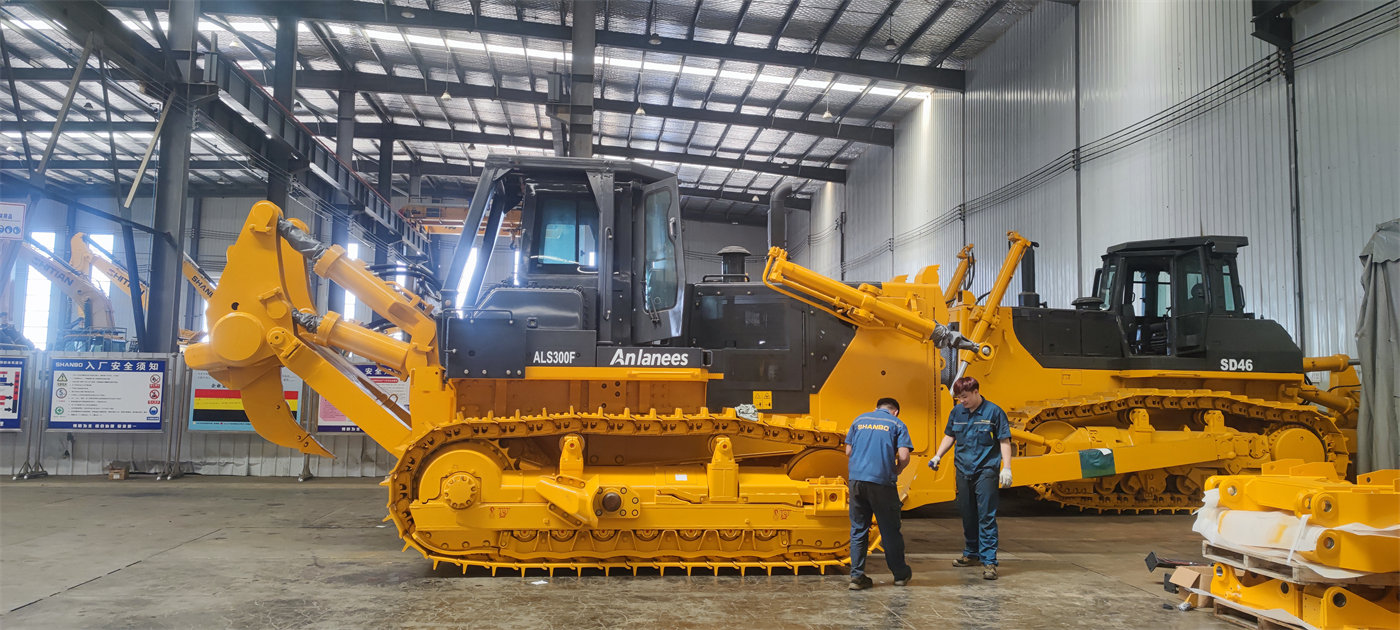
In terms of the working equipment, the SD46-6 is standard-equipped with a large-capacity semi-U blade, with a blade capacity of 16 m³, blade width of 4314 mm, blade height of 1841 mm, maximum cutting depth of 700 mm, and maximum blade tilt of 1000 mm. The large-capacity blade is suitable for large-area earth-rock stockpiling and bulk material handling, but actual dozing efficiency also depends on the material loosening factor, pushing distance, and operating method. The information does not provide corresponding production data, so shift capacity cannot be inferred from it.
The rear attachment is an adjustable-angle single-shank heavy-duty ripper. The information states that it is used for deep ripping, rock breaking, and hard-ground ripping. If the mining working face has hard interlayers or requires pre-ripping, this configuration can be part of the overall machine solution; however, ripping effectiveness is related to geotechnical conditions and operating parameters and must be verified against on-site materials.
Beyond the Undercarriage: Structure, Safety, and Maintenance Conditions
The main frame of the SD46-6 adopts a fully enclosed box-type structure. The information states that it uses high-strength wear-resistant steel and heavy-duty cast steel components to improve impact, bending, and torsion resistance. The machine is standard-equipped with ROPS rollover protection and FOPS falling-object protection structures, and an upgraded integrated ROPS & FOPS protective frame is also available as an option. For mining operations, falling-object and rollover risks are content that must be separately assessed in on-site safety management. Protective structures are only one of the machine conditions and cannot replace on-site safety plans.

In terms of maintenance, the information mentions externally mounted distribution valve groups, a wide-opening engine hood, maintenance-free batteries, and clear maintenance reminder stickers, facilitating daily inspection and troubleshooting. These features affect maintenance convenience; whether they reduce overall maintenance costs still needs to be judged based on local parts supply, service response, and actual failure records.
Boundary Conditions to Verify Before Purchase
- Material type and loosening factor: The blade capacity of 16 m³ is geometric capacity; actual dozing volume is affected by material condition and must be calculated based on on-site materials.
- Ground bearing and slope: Ground pressure of 0.123 MPa and gradeability of 30° are data parameters; actual allowable slopes must also consider road surface adhesion, load distribution, and safety management requirements.
- Relocation distance and frequency: Track undercarriages are suitable for on-site heavy-duty dozing; if frequent long-distance relocation is required, flatbed transport arrangements should be evaluated.
- Ripper operating conditions: Whether hard rock or interlayers require pre-ripping should be confirmed based on rock strength and working face layout.
- Support and after-sales: Spare parts supply for the engine, hydraulic components, and undercarriage parts, service radius, and operator training must be verified with the supplier.
Information Recommended for Inquiry
If preparing to inquire about a heavy-duty mining dozing solution, it is recommended to specify the material type and particle size, working face ground conditions, pushing distance, daily shifts, whether ripping is required, slope and relocation arrangements, as well as existing supporting equipment and maintenance conditions. This information helps determine whether a 600 hp track-type dozer such as the SD46-6 falls within the applicable scope, and also enables the supplier to provide more specific explanations regarding blade configuration, protective options, and after-sales arrangements. Conclusions on production, fuel consumption, and service life not covered by the information should be judged after verification under actual working conditions.