


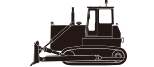
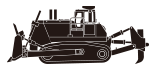















When purchasing a bulldozer, horsepower is often the first item compared: machines with similar horsepower ratings and close prices may look much the same. But once the equipment is actually put on a job site, what often determines whether it works well is not the horsepower figure, but whether the machine is configured for "dozing" or for "rough grading." Dozing loose materials and clearing hard, compacted sites are both called bulldozing, but they have different requirements for blade type, blade wear resistance, overall weight distribution, and ripper configuration. This article breaks down these two types of needs by work objective, and then, based on publicly available information about the SD22 series 235-horsepower bulldozers on this site, explains which actual conditions the configuration differences correspond to.
First Distinguish: Dozing and Grading Are Not the Same Thing
The core of dozing is moving material from one place to another, such as short-distance transfer of loose coal, sand and gravel, or earth. This type of operation is concerned with the volume moved per pass, the ability to retain material in front of the blade, and whether travel and transmission are stable during continuous operation. The blade must be able to "hold" the material, so blade shape and capacity are more important than simple penetration capability.
The core of rough grading is leveling uneven ground, compacting it, or clearing a hard surface layer. This type of operation is more concerned with whether the blade can penetrate, whether the blade is wear-resistant, and whether the undercarriage can withstand rock impacts. When weathered rock or hard soil layers are encountered, a ripper is also needed to loosen the soil; relying solely on the blade to push through is not economical.
Discussing "whether there is enough horsepower" by mixing these two objectives together easily overlooks the blade and undercarriage configuration items that truly affect work results.
Different Configuration Directions Under the Same Power Platform
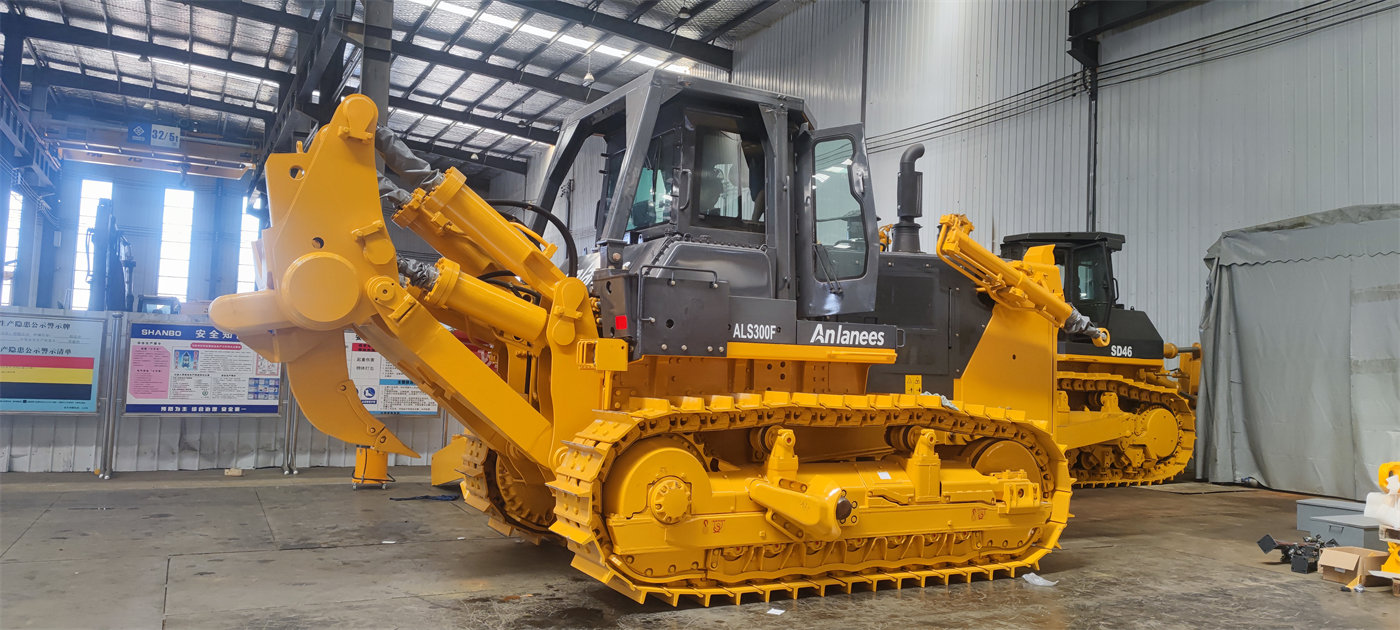
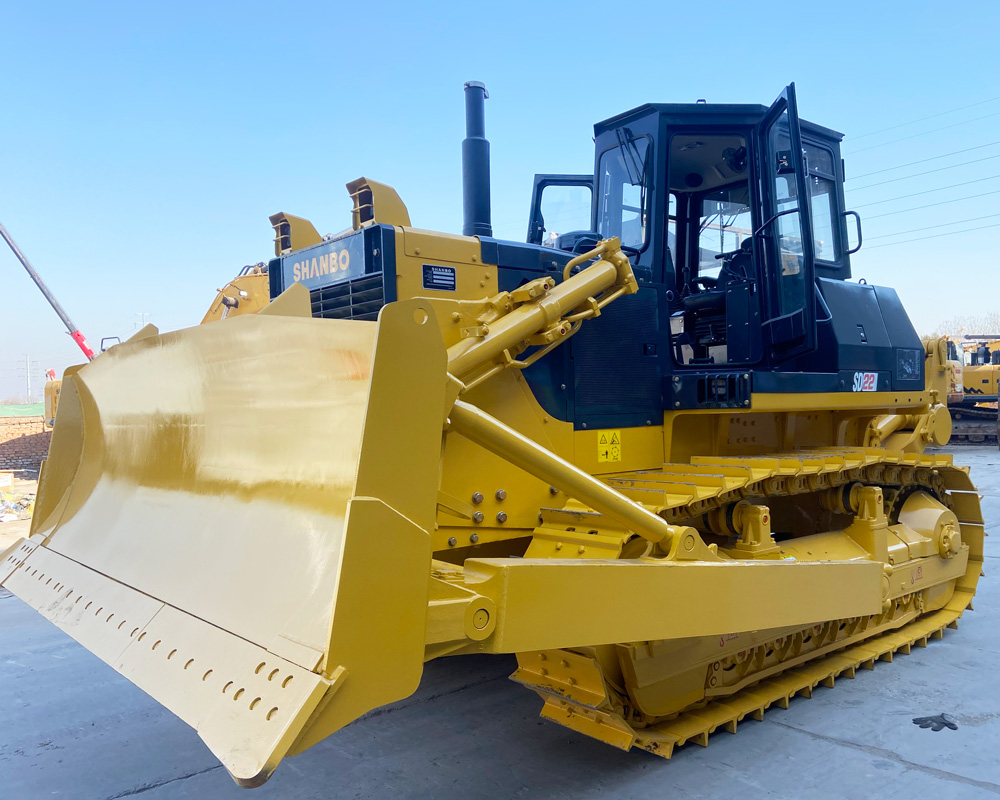
The SD22 series bulldozers on this site have a rated power of 175 kW (235 HP), engine models WP12/QSNT-C235, operating weight between 23,450 kg and 24,000 kg, ground contact length of 2,730 mm, and ground clearance of 405 mm. Under this power platform, the standard, coal, and rock versions correspond to different work objectives, and the differences are mainly reflected in the blade and work equipment rather than the engine.
| Version | Blade Type | Blade Width/Height (mm) | Corresponding Work Direction |
|---|---|---|---|
| SD22 Standard Version | Straight blade/angle blade/U blade/semi-U blade | 3725/1315; 4635/1055; 3800/1343; 3725/1374 | General road engineering, earth and rock excavation, ordinary bulk material handling |
| SD22C Coal Version | Coal blade | 4200/1350 | Coal yard stockpiling, bulk material transfer |
| SD22W Rock Version | Rock straight blade/rock angle blade/rock U blade/rock semi-U blade | 3725/1315; 4635/1055; 3800/1343; 3725/1374 | Quarries, mountain road reconstruction, rock terrain excavation |
As can be seen from the table, the coal version's blade width and height differ from those of the standard version, and its ground pressure is 57.5 kPa, lower than the standard version's 66 kPa, which is related to the need for passage on soft bulk material sites such as coal yards. The rock version emphasizes thickened wear-resistant work equipment and reinforced push arms, targeting impact wear in crushed stone and weathered rock sites. These differences show that when selecting a model, determining the work object first is more meaningful than comparing horsepower first.
What Conditions the Standard Version Suits, and Where Its Boundaries Are
The SD22 standard version offers multiple choices including straight blade, angle blade, U blade, and semi-U blade, with application scenarios including general road engineering, auxiliary mining construction, earth and rock excavation, and ordinary bulk material handling. If the work content is mainly earthmoving dozing and rough site grading, and the material does not contain large amounts of large rocks, the standard version is the starting point for configuration selection.
But the standard version does not mean it can do everything. If the site is mainly weathered rock or crushed stone, or if loose coal needs to be dozed in a coal yard for a long time, the standard version's blade type and wear-resistant configuration may not correspond to these working conditions. The separate coal and rock versions in the information itself indicate that different materials have different requirements for work equipment. Whether the standard version is suitable for a specific site still depends on material particle size, ground bearing capacity, and work shifts, and these conditions should be explained to the manufacturer during inquiry.
Supporting Conditions Beyond the Blade
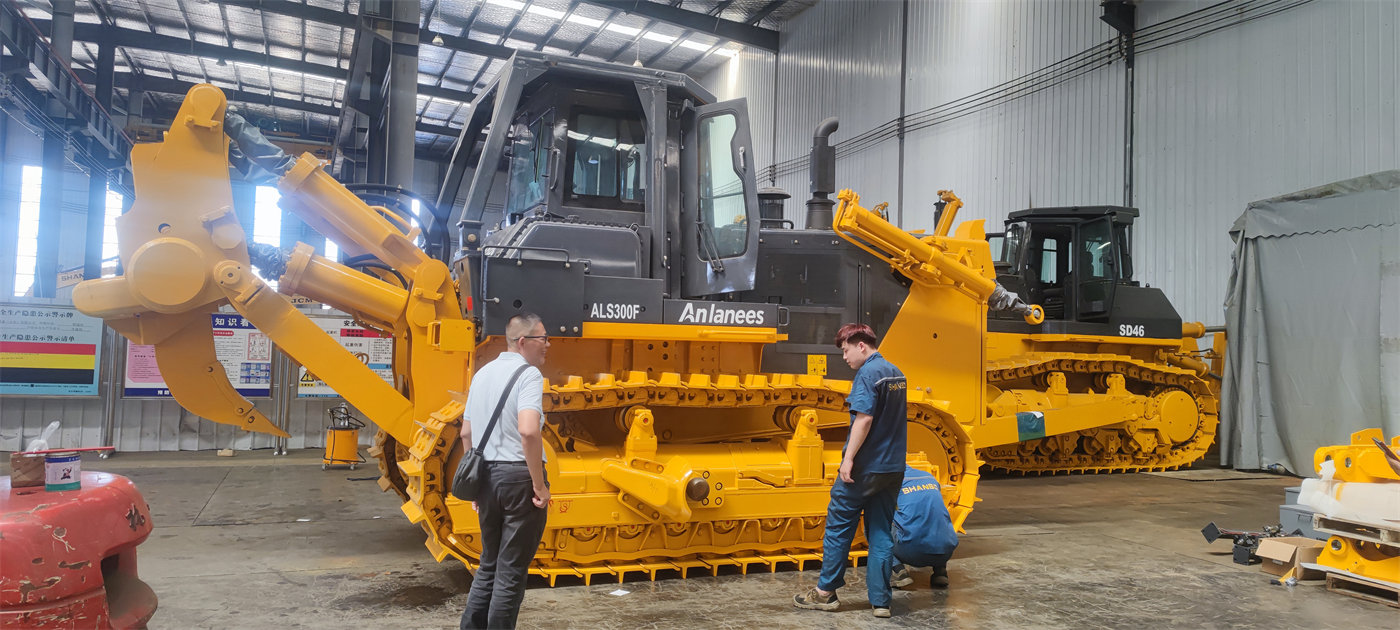
Bulldozer selection is not only about determining the blade. The SD22 series can be optionally equipped with a ripper, single-tooth or three-tooth, with loosening depth of 695 mm for single-tooth and 666 mm for three-tooth, and ripper lift height of 515 mm for single-tooth and 555 mm for three-tooth. If the site has hard soil layers or requires loosening before dozing, the ripper is a supporting item, but it changes the overall machine weight and operation method, so whether to include it in the configuration must be confirmed before purchase.
Regarding the undercarriage, the SD22 series offers track shoe widths of 560 mm, 610 mm, and 660 mm, with a track gauge of 2,000 mm. Track shoe width is directly related to ground pressure, and soft ground and hard ground have different width requirements. The information provides ground pressure values for different versions but does not cover all soil conditions, so during actual selection the site ground should be described clearly and the manufacturer should confirm the track shoe configuration.
In addition, the SD22 series has a fuel tank capacity of 450 L, hydraulic tank capacity of 110 L, maximum forward speed of 11.2 km/h, and maximum reverse speed of 13.2 km/h. These data can help judge refueling arrangements for relocation and continuous operation, but they cannot directly infer fuel consumption or shift efficiency at a specific site, which still needs to be calculated based on actual work volume.
Checklist to Verify Before Purchase
- Work objective: mainly material dozing or mainly rough site grading, and what the proportion of each is.
- Material conditions: loose earth, loose coal, sand and gravel, or crushed stone and weathered rock, and approximately what the maximum particle size is.
- Ground conditions: soft soil, hard ground, or crushed stone site, and whether track shoe width and ground pressure need to be considered.
- Attachment needs: whether a ripper is needed, single-tooth or three-tooth, and the required working depth.
- Shifts and relocation: daily working hours and relocation distance, based on which refueling and transportation arrangements can be judged.
- Safety and protection: whether FOPS/ROPS protective structures are needed, and lighting conditions for night work.
Matters Still Requiring Confirmation with the Manufacturer
The parameters cited in this article come from publicly available information about the SD22 series on this site, but the information does not cover all combinations of working conditions. For example, actual dozing efficiency under specific materials, the performance of different track shoe widths under specific ground conditions, and the impact of combined ripper and blade configuration on the machine's center of gravity all need to be confirmed with the manufacturer based on site conditions during the inquiry stage. Regarding electric bulldozers, this site currently has no independent information on electric models. If an electric solution is considered, power supply, charging facilities, and shift refueling conditions must be verified separately, and the parameters of fuel models cannot be used directly as substitutes.
Information Recommended to Provide During Inquiry
To enable the manufacturer to give configuration recommendations closer to actual needs, the following can be provided during inquiry: material type and particle size, site ground description, planned daily work volume or working hours, whether a ripper or other attachments are needed, relocation distance and transportation method, and requirements for cab protection and lighting. This information is more helpful than simply asking "how much does one machine cost" for judging whether the configuration is suitable.