















For contractors engaged in earthmoving and rough site grading, a practical problem often arises on soft ground, wetlands, backfill areas, or sites with high moisture content: the machine has enough power, but the tracks sink, travel resistance is high, and dozing efficiency drops. At this point, looking only at horsepower or blade width makes it hard to explain where the problem lies. Ground pressure is the value used to describe "how much machine weight is distributed over each unit of ground contact area," expressed in kPa. It helps determine whether equipment is likely to sink under given ground conditions, but it cannot determine selection on its own.
First Clarify the Work Objective and Ground Constraints
Under such working conditions, bulldozers usually handle two types of tasks: first, dozing loose earth, backfill material, or bulk material in stockyards; second, rough grading of the site. The two tasks have different requirements for blade type, but both are subject to one common constraint—whether the ground can withstand the ground pressure from repeated travel and dozing. If the ground is soft, track sinking will change both blade angle and dozing resistance, and work continuity will be affected accordingly.
Therefore, the assessment sequence can be: first confirm the site type and ground bearing conditions, then confirm whether the work is mainly dozing or rough grading, and finally compare machine versions and configurations. In this sequence, ground pressure is a second-level verification item used to narrow down the version direction, not to replace site investigation.
Ground Pressure Data for SD16 Series Versions
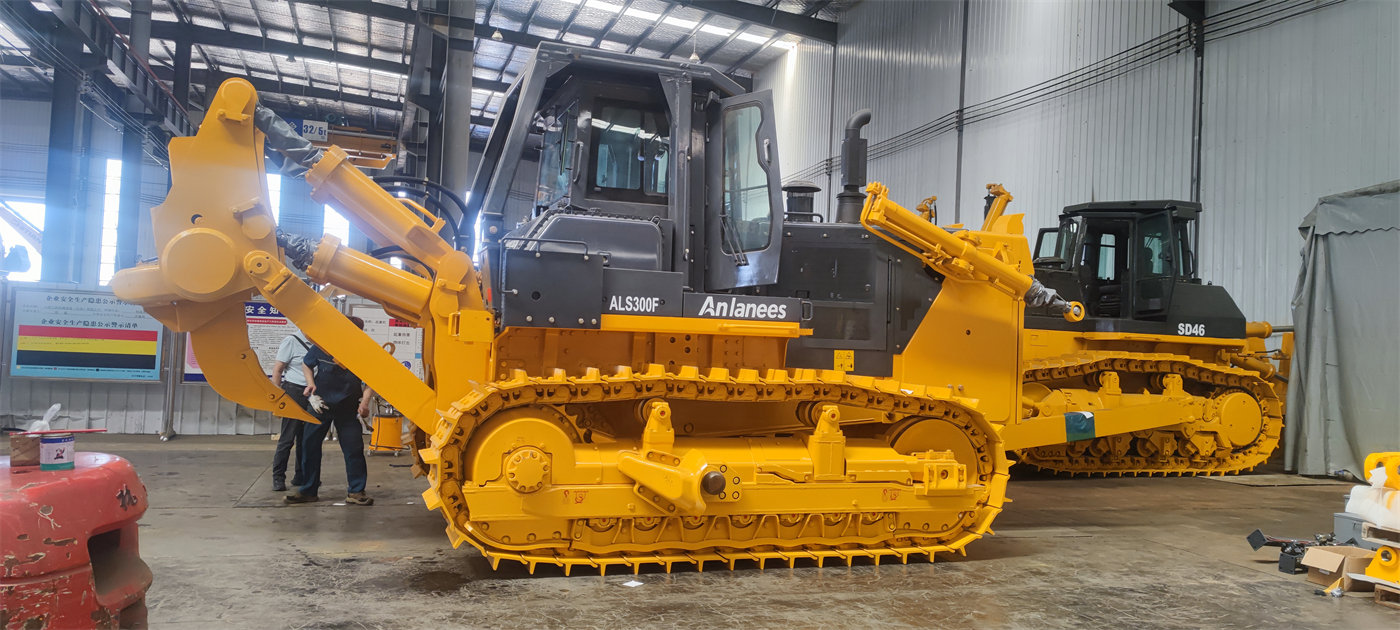
The SD16 on this site is a 178 hp crawler bulldozer equipped with a Weichai WP10 engine, rated power 131 kW, and available in standard, coal, extended, super-wetland, sanitation, desert, and forestry logging versions. In verified data, the standard version has a ground pressure of 58 kPa, the coal version 55 kPa, and the super-wetland version 22 kPa; the ground pressure field for the extended version is not marked with a value in the data. The differences in ground pressure among versions mainly come from different combinations of overall machine mass and undercarriage parameters such as track shoe width and ground contact length.
| Version | Overall Machine Mass (kg) | Track Shoe Width (mm) | Ground Pressure (kPa) |
|---|---|---|---|
| SD16 Standard Version | 17000 | 510 | 58 |
| SD16C Coal Version | 17500 | 510 | 55 |
| SD16L Super-Wetland Version | 16900 | 960 | 22 |
As can be seen from the table, the overall machine mass of the super-wetland version is close to that of the standard version, but the track shoe width increases from 510 mm to 960 mm, and ground pressure drops to 22 kPa. This shows that when overall machine mass changes little, track shoe width is one of the main variables affecting ground pressure. The coal version has a slightly higher overall machine mass than the standard version, but its ground pressure is slightly lower instead, indicating that its undercarriage configuration has also been adjusted accordingly.
What These Values Correspond to in Site Assessment
Conventional Hard and Compact Sites
On conventional earthwork sites such as highways, railways, mines, and airports, ground bearing conditions are relatively clear, and the 58 kPa ground pressure of the standard version can serve as a comparison baseline. At this point, selection focuses more on blade type, ripper configuration, and work shifts; ground pressure is not the main limiting factor.
Soft Soil, Wetlands, and River Training
The data clearly positions the SD16L super-wetland version for swamp and soft wetland conditions, using an ultra-low ground pressure undercarriage system and boat-shaped ribbed wide track shoes. The 22 kPa ground pressure value and 960 mm track shoe width provide a reference basis for assessing trafficability on such sites. However, it should be noted that 22 kPa is a rated value in product data; actual sinking depth is also affected by soil moisture content, vegetation cover, working depth, and the number of repeated passes, so one cannot conclude from a single value that "the machine will not get stuck."
Bulk Material Scenarios Such as Coal and Port Stockyards
The SD16C coal version is intended for bulk material handling and construction work at power plants and port stockyards, equipped with standard wide tracks and an extra-large-capacity coal blade, with a ground pressure of 55 kPa. The ground in such scenarios is mostly hardened or compacted stockyard surface, so the reference significance of ground pressure differs from that in wetlands; more attention should be paid to matching blade capacity with material bulk density.
Extended Version: Ground Pressure Not Marked in the Data
The SD16B extended version has an overall machine mass of 17100 kg, track shoe width of 510 mm, and ground contact length of 2635 mm, but the ground pressure field in the data is blank. This means that existing data cannot be used to determine whether its ground pressure is the same as or close to that of the standard version. If the work site is sensitive to sinking, the actual ground pressure value for this version should be confirmed with the manufacturer before comparison; it should not be estimated on one's own.
Parameters to Consider Alongside Ground Pressure
- Ground contact length: The SD16 standard, coal, extended, and super-wetland versions all have a ground contact length of 2635 mm. Ground contact length and track shoe width together determine ground contact area.
- Ground clearance: All versions have 400 mm, affecting trafficability and undercarriage protection space.
- Minimum turning radius: All versions have 4466 mm, affecting turning arrangements in narrow sites.
- Blade configuration: The standard version can be equipped with an angle blade, straight blade, or U-blade; the super-wetland version uses a straight blade; the coal version uses a coal blade. Differences in blade width and height directly affect the amount moved per pass.
- Ripper: The standard and extended versions are equipped with a three-shank ripper for breaking clay and frozen soil; the data for the super-wetland version does not list a ripper configuration.
These parameters need to be considered together with ground pressure. For example, on the same soft ground, widening the track shoes lowers ground pressure but may also change steering resistance and travel resistance; increasing blade width raises the amount moved per pass while also increasing dozing resistance. When selecting a model, it is not advisable to focus on only one value.

Application Boundaries and Items to Be Confirmed
Ground pressure values come from product rating data and usually correspond to specific configurations and specific ground conditions. In actual construction, the following items should be confirmed with the manufacturer or technical personnel before purchase:
- Whether there is survey or test data on the soil type, moisture content, and bearing capacity of the target site;
- Whether the actual delivery configuration of the selected version matches the rated configuration in the data, especially track shoe width and overall machine mass;
- The ground pressure value for the extended version is missing and needs to be confirmed;
- The actual trafficability performance of the super-wetland version on extremely soft ground needs to be evaluated in light of specific site conditions; the data does not provide field test data;
- Whether the configuration of attachments such as blades and rippers affects the overall machine mass and the rated ground pressure value.
If site conditions fall between conventional earthwork and super-wetland, the two endpoint values of 58 kPa and 22 kPa alone are not enough to make a judgment. Soil survey data, working depth, shift arrangements, and travel routes should be provided to the manufacturer for verification assistance.
Information to Provide When Requesting a Quotation
Ground pressure is only one input for selection assessment. To enable the manufacturer to give targeted version recommendations, it is advisable to provide the following when requesting a quotation: type and condition of the work material (earth, bulk material, frozen soil, wetland silt, etc.), site ground conditions and bearing situation, single-shift working hours and dozing distance, blade and ripper configuration requirements, whether lighting is needed for night work, and whether there are special protection or emission requirements on site. Once the information is complete, comparing the ground pressure, overall machine mass, and undercarriage parameters of each version will lead to a more reliable judgment.