




















When selecting equipment, earthwork contractors tend to equate "heavy-duty" directly with "large-spec." Especially in conditions such as mine stripping and earthwork for large infrastructure projects, seeing descriptions of high loads and continuous truck loading leads to a tendency to select by maximum tonnage. But equipment specification is not the only variable: site dimensions, material state, haul truck matching, access roads and shift arrangements all affect whether a large machine can truly perform. Using public data on the SH520 crawler excavator as an example, this article explains under what conditions large-spec equipment is justified and what still needs to be verified before purchase.
First distinguish: what is "heavy-duty" and what merely "looks heavy"
"Heavy-duty" means different things on different sites. Continuous bucket loading in open-pit mining, earthwork in complex geology, and high-load truck loading are sustained tests of equipment structure, hydraulic response and bucket wear resistance. In contrast, borrow-pit excavation in backfill areas, short-haul loading within a site, and small-scale hard-soil excavation may also make a machine seem strained, but the limiting factor is often not insufficient tonnage but swing space, material looseness, or the turnaround rhythm of haul trucks.
Mixing these two situations leads to two kinds of misjudgment: a small site selects a large machine, causing access difficulties, restricted swing and higher shift costs; while a genuinely high-load mining site selects by general configuration, leaving insufficient structural and hydraulic margin under continuous operation. Before selection, clarify: per-shift workload, material type, loading point layout and haul truck specifications—rather than looking first at maximum tonnage.
Which work needs the SH520's data can correspond to
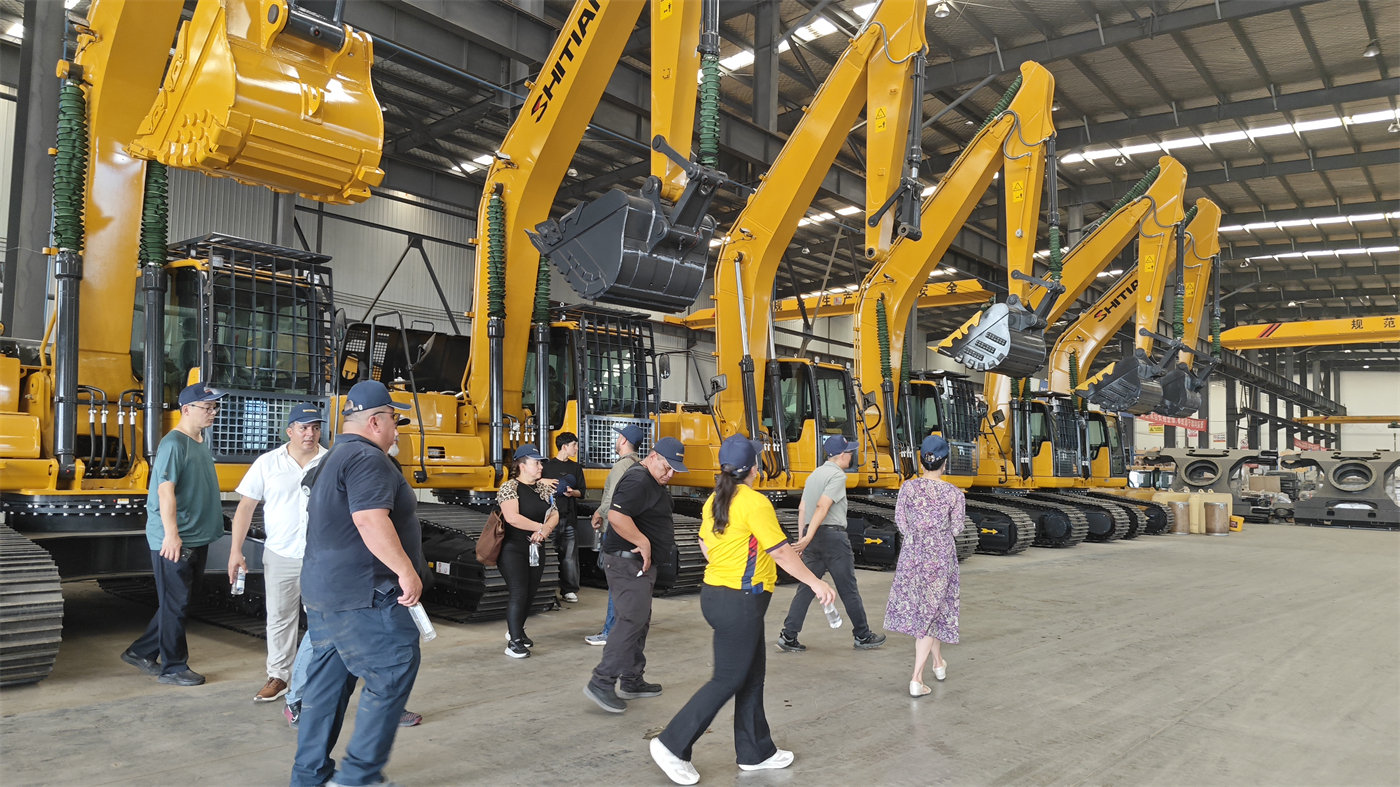
The SH520 is a 50-tonne-class crawler excavator, with operating weight 50500 kg, a Cummins QSM11 engine rated at 280 kW, bucket capacity 2.5–3.5 m³, bucket digging force 292 kN, arm digging force 251 kN, and a Linde load-sensing hydraulic system. These data correspond to high-capacity bucket loading and continuous heavy-duty operation scenarios.
- High-load truck loading and pit loading: The 2.5–3.5 m³ bucket capacity and 292 kN bucket digging force point to a need to move a larger volume per cycle. If actual work is mainly earthwork truck loading, this bucket capacity must be checked together with the haul truck body volume and dumping height.
- Complex geology and hard materials: The 292 kN bucket digging force and 251 kN arm digging force provide a substantial cutting capability basis, but whether it can handle specific rock and soil conditions also depends on whether the material has been loosened by blasting and whether it contains large boulders. The data do not provide conclusions on applicability to various strata; before purchase, verify with on-site material samples and test data.
- Structural durability under continuous operation: The data mention a reinforced central load-bearing structure, an X-shaped undercarriage frame section with 35% higher strength than conventional designs, and wear-resistant weld plates in key wear areas of the heavy-duty bucket. These descriptions correspond to structural durability needs under long-term high-load cycles, but specific service life or maintenance intervals cannot be inferred from them.
- Hydraulic response and multi-function coordination: The Linde load-sensing system, the Toshiba main valve's straight-travel circuit and boom/swing priority logic correspond to the need for smooth continuous swing, dumping and return movements during truck loading. Actual results still need to be judged in combination with operator habits and haul truck scheduling.
Conditions under which large-spec equipment is instead unsuitable
The SH520 has an overall width of 3490 mm, a tail swing radius of 4110 mm, and an overall length of 12545 mm. These dimensions mean it has clear requirements for loading platform width, swing clearance and access roads. If the loading point is squeezed into a narrow bench or between existing structures, insufficient swing radius will directly limit the working face; if access road width or load-bearing conditions are inadequate, transport and relocation will also become additional costs.
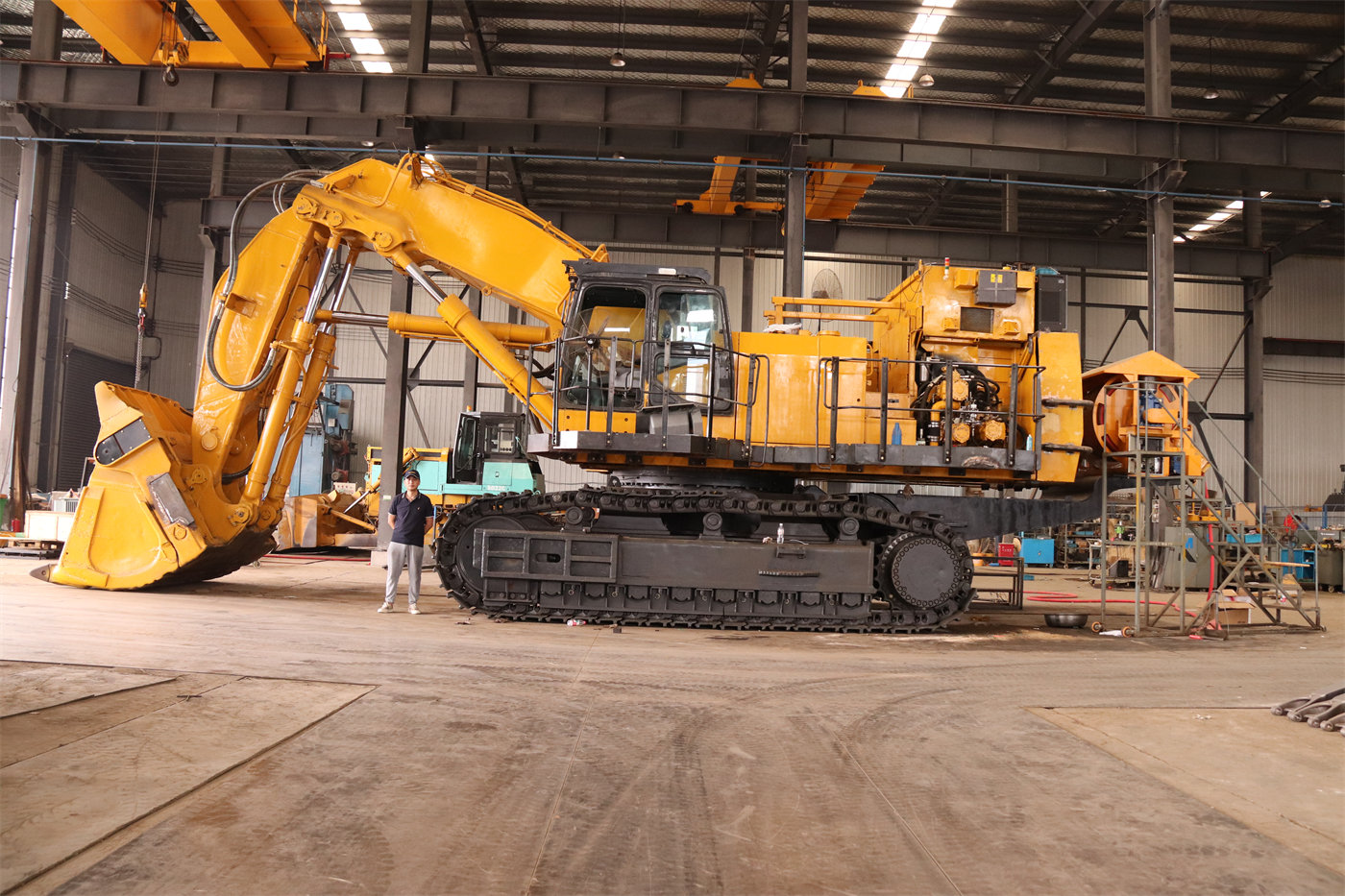
Another boundary to verify is ground bearing. The data give a ground pressure of 84 kPa, which must be compared with actual site ground conditions. On soft foundations, backfill areas or sites with high moisture content, even if power and bucket capacity meet loading needs, unstable positioning may affect continuous operation. The data do not provide conclusions on the suitability of this model on various soft foundations; before purchase, judge based on geotechnical investigation or on-site bearing tests.
In addition, if the per-shift earthwork volume is limited and haul truck body volumes are small, a 3.5 m³-class bucket matched with small trucks will cause waiting for the bucket, spillage or frequent reversing. Truck-loading coordination is not determined by excavator bucket capacity alone, but jointly by bucket capacity, body volume, dumping height and vehicle turnaround. The maximum dumping height of 7814 mm in the data also needs to be compared with the actual sideboard height of the haul trucks.

Checklist to verify item by item before purchase
- Workload and shifts: Planned loading volume per shift, effective working hours, and whether multiple shifts run continuously.
- Material state: Earthwork, loose ore or blasted rock; maximum lump size, moisture content, and whether a breaker hammer is needed.
- Loading point layout: Platform width, swing clearance, and the distance between the excavator's position and the haul truck's stopping position.
- Haul truck matching: Body volume, sideboard height and number of vehicles in rotation, compared with the 2.5–3.5 m³ bucket capacity and 7814 mm maximum dumping height.
- Ground conditions: Matching of the 84 kPa ground pressure with site bearing capacity, and whether soft-foundation sections need replacement fill or matting.
- Access and relocation: Road width, bridge load capacity and transport method, corresponding to the overall width of 3490 mm and overall length of 12545 mm.
- Matching attachments: If a hydraulic breaker is needed, verify compatibility separately based on operating weight, hydraulic flow and pressure, attachment weight and connection dimensions; do not assume direct fit.
Matters still to be confirmed with the manufacturer
The available data do not provide the SH520's productivity in specific strata, fuel consumption per unit volume, working efficiency with different bucket configurations, or a compatibility list with various brands of haul trucks or hydraulic breakers. This content must be obtained from the manufacturer as configuration recommendations and interface data for project conditions. If the project involves electric equipment or a comparison of diesel/electric options, this article does not include electric bulldozer models and cannot be used to recommend a power option.
Site information to provide when requesting a quotation
To enable the manufacturer to give a well-founded configuration recommendation, provide at the inquiry stage: material type and maximum lump size, per-shift and peak workload, loading point plan dimensions and swing clearance, haul truck body volume and sideboard height, site ground bearing conditions, access road conditions, whether a hydraulic breaker is needed and the nature of the material to be broken, and work shifts and continuous operating duration. This information is more helpful than simply asking "what is the largest bucket it can take" for judging whether the equipment specification matches.