




















Equipment configuration for quarry stripping operations often faces a timing conflict: stripping volume is limited in the initial production stage, so if machines are selected according to final scale, early-stage shift utilization will be low; if small specifications are deployed first and machines are replaced once output rises, this involves site entry, relocation, and personnel re-familiarization. Rather than choosing between "getting it right in one step" and "incremental additions," it is better to first clarify the conditions for advancing configuration—which parameters change with scale, and which boundary conditions must be verified from the outset.
1. First clarify which operating conditions are affected by "scale changes"
Quarry stripping is not a single action; it typically includes overburden removal, muckpile loading, haul truck loading, and temporary road maintenance. As scale expands, the most direct changes are loading volume per unit time and continuous equipment operating hours, which in turn affect bucket capacity, cycle rhythm, undercarriage load-bearing, and relocation frequency. Therefore, "advancing configuration" is not simply increasing tonnage, but checking whether these conditions change in sync.
- Material conditions: overburden soil, weathered rock, and blasted hard rock have different requirements for digging force.
- Truck loading coordination: the height and volume of the haul truck bed determine whether the dumping height and the number of bucket loads per truck match.
- Site bearing capacity: ground conditions at the quarry bench, temporary roads, and loading points affect the ground pressure and stability of crawler equipment.
- Relocation frequency: the rate of bench advancement determines how long equipment stays in the same mining area and whether frequent self-propelled travel is needed.
If any one of the above conditions remains under high load for an extended period, it is worth considering a larger equipment specification during the configuration stage; conversely, if loading points are scattered and single-point workload is limited, large equipment may not be able to leverage its advantages.
2. Which large-scale stripping needs do the SH600 specifications correspond to
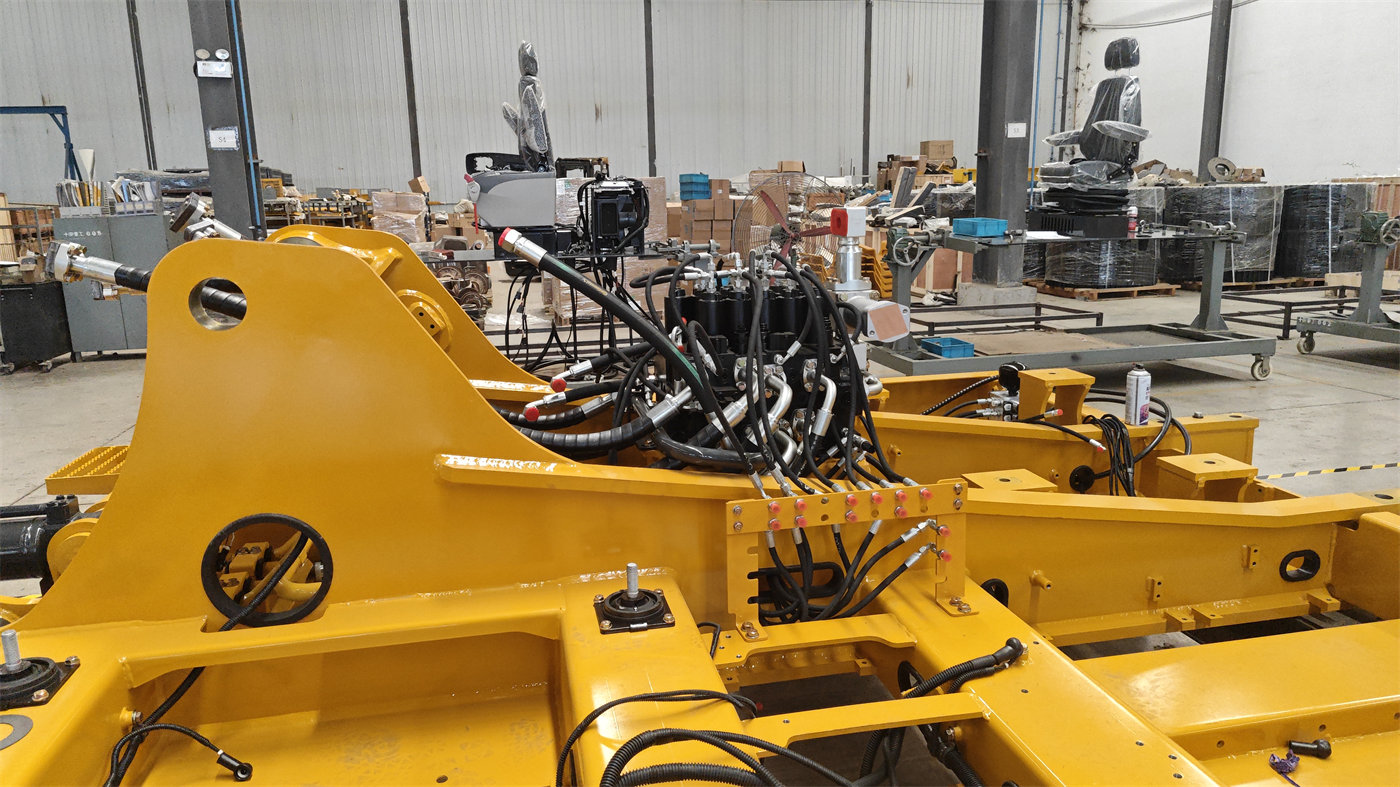
The SH600 on this site is a 55–60 ton class crawler excavator with an operating weight of 55900 kg, equipped with a Cummins QSM11-C400 engine and a rated power of 298 kW. These figures do not directly equate to production efficiency, but they can be used to compare against the configuration requirements for the "continuous heavy-duty loading" scenario in quarry stripping.
Bucket capacity and material throughput
The SH600 has a bucket capacity of 2.5–3.5 m³ and a bucket width of 1968 mm. For muckpile loading and haul truck loading, the bucket capacity range leaves room for configuration choices: when material is loose and truck bed volume is large, a larger bucket can be selected to reduce the number of loading cycles; when material is harder or impacts the bucket more heavily, bucket selection should be verified together with digging force. The data lists a bucket digging force of 328 kN and a stick digging force of 271 kN, which can serve as a reference for judging penetration capability in hard materials, but does not mean the same performance can be achieved under any rock conditions; the specific result still depends on blast fragmentation and material hardness.
Hydraulic flow and cycle rhythm
The SH600 hydraulic system has a maximum operating flow of 874 L/min and adopts negative flow control. The flow figure corresponds to action response and oil supply capability for combined operations; in continuous loading, it affects whether cycle transitions are smooth rather than being a simple speed indicator. If haul truck turnover is intensive at the loading point, the equipment needs to frequently complete swing, dumping, and return motions, and the degree of matching in this link is worth attention during selection.
Undercarriage and site adaptability
The SH600 has a traction force of 349 kN, gradeability of 70% (35°), ground pressure of 85.3 kPa, and track shoe width of 600 mm. Quarry benches and temporary roads often have slopes and crushed stone; traction force and gradeability data can be used to judge whether the equipment can relocate on its own; ground pressure is related to platform bearing conditions, and if the loading point is on backfill or a soft foundation, ground treatment measures need to be verified separately. The data also gives a minimum ground clearance of 1382 mm and a counterweight ground clearance of 1426 mm, which can serve as references for judging passability.
Working range and dumping positioning
Maximum digging radius 11406 mm, maximum dumping height 7150 mm, maximum digging depth 7114 mm. In loading operations, whether the dumping height matches the haul truck sideboard height directly affects whether additional raising or position adjustment is needed. These values should be checked against the selected haul truck model rather than viewed in isolation.
3. Phased approach to advancing configuration
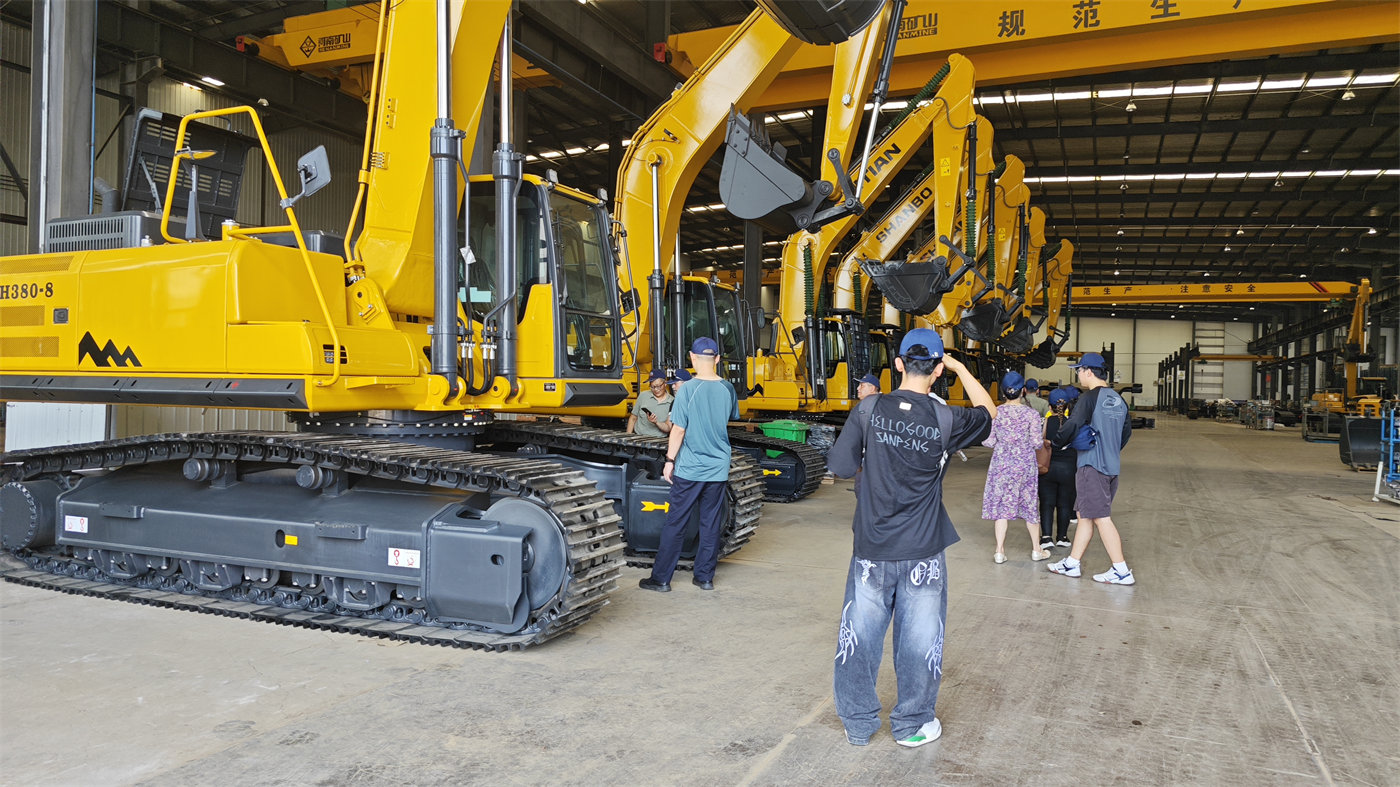
From initial stripping to large-scale production in a quarry, equipment configuration can be advanced in the following order rather than locking in final specifications from the start.
| Stage | Main operating characteristics | Key configuration verification points |
|---|---|---|
| Initial stripping | Mainly overburden removal, limited muckpile volume, scattered loading points | Relocation convenience, bucket adaptability to soil and weathered rock, shift utilization |
| Output ramp-up | Concentrated muckpiles, denser haul truck turnover, longer continuous operating hours | Bucket capacity and truck bed matching, hydraulic combined-action transitions, undercarriage stability |
| Large-scale production | Multi-bench advancement, higher proportion of hard rock, prolonged heavy-duty operation | Digging force versus material hardness, ground pressure versus platform bearing, heat dissipation and maintenance conditions under continuous operation |
It should be noted that this table is a verification framework for advancing configuration, not an equipment replacement schedule. Whether equipment needs to be added or replaced at a certain stage depends on actual stripping volume, haulage organization, and quarry layout; such project data is not included in the information.
4. Under which conditions large equipment may not be suitable
The SH600's operating weight and dimensions impose certain site requirements. With an overall length of 10252 mm, overall width of 3718/4154 mm, and tail swing radius of 3822 mm, swing space needs to be verified in advance at narrow loading points or in quarries with densely arranged adjacent equipment. If the loading platform width is limited and haul trucks have difficulty turning around, oversized equipment may instead increase layout difficulty.

In addition, if initial stripping in the quarry mainly involves thin overburden and scattered small muckpiles, the single-point loading volume may be insufficient for large-capacity equipment to operate continuously, affecting shift utilization. In such cases, the pace of advancing configuration should be judged comprehensively based on the number of haul trucks and loading points, rather than back-calculating equipment specifications solely from final capacity.
5. Checklist recommended for item-by-item verification before purchase
- Material conditions: proportion of overburden, weathered rock, and blasted hard rock; maximum lump size; whether a hydraulic breaker is needed to handle large lumps.
- Haul truck parameters: bed volume, sideboard height, payload per truck, and their matching relationship with bucket capacity and dumping height.
- Loading point conditions: platform width, swing space, ground bearing capacity, and drainage.
- Relocation route: slope, road width, turning radius, and their correspondence with overall dimensions and gradeability.
- Shift arrangement: daily operating hours, continuous operating periods, and whether maintenance windows conflict with production rhythm.
- Supporting attachments: if a hydraulic breaker is required, operating weight, hydraulic flow and pressure, attachment weight, and connection dimensions should be verified separately; the information on this site does not include compatibility data between the SH600 and specific breaker models.
6. Items still requiring confirmation with the manufacturer
The available information provides the main specifications and working range of the SH600, but the following items need separate confirmation during the selection stage: changes in overall weight and ground pressure corresponding to different bucket configurations; actual digging performance under specific material hardness; compatibility lists and piping configurations for attachments such as hydraulic breakers; and local emission, transportation, and registration requirements. These items cannot be directly inferred from the existing parameter table and should be raised together during inquiry.
7. Site information to provide when requesting a quotation
To enable the manufacturer or dealer to provide more targeted configuration recommendations, it is advisable to provide the following when requesting a quotation: current and expected annual stripping volume of the quarry, material types and blasting methods, haul truck models and quantities, a simple layout drawing of loading points, site slopes and ground conditions, daily shift arrangements, and whether a hydraulic breaker is planned. The more specific the information, the easier it is to judge whether equipment specifications correspond to site conditions and reduce later adjustments.