













In earthmoving and truck loading projects, bucket capacity is often treated as the first comparison item during equipment configuration: the larger the bucket, the more material per bucket, and the fewer cycles. However, after actually going into the pit, some machines with no small bucket capacity cannot penetrate hard, compacted material layers and can only repeatedly loosen the soil or switch to hydraulic breaker pretreatment. The problem is often not the bucket capacity itself, but whether the bucket digging force matched to the bucket capacity is sufficient.
This article focuses on this trade-off: under large bucket capacity configurations, why bucket digging force must still be considered together, and within the information scope of the SH500 crawler excavator on this site, which values can correspond to which operational judgments, and which conditions still need on-site verification.
What bucket capacity and bucket digging force each constrain
Bucket capacity describes how much material a single bucket can hold and affects the payload per cycle; bucket digging force describes how much cutting force the bucket edge can exert during digging and affects whether it can penetrate the current material layer. The two correspond to different operational stages: the former leans toward the loading side, the latter toward the digging side.
When the material is loose and the layer is thin, a larger bucket capacity makes it easier to increase loading pace; when the material is hard and compact, contains gravel, or is weathered rock, the bucket edge cannot penetrate, and no matter how large the bucket capacity, it can only return empty. This is why large bucket capacity configurations cannot be judged separately from bucket digging force.
The relationship between these two values in SH500 information
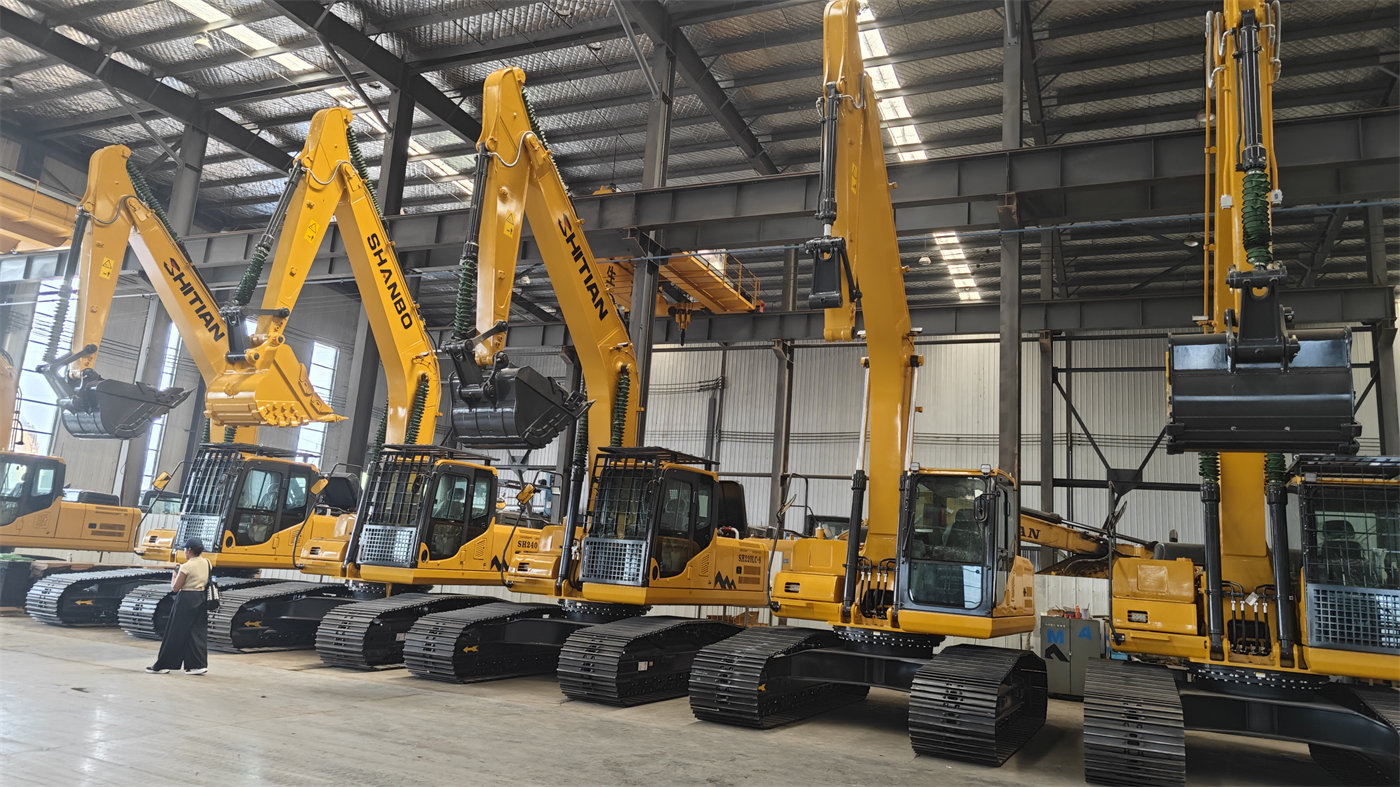
Public information on the SH500 crawler excavator from this site shows a bucket capacity of 2.2–2.5 m³, bucket digging force of 290 kN, stick digging force of 236 kN, and operating weight of 49,600 kg. The configuration direction is to provide large bucket capacity and relatively high bucket digging force simultaneously, rather than maximizing bucket capacity alone.
What this set of values helps determine is: on a 50-ton class crawler excavator, the 2.2–2.5 m³ bucket capacity and 290 kN bucket digging force belong to the same configuration information, and during selection they need to be evaluated together rather than using only the bucket capacity item to match with trucks.
Other conditions matched with bucket capacity
- Engine: Cummins QSM11, rated power 250 kW/2000 rpm, 6-cylinder in-line, turbocharged, intercooled, displacement 11 L.
- Hydraulic system: Linde load-sensing system, maximum operating flow 2×380 L/min, plus 27 L/min gear pump flow.
- Travel: travel speed 3.2/5.3 km/h, gradeability 70% (35°).
- Working range: maximum digging depth 7800 mm, maximum digging height 10924 mm, maximum dumping height 7615 mm, maximum digging radius 12016 mm.
This information is used to explain the power and hydraulic configuration direction of this model in continuous loading scenarios, but it cannot be used to infer that it can achieve a specific output under any material. Output is also affected by material conditions, truck turnaround, operator skill, and shift arrangements.
Which on-site conditions will change the actual effect of these two values
Material conditions
For the same earthmoving and truck loading, loose backfill soil, compacted clay, gravelly soil, and weathered rock layers have very different requirements for the bucket edge. The information gives the bucket digging force under rated configuration; whether it can actually penetrate also depends on material layer hardness, joint development, and whether pre-loosening is needed. When the material is on the hard side, whether hydraulic breaker pretreatment is needed should be included in the plan rather than solved solely by increasing bucket capacity.
Truck positioning
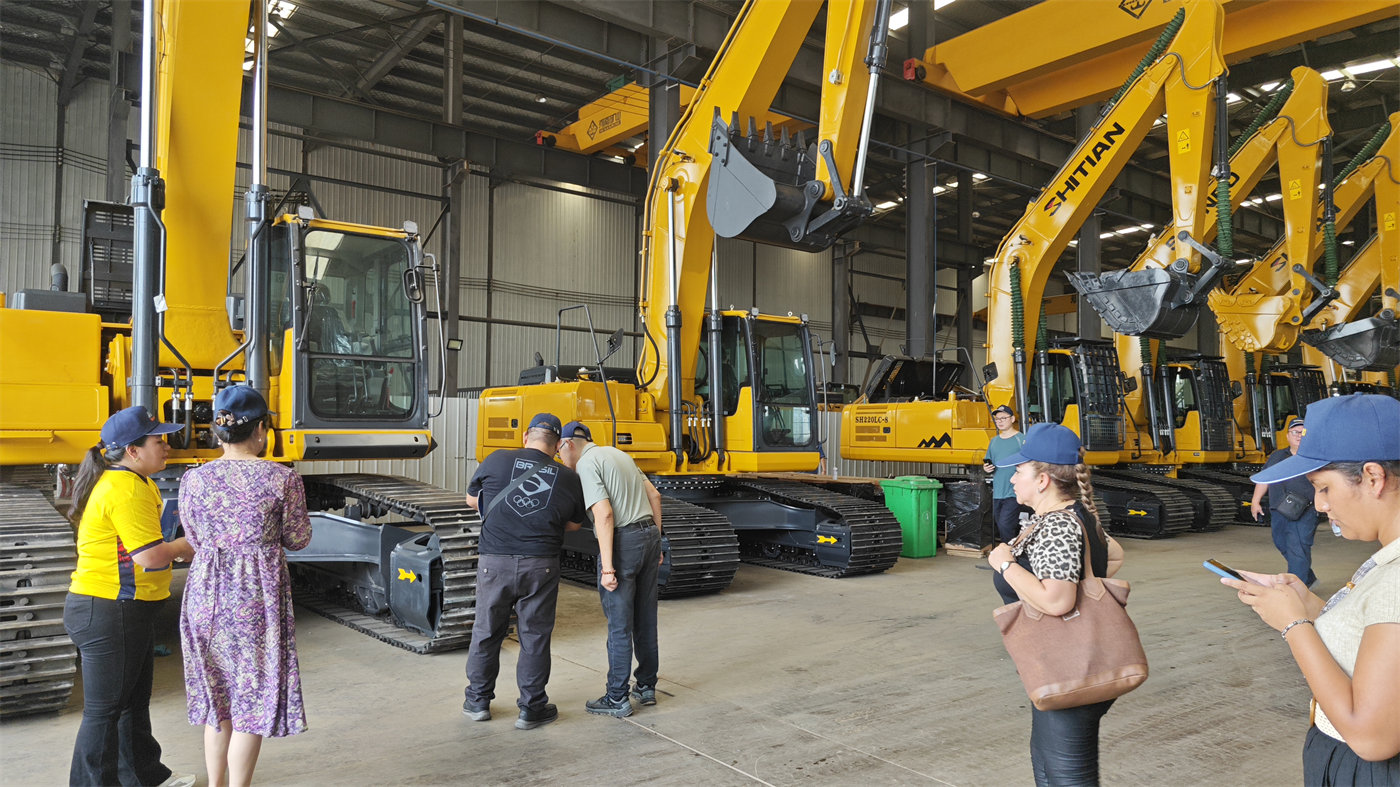
After bucket capacity is enlarged, the discharge weight per bucket increases, and requirements for dumping height and truck bed positioning become more sensitive. In the SH500 information, the maximum dumping height is 7615 mm; during selection, this needs to be checked together with the bed height and parking position of the trucks planned for use, to avoid a situation where the bucket capacity is large enough but discharge cannot be accurately positioned.
Ground bearing and stance
The operating weight is 49,600 kg, and the ground pressure information is marked as 81.9 MPa. Whether the ground at the loading point has been compacted and whether it is in a backfill area or soft foundation section directly affects stance stability and travel safety. The ground pressure value in the information needs to be checked under specific ground conditions and cannot be directly equated with a passability conclusion for any site.
Swing and working radius
The maximum digging radius is 12016 mm and the tail swing radius is 3655 mm. When arranging the loading point, swing space and adjacent vehicle passage need to be reserved. When the loading platform is narrow, the swing clearance of a large bucket capacity machine will become the constraint first, not the bucket capacity.

When a large bucket capacity configuration may not be suitable
If the loading point is compact, the trucks are on the small side in tonnage, the material is mainly hard compacted layers without pre-loosening, or the shift arrangement itself does not allow frequent adjustment of stance, then configuring simply by large bucket capacity may not translate into loading pace. In this case, what is more worth confirming first is the material pretreatment method, truck matching, and site layout, rather than continuing to enlarge bucket capacity.
Conversely, in continuous loading scenarios where the material is relatively controllable, truck turnaround is stable, and the loading platform has sufficient swing space, a model with both relatively high bucket capacity and bucket digging force has the corresponding conditions to perform. This is a conditional judgment, not a conclusion about the applicability of this model.
Suggested item-by-item checks before purchase
- Material type and hardness: whether pre-loosening or hydraulic breaker cooperation is needed; hydraulic breaker matching requires separate verification of operating weight, hydraulic flow and pressure, connection dimensions, and piping information.
- Truck parameters: bed height, load, and turnaround method, and whether they match the maximum dumping height and bucket capacity.
- Loading point dimensions: swing space, tail swing radius, adjacent vehicle passage, and exit route.
- Ground conditions: bearing capacity, whether soft foundation or backfill area, checked against ground pressure information.
- Working range: whether maximum digging depth and digging radius cover the planned bench and stockpile layout.
- Shifts and supporting arrangements: continuous operation duration, fuel supply, and operator arrangements.
Information to provide when requesting a quote
When contacting the manufacturer or dealer, it is recommended to provide the material type and approximate hardness, loading point plan dimensions, planned truck bed height and load, average daily workload and shifts, ground bearing conditions, whether attachments are needed, and existing equipment configuration. This information is used to check whether the SH500's bucket capacity, bucket digging force, dumping height, and working range correspond to actual needs; conclusions should not be drawn directly when on-site information is lacking.