




















Quarry loading and infrastructure earthworks are different: one deals with hard rock after blasting, the other with soft or mixed soil, and their loading rhythms, site conditions and relocation frequencies all differ. Contractors considering sharing one excavator usually want to reduce the number of machines and relocation costs. But whether sharing is viable does not depend on machine size; it depends on whether the requirements of the two types of working conditions fall within the capability range of the same machine. This article addresses that question by comparing the public information on the SH470 item by item.
First, what each type of working condition requires
The main constraint in quarry loading is hard, unevenly sized material: the bucket must be able to penetrate the pile, and insufficient digging force leads to incomplete fills, repeated loosening or reliance on secondary breaking. Infrastructure earthworks, by contrast, focus more on digging depth, dumping height, working radius and travel relocation; the material state varies widely and may include soft soil, backfill or a small amount of rock.
The requirements the two types of working conditions place on the same machine can be grouped into four areas: the combination of bucket capacity and digging force, sustained hydraulic output, undercarriage and ground pressure, and working range and relocation conditions. Each group is compared below against the SH470 information.
Bucket capacity and digging force: rock loading is not just about bucket capacity
The SH470 has a bucket capacity of 2.0–2.2 m³, a bucket digging force of 290 kN and an arm digging force of 236 kN. For quarry loading, bucket capacity determines the theoretical load per bucket, while digging force determines whether the bucket can penetrate the pile smoothly. When rock fragments are large and the pile is dense, a mismatch between digging force and bucket capacity can mean the bucket is large enough but cannot be filled.
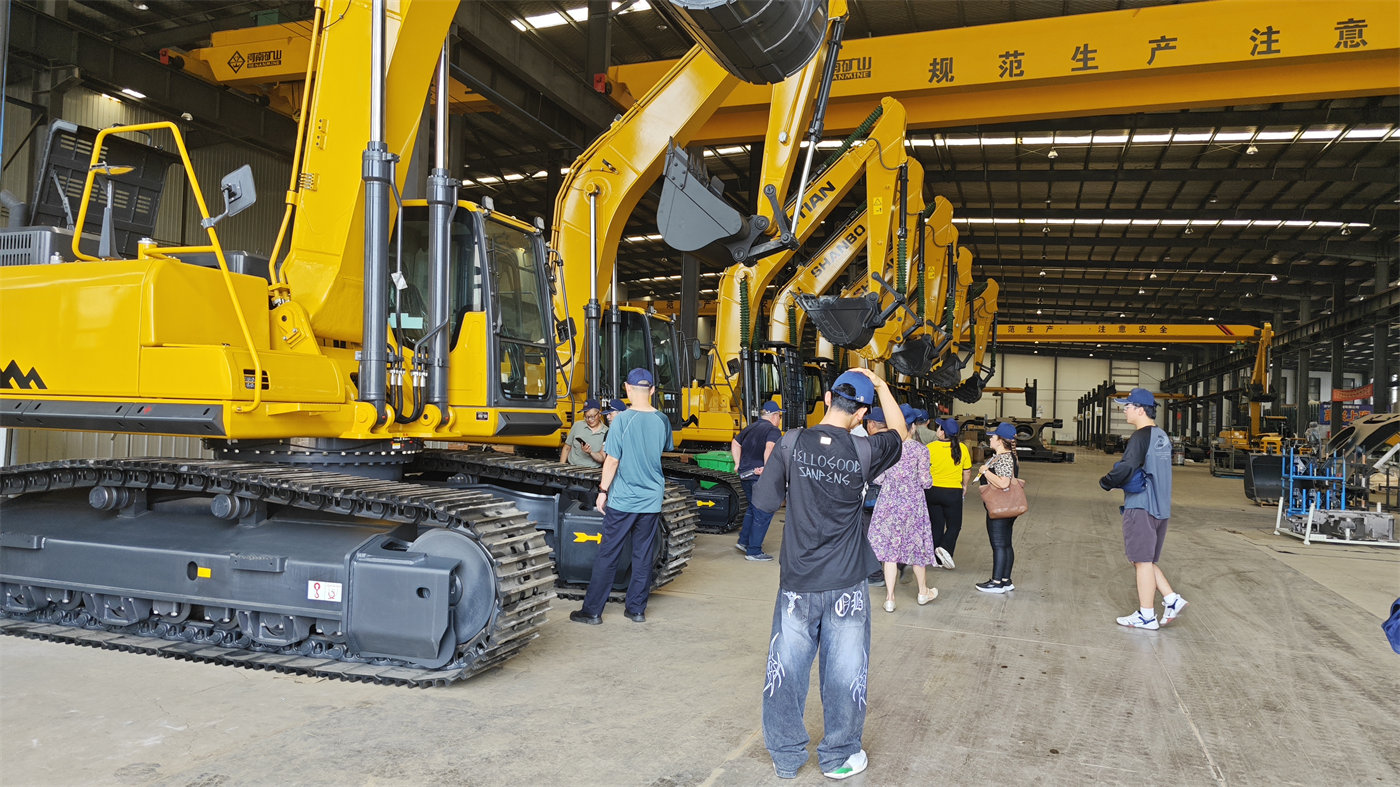
For infrastructure earthworks, the combination of 2.0–2.2 m³ bucket capacity and 290 kN bucket digging force is a relatively heavy-duty configuration for conventional earthmoving loading. Whether it is suitable depends on the truck body volume and the loading point layout, not on the bucket capacity figure alone.
Hydraulics and power: output conditions for continuous operation
The SH470 is powered by a Cummins QSM11 engine rated at 250 kW/2000 rpm; the hydraulic system is Linde load-sensing, with a pump configuration of 2× variable piston pumps + 1× gear pump and a maximum operating flow of 2×360+27 L/min. This information indicates that the machine is designed for heavy-duty continuous operation in terms of hydraulic flow and power output, corresponding to working conditions such as quarry loading with frequent cycles and large load fluctuations.
However, the information does not provide actual cycle times, fuel consumption or productivity data under different material states. Whether a shared-machine solution can meet the shift requirements of infrastructure earthworks must be calculated separately based on the specific workload, number of trucks and site organisation; it cannot be inferred directly from power and flow figures.
Undercarriage and site: ground conditions differ between quarries and earthworks sites
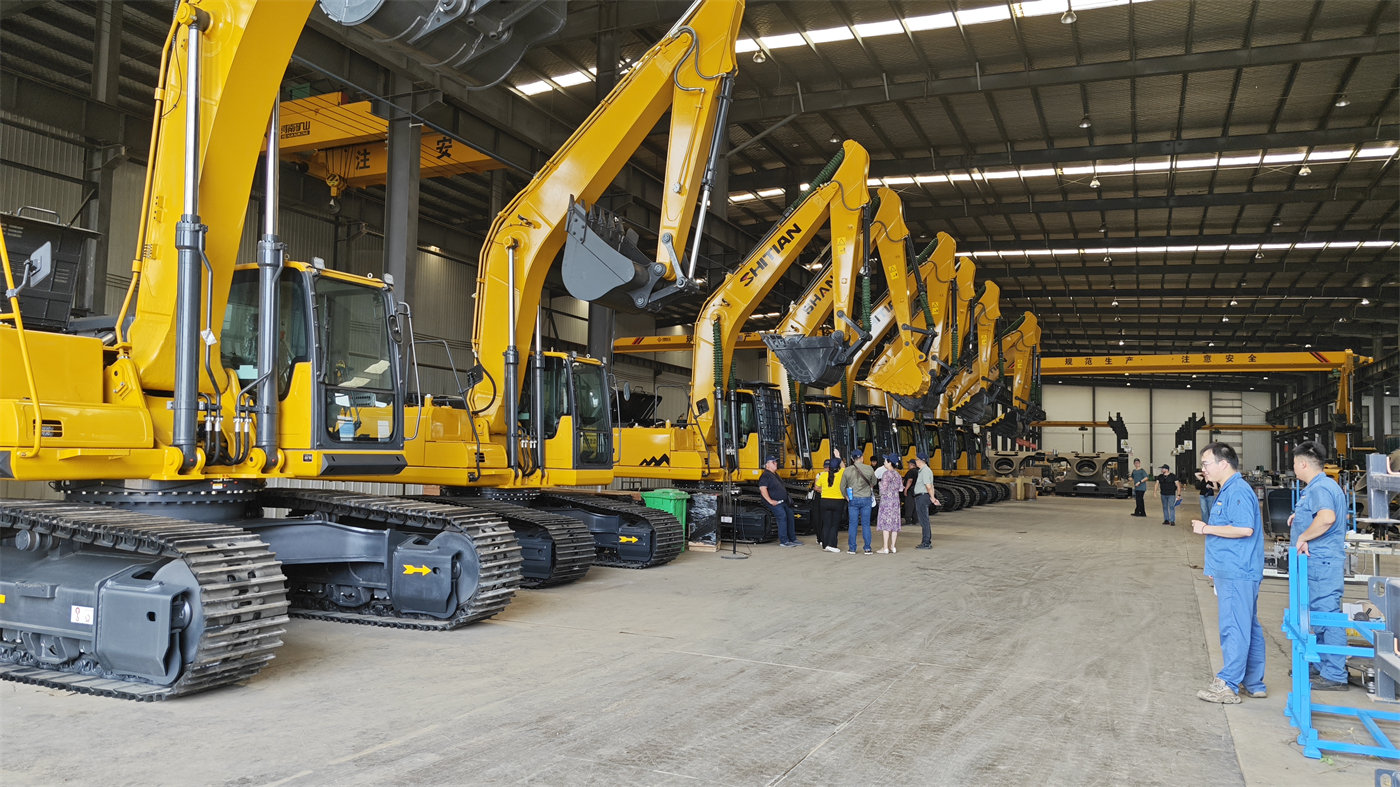
The SH470 has an operating weight of 44,900 kg, a track shoe width of 600 mm, a ground pressure of 80.2 kPa and a gradeability of 70% (35°). Quarry loading points are usually on crushed-stone ground with relatively well-defined bearing capacity; infrastructure earthworks may encounter backfill areas, soft soil or ground with high moisture content, and whether the 80.2 kPa ground pressure will cause sinking depends on the on-site soil and moisture conditions, which the information itself cannot determine.
When one machine is shared, the same crawler undercarriage must switch between the two types of ground. Before purchase, the ground bearing capacity, access road width and slope at both sites should be checked separately; the quarry conditions alone cannot represent all sites.
Working range and relocation: the extra constraints of sharing
The SH470 has a maximum digging radius of 12,016 mm, a maximum digging depth of 7,800 mm, a maximum dumping height of 7,615 mm, an overall width of 3,490 mm and a ground contact length of 6,735 mm during transport. Deep foundation pits or specific dumping heights in infrastructure earthworks need to be checked item by item against these figures.

A shared-machine solution also means the equipment must relocate between the quarry and the earthworks site. With an overall length of 12,090 mm and a width of 3,490 mm, relocation requires a flatbed trailer and suitable road conditions. The more frequent the relocation, the more the scheduling cost of sharing cannot be ignored. This information only provides dimensions and does not cover transport solutions or costs, which must be confirmed separately.
Conditions under which a shared-machine solution should be reconsidered
- If the quarry rock fragments are large and the pile is dense, and trial loading shows difficulty in bucket penetration or incomplete fills, the existing combination of bucket capacity and digging force may not be sufficient, and pre-treatment or configuration adjustments should be evaluated.
- If the earthworks site is mainly soft soil or backfill, and the 80.2 kPa ground pressure exceeds the ground bearing capacity, the risks of travel and sinking must be verified first.
- If the workload of both types of working conditions is close to the machine's full capacity, sharing one machine will cause scheduling conflicts; in this case the number of machines is a more prominent issue than model selection.
- If the relocation roads or flatbed trailer conditions do not meet the machine's dimension requirements, sharing will instead increase the difficulty of site access.
The above are conditional judgements based on the available information, not construction conclusions that have already occurred. Whether they hold in practice must be confirmed through on-site trial loading and with the manufacturer.
Checklist to verify with the manufacturer and on site before purchase
| Item to verify | Why it needs confirmation |
|---|---|
| Quarry material fragment size, pile condition and trial loading performance | The information gives bucket capacity and digging force but cannot replace actual penetration and filling performance with the real material |
| Ground bearing capacity and moisture condition at the earthworks site | Whether the 80.2 kPa ground pressure is suitable depends on the on-site soil |
| Truck body volume and dumping height | The 7,615 mm maximum dumping height must align with the truck body, and bucket capacity must match truck body volume |
| Relocation route, flatbed trailer and bridge clearance limits | Machine dimensions determine relocation feasibility; the information does not cover transport solutions |
| Shifts and workload at both sites | When one machine is shared, scheduling conflicts may become a constraint before machine capability does |
| Attachment and piping configuration | If the quarry requires a hydraulic breaker for pre-treatment, the flow, pressure and connection dimensions of the host machine and attachment must be verified separately; the information does not cover this |
When requesting a quotation, it is advisable to provide: the material type and fragment size for both types of working conditions, site ground conditions, truck specifications, workload and shift arrangements, relocation distance and road conditions, and whether a breaker is required. Only with this complete information can the manufacturer judge whether a shared-machine solution is feasible, rather than simply quoting a model.