
















Medium-scale quarries can easily fall into a dilemma when configuring equipment: if machines are selected based on estimated maximum capacity, shift utilization may be low in the first few years; if a smaller size is chosen based on current output, there may be concerns about being underpowered when hard rock is encountered or orders increase. What really needs to be clarified first is the annual stripping volume of the quarry, the layout of loading points, the bucket capacity of transport trucks, and site bearing conditions—exactly what range these factors constrain the equipment specifications to. This article focuses on this judgment process and, combining publicly available information on the SH380 crawler excavator from this site, explains why 37-tonne class equipment is worth including in the comparison under medium-scale quarry conditions, and when certain conditions are not met, selection should not be forced.
First Clarify the Operating Constraints of a Medium-Scale Quarry
The excavator in a quarry mainly handles the loading of blasted rock, the transfer of stripped soil and rock, and completing loading cycles in coordination with transport trucks. Compared with large open-pit mines, medium-scale quarries usually have a limited number of benches and relatively fixed loading points, and the bucket capacity of transport trucks will not increase indefinitely. Requirements for excavators at such sites focus on three points: first, the bucket can align with the beds of common transport trucks; second, the digging force is sufficient to penetrate hard rock after blasting; third, the equipment's dimensions and swing radius can operate within the existing loading platform.
If the equipment specifications are far larger than the actual workload, several practical problems may arise: high purchase cost, heavy depreciation pressure per shift, higher swing space requirements, and uneconomical matching with transport trucks. Conversely, insufficient specifications can lead to difficulty penetrating hard rock, slower loading cycles, and long-term high-load operation of the equipment. The key is not "the bigger the better" or "the smaller the more economical," but whether the equipment parameters can cover the most common operating combinations at the site.
Which Medium-Scale Quarry Needs Can SH380 Specifications Address
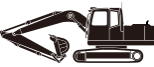
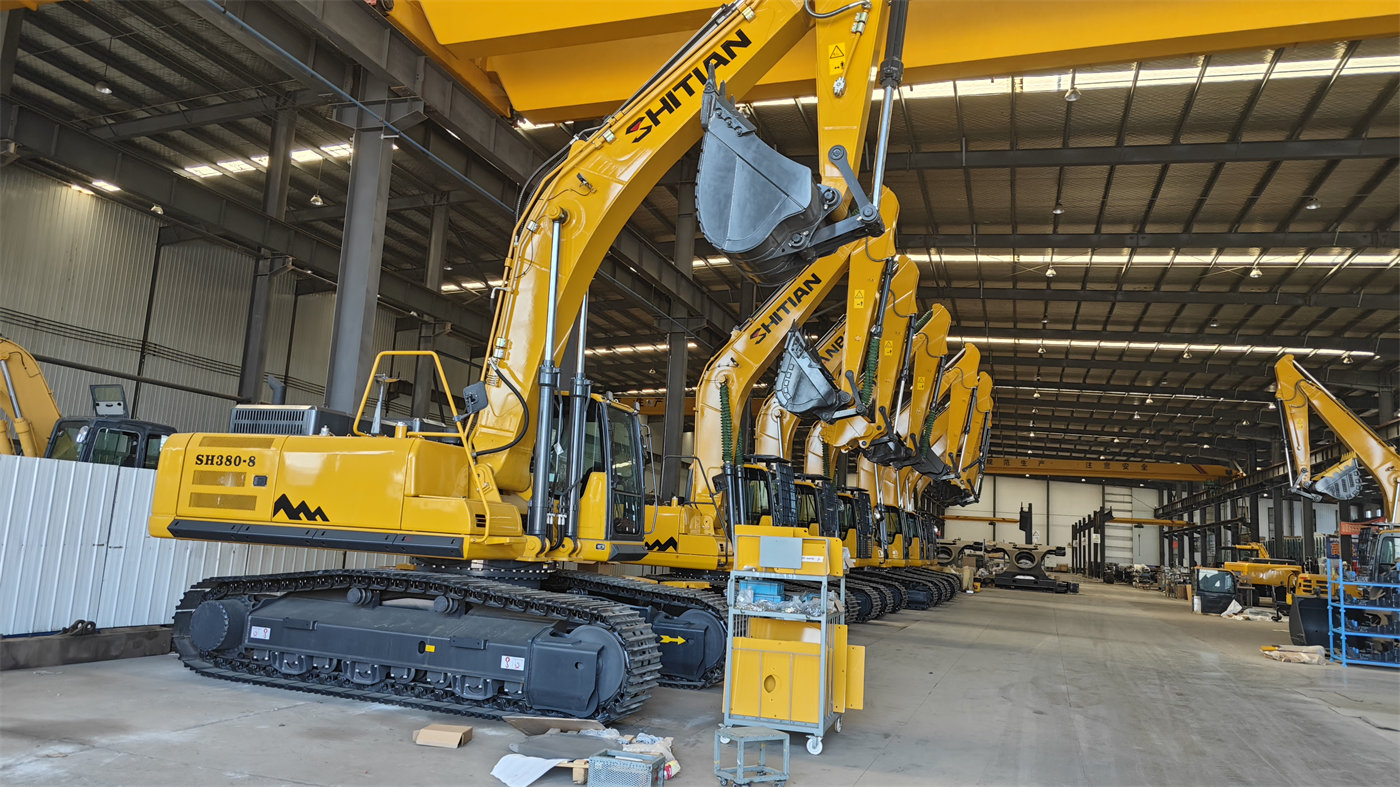
The SH380 is a 37-tonne class crawler excavator from this site, with an operating weight of 37000 kg, equipped with a Cummins 6LTAA8.9-325 engine, rated power 242 kW (324.7 HP), bucket capacity 1.62–1.82 m³, bucket digging force 230 kN, arm digging force 190 kN, and maximum hydraulic system operating flow 2×330 L/min. These specifications can serve as a starting point for comparing against the needs of a medium-scale quarry.
Bucket Capacity and Alignment with Transport Trucks
The 1.62–1.82 m³ bucket capacity corresponds to the common bed dimensions of medium-tonnage transport trucks. At quarries with compact loading point layouts and frequent truck turnover, an oversized bucket can make alignment difficult during dumping or cause spillage, while an undersized bucket increases the number of cycles. The SH380's bucket width is 1571 mm; before purchase, the inner width and sideboard height of the main on-site transport trucks should be checked to determine whether the dumping point can be easily controlled.
Digging Force and Hard Rock
The 230 kN bucket digging force and 190 kN arm digging force correspond to the loading needs of blasted rock. The material state at a medium-scale quarry is usually between earthwork and the hard rock of large mines; blasting quality, rock fragment size distribution, and bench height directly affect the actual effect of digging force. The values in the specifications cannot replace on-site material testing. Before purchase, the typical rock fragmentation after blasting should be confirmed, and the manufacturer should be informed whether bucket type or tooth configuration needs adjustment for hard rock conditions.
Hydraulic Flow and Continuous Loading Pace
The configuration of dual variable displacement piston pumps plus a gear pump provides a maximum operating flow of 2×330 L/min and a main system pressure of 36 MPa. This set of specifications corresponds to the hydraulic response requirements in combined operations and continuous loading cycles. Loading operations at a medium-scale quarry are often repeated cycles of "dig—swing—dump—return," and whether hydraulic flow matches affects the smoothness of movement transitions. However, flow values alone cannot be directly converted into loading efficiency; they must also be judged in combination with operating habits, material conditions, and truck dispatch.
Undercarriage and Site Conditions
The SH380 has a track shoe width of 600 mm, ground pressure of 62 kPa, gradeability of 70% (35°), and minimum ground clearance of 565 mm. Loading platforms and haul roads at medium-scale quarries commonly contain crushed stone, loose soil, and slopes. The ground pressure of 62 kPa can serve as one reference for judging whether the equipment will sink on soft or insufficiently compacted ground. If the site has mud, backfilled areas, or water accumulation during the rainy season, ground bearing conditions need further verification, and whether track configuration needs adjustment should be confirmed.
Operating Range and Dump Height
Maximum digging height is 10134 mm, maximum dump height is 7182 mm, maximum digging depth is 7240 mm, and maximum digging radius is 11051 mm. These values are mainly used to compare against loading point bench heights and transport truck sideboard heights. If a medium-scale quarry uses layered extraction, bench heights and loading point positions will change. Before purchase, common loading positions should be checked item by item against the dump height and digging radius in the specifications to confirm whether the equipment can smoothly complete dumping at common bench heights.

Conditions Under Which Specifications Should Be Reconsidered
- Transport truck bucket capacity is clearly too large: If the bed volume of the main on-site transport trucks far exceeds the reasonable loading range of a 1.82 m³ bucket, the number of loading cycles will increase, and the matching relationship between bucket capacity and transport trucks needs to be re-evaluated.
- Blasted rock fragments are too large or hardness is too high: The 230 kN bucket digging force corresponds to conventional blasted rock. If large hard rock is common on site, pretreatment or re-evaluation of equipment specifications and attachment solutions may be required.
- Loading platform space is limited: The SH380 has an overall width of 3200 mm and a tail swing radius of 3438 mm. If there are many obstacles around the loading point and swing space is insufficient, it is necessary to check whether the equipment dimensions can meet the site layout.
- Ground bearing conditions are poor: The ground pressure of 62 kPa is a value under a specific configuration. If the site is soft ground, backfilled area, or ground with high moisture content, it should be verified whether the actual ground conditions are within the equipment's allowable range.
- Annual workload remains low for a long time: The purchase and operating costs of 37-tonne class equipment need to match shift workload. If the quarry's long-term output is limited, configuring to maximum specifications may result in idle resources.
Checklist to Verify Before Purchase
| Check Item | Content to Confirm | Corresponding Specifications or Items to Verify |
|---|---|---|
| Material state | Rock fragment size, hardness, and moisture content after blasting | Compare with bucket digging force 230 kN; conduct on-site trial digging if necessary |
| Transport truck matching | Inner bed width, sideboard height, and volume of main transport trucks | Compare with bucket width 1571 mm and dump height 7182 mm |
| Loading platform | Platform dimensions, swing space, distance to obstacles | Compare with overall width 3200 mm and tail swing radius 3438 mm |
| Ground conditions | Ground material, compaction, water accumulation in rainy season | Compare with ground pressure 62 kPa; confirm whether bearing capacity is sufficient |
| Bench and dumping | Common bench height, relative position of loading position and transport truck | Compare with maximum digging height 10134 mm and maximum digging radius 11051 mm |
| Supporting attachments | Whether a hydraulic breaker is needed to handle large rock fragments | Provide host hydraulic flow, pressure, and connection dimensions to verify attachment compatibility |
| Shifts and refueling | Daily work shifts, fuel supply arrangements | Fuel tank capacity 580 L; evaluate in combination with on-site refueling conditions |
The "Corresponding Specifications" column in the table is only intended to indicate the direction of verification and does not mean matching verification has been completed. Whether the host machine and hydraulic breaker are compatible must be verified item by item based on operating weight, hydraulic flow and pressure, attachment weight, connection dimensions, and piping data; this site currently has no matching data between the SH380 and specific breaker models, and supporting documentation should be obtained from the manufacturer before purchase.
Items Still to Be Confirmed with the Manufacturer
- The specific bucket type, tooth configuration, and applicable material range for different bucket capacity configurations (1.62 m³ and 1.82 m³);
- The actual operating performance and recommended operating methods of the 230 kN bucket digging force under typical blasted rock conditions at a medium-scale quarry;
- The track shoe configuration and ground condition assumptions corresponding to the ground pressure of 62 kPa;
- If a hydraulic breaker needs to be installed later, whether the host machine's hydraulic system reserved flow, pressure interfaces, and piping layout support it;
- The matching of equipment transport dimensions (overall length 11161 mm, width 3200 mm, ground contact length during transport 5872 mm) with on-site access roads and turning radii.
Site Information to Provide When Requesting a Quote
When requesting a quote from the manufacturer or dealer, it is recommended to provide the following information so that they can judge whether the SH380 is suitable for the specific project: the quarry's annual planned output and monthly fluctuation range; the fragment size distribution and hardness description of typical blasted rock; the bed dimensions and number of main transport trucks; the length and width of the loading platform, ground material, and swing space; common bench heights and loading position layout; daily work shifts and fuel supply methods; whether a hydraulic breaker and other attachments are needed. The more specific the above information, the more helpful it is to match equipment configuration with site conditions and reduce selection deviations.