
















The procurement challenge for large-scale rock breaking operations often lies not in whether to use a breaker, but in whether the carrier and attachment can form a stable combination. A common on-site phenomenon is: the hammer is installed, but the impact rhythm is unstable, the hydraulic system overheats, the chisel wears quickly, or the carrier's boom vibrates noticeably during continuous breaking. These problems are rarely determined by a single parameter; they result from the combined effect of material, carrier, attachment interface, and work organization. Using the public information of the ME1950 heavy-duty hydraulic breaker on this site as a clue, this article sorts out the conditions that should be checked separately before purchasing a large-scale rock breaking solution.
First Break Down the Work Objective: Breaking Is Not a Single Step
Large-scale rock breaking may occur in primary crushing in open-pit mining, hard rock handling in tunnel excavation, bridge foundation demolition, or the reduction of boulders and large rocks in mountain road projects. Different steps have different requirements for the breaker: primary crushing in mining values structural durability under continuous operation, tunnel excavation is limited by space and ventilation, and demolition work needs attention to rebar entanglement in reinforced concrete. Discussing "matching" by mixing these steps together easily leads to a seemingly universal conclusion that cannot be implemented in practice.
A more feasible approach is to first clarify three things: what rock type the material to be broken is, what the approximate lump size range is, and how much is planned to be broken per shift. These three items determine the level of impact energy the breaker needs and also determine what tonnage the carrier needs to support. When information is insufficient, it is not advisable to lock onto a specific model first.
Large-Scale Breaking Needs That ME1950 Information Can Address
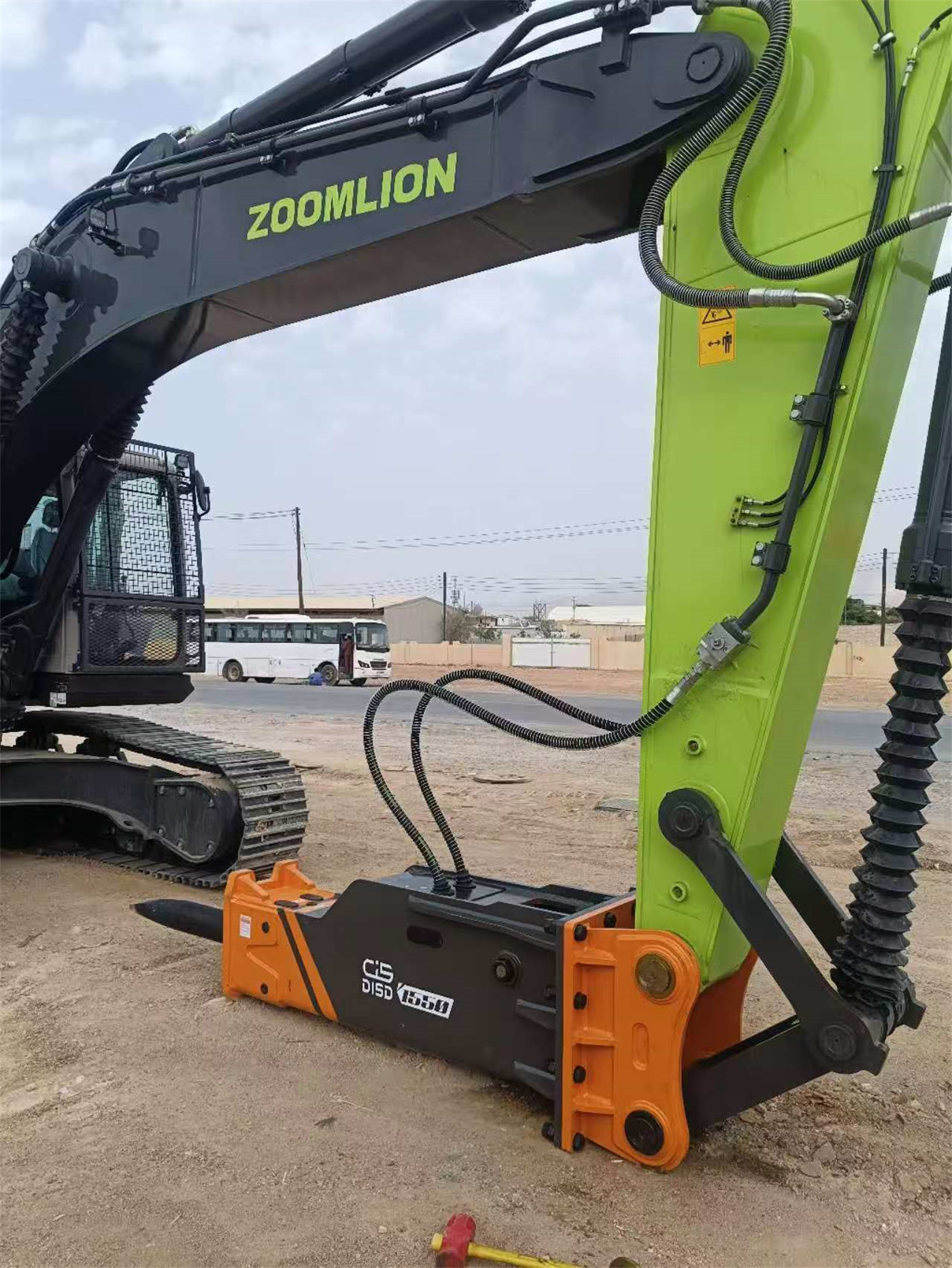
The ME1950 heavy-duty hydraulic breaker on this site has an operating weight of 5820KG and matches 50-60 ton excavators. These figures first indicate that it is aimed at heavy-duty carrier platforms, not an attachment that small and medium excavators can mount at will. For large-scale rock breaking, insufficient carrier tonnage directly limits the hammer's performance and also imposes additional load on the boom and swing platform.
In terms of hydraulics, the ME1950 has a flow range of 260-310 L/min and an operating pressure range of 260-280 KG/cm². These two ranges are the core basis for judging whether the carrier's hydraulic output can match. If the flow is too low, impact frequency and response will be affected; if the pressure does not match, it may not be possible to enter the design working range. During procurement, the carrier's hydraulic pump flow, system pressure, and attachment circuit capacity should be compared item by item with these two sets of values, rather than assuming direct compatibility just because the carrier tonnage falls within the 50-60 ton range.
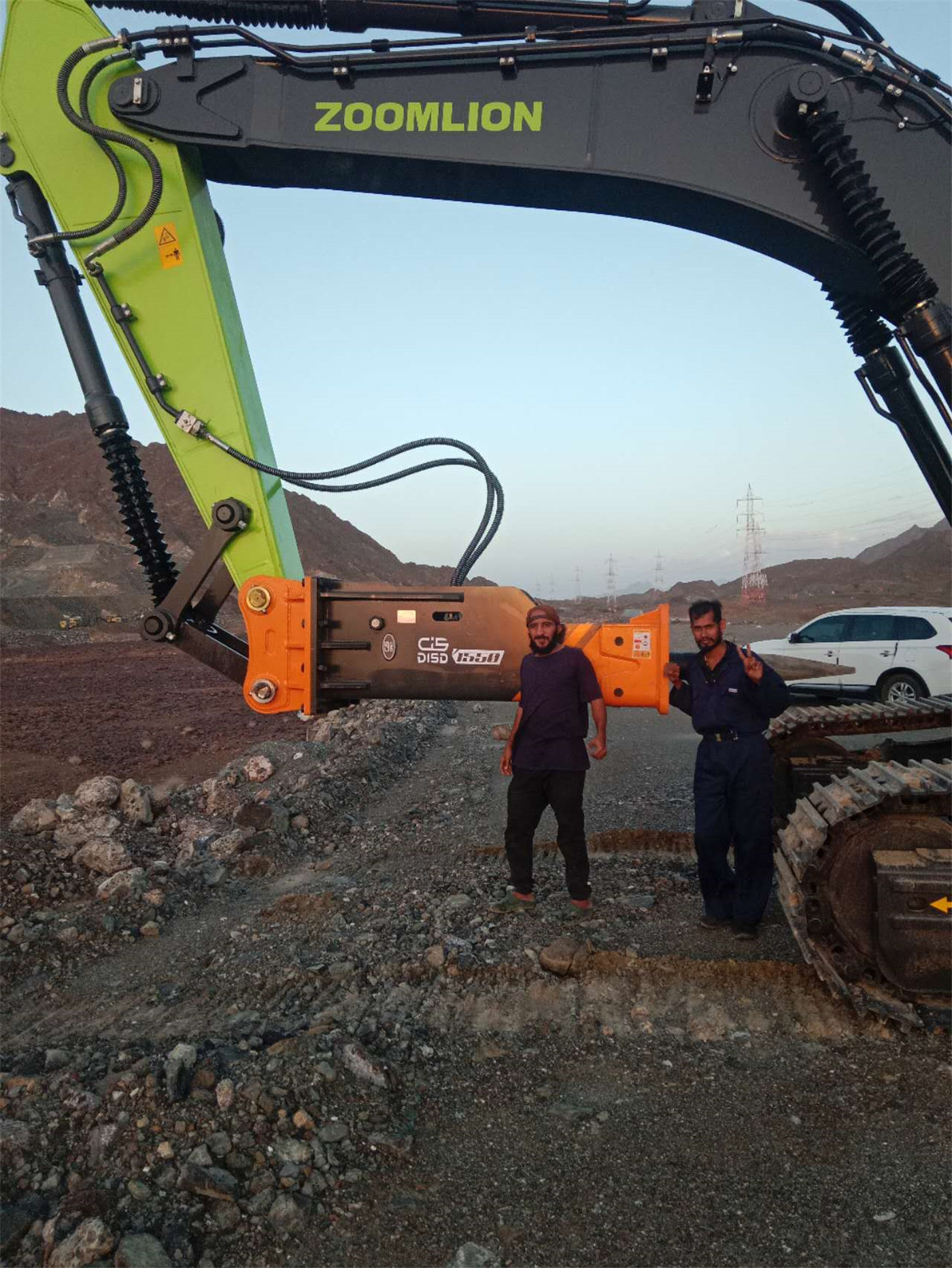
The structural features mentioned in the information, including a high-strength alloy steel plate power chamber, oversized through bolts, a recoil management system and large-capacity nitrogen accumulator, mirror-finished inner bore and multiple sealing systems, correspond to the needs for structural stability and sealing against dust in large-scale continuous breaking. These descriptions can serve as a reference for understanding the product design direction, but cannot replace adaptation confirmation for a specific job site.
The Carrier Side: Do Not Look Only at Tonnage
The 50-60 ton matching range is a range, not a precise correspondence line. Within the same tonnage segment, different carriers may have different boom lengths, stick configurations, hydraulic pump arrangements, and attachment piping layouts. Large-scale rock breaking operations have long continuous durations, and the carrier remains under impact reaction forces for extended periods. The following conditions need to be checked together:
- Whether the carrier's operating weight falls within the 50-60 ton range specified in the ME1950 information;
- Whether the carrier's hydraulic system can provide a flow of 260-310 L/min and a pressure of 260-280 KG/cm²;
- Whether the attachment mounting connection dimensions, pin diameter, and connection plate form correspond to the carrier's stick end;
- Whether the carrier has reserved breaker piping, and whether the pipe diameter and valves can withstand the corresponding flow;
- Whether the overall machine stability and counterweight need adjustment after mounting a 5820KG attachment.
The existing product information does not provide specific values for connection dimensions and mounting interface. This means that it is impossible to judge from text information alone whether a specific carrier can directly mount the ME1950; it is necessary to request connection dimension drawings from the manufacturer and compare them with actual measurements at the carrier's stick end. This point is easily overlooked before procurement, yet it is the prerequisite for whether the attachment can be installed.
Material and Site Conditions Change the Matching Focus
The information mentions that the ME1950 is suitable for high-density geological structures such as high-silica granite and solid basalt. The harder and more abrasive the rock, the faster the wear of the chisel and front head, and the higher the requirements for the front head's wear-resistant bushing and sealing against dust. Conversely, if the material is mainly medium-hard rock or reinforced concrete, the matching focus will be more on lump size, rebar entanglement, and post-breaking particle size requirements, rather than simply pursuing maximum impact energy.
Site conditions also affect whether the solution is feasible. Large-scale breaking operations are mostly at open-pit mines, tunnels, or bridge demolition sites. The working face space, ground bearing capacity at the carrier's position, and the connection of broken material removal will all limit the actual usable range of the hammer. Tunnel operations also need to consider ventilation and dust; bridge demolition involves working height and surrounding protection. These conditions are not covered in the product information and need to be confirmed separately according to the actual project situation.
Supporting Conditions for Continuous Operation
Large-scale rock breaking is often not short-term work but progresses continuously by shift. Supporting conditions under continuous operation include: fuel or power supply arrangements for the carrier, hydraulic oil temperature management, chisel spare parts inventory, and the operator's grasp of the breaking rhythm. The information mentions that the ME1950 can operate continuously under high ambient temperatures, but this is a product design description and cannot be directly inferred that any job site can operate without interruption under high summer temperatures. Actual shift arrangements should still be determined in combination with the carrier's cooling capacity, hydraulic oil temperature monitoring, and on-site ambient temperature.
Another condition that is easily underestimated is the coordination of material removal. Broken rock blocks need to be cleared away promptly; otherwise, the hammer's working face will be occupied, and frequent repositioning of the carrier will actually reduce overall progress speed. Arranging breaking and loading/transport as one link is more practical than solely pursuing the hammer's impact parameters.
Checklist to Verify Before Procurement
| Check Item | Content to Confirm | Information Source |
|---|---|---|
| Carrier tonnage | Whether within the 50-60 ton matching range | Specified in ME1950 information |
| Hydraulic flow | Whether it can reach 260-310 L/min | Specified in ME1950 information; carrier parameters need separate verification |
| Operating pressure | Whether it can fall within 260-280 KG/cm² | Specified in ME1950 information; carrier parameters need separate verification |
| Connection dimensions | Whether pins and connection plates correspond to the stick end | Not provided in information; request from manufacturer |
| Attachment piping | Whether diameter, valves, and flow match | Not provided in information; verify on site |
| Material rock type | Hardness, abrasiveness, lump size | Confirm according to project geological data |
| Site conditions | Position bearing capacity, working space, removal coordination | Confirm according to on-site survey |
The first five items in the table directly determine whether the carrier and attachment can form a combination; the latter two determine whether this combination can operate continuously on the actual job site. Only when both types of conditions are met is there a basis for discussing the solution; if only one type is met, it is recommended to supplement information before proceeding.

Matters Still Requiring Confirmation with the Manufacturer
The existing information can support preliminary comparison of tonnage range, hydraulic flow, and pressure range, but does not cover the following: compatibility list of ME1950 with specific carrier models, detailed connection dimension drawings, chisel selection recommendations for different rock types, spare parts supply cycle, and overall machine stability calculation after attachment installation. These matters should be raised during the inquiry stage and confirmed in writing by the manufacturer or agent; they should not be inferred solely from product introduction pages.
If the carrier tonnage, hydraulic parameters, or connection interface at the project site deviate from the above ranges, forced matching should not be attempted; instead, the attachment specifications or carrier solution should be re-evaluated. When information is insufficient, conditional judgment is more prudent than direct recommendation.
Site Information to Provide During Inquiry
To enable the manufacturer to give targeted matching advice, it is recommended to provide the following during inquiry: rock type and typical lump size of the material to be broken, planned breaking volume per shift, model and operating weight of the intended carrier, carrier hydraulic pump flow and system pressure, stick end connection dimensions or drawings, type of work site and space limitations, continuous operation shift arrangements, and the method for removing broken material. The more specific the information, the easier it is to judge whether the ME1950 falls within the compatible range, and it also reduces rework later caused by interface or hydraulic mismatches.