



















When reviewing product documentation for heavy hydraulic breakers, most people first look for the two items "applicable excavator tonnage" and "chisel diameter," and once they confirm their carrier falls within the range, they consider the matching issue largely resolved. However, in actual procurement, problems such as unstable impact rhythm after the breaker is installed, high hydraulic oil temperature, connection pins not aligning, or noticeable carrier boom feedback during continuous operation are rarely determined by tonnage alone. Using the publicly available information for the ME1750 heavy hydraulic breaker on this site as a guide, this article lists the easily skipped matching items one by one in the order they are encountered when reading the documentation.
First confirm what operation this documentation is intended for
The public description of the ME1750 positions it for 38–48 ton class large excavators, with applications including primary rock breaking in open-pit mining, tunnel excavation, demolition of large reinforced concrete bridge structures, underwater bedrock removal in port construction, and mountainous site preparation. The overall operating weight is 3950 kg, and the chisel diameter is 175 mm with a length of 1600 mm. This information first answers "what type of working conditions this breaker generally serves," not "any 38–48 ton carrier can be directly equipped."
For buyers, at this point they should compare their own operational goals: primary rock breaking in mines, building foundation demolition, or primarily reinforced concrete breaking. Different material types and breaking targets mean the hydraulic and connection conditions to be verified subsequently are not the same.
The tonnage range is only the first filter
The documentation states it is suitable for 38–48 ton excavators. The role of this range is to first exclude clearly mismatched carriers, but it cannot replace more detailed verification. Even for the same 40-ton class carrier, hydraulic system settings, boom and arm connection dimensions, and auxiliary piping layout may differ across brands and years.
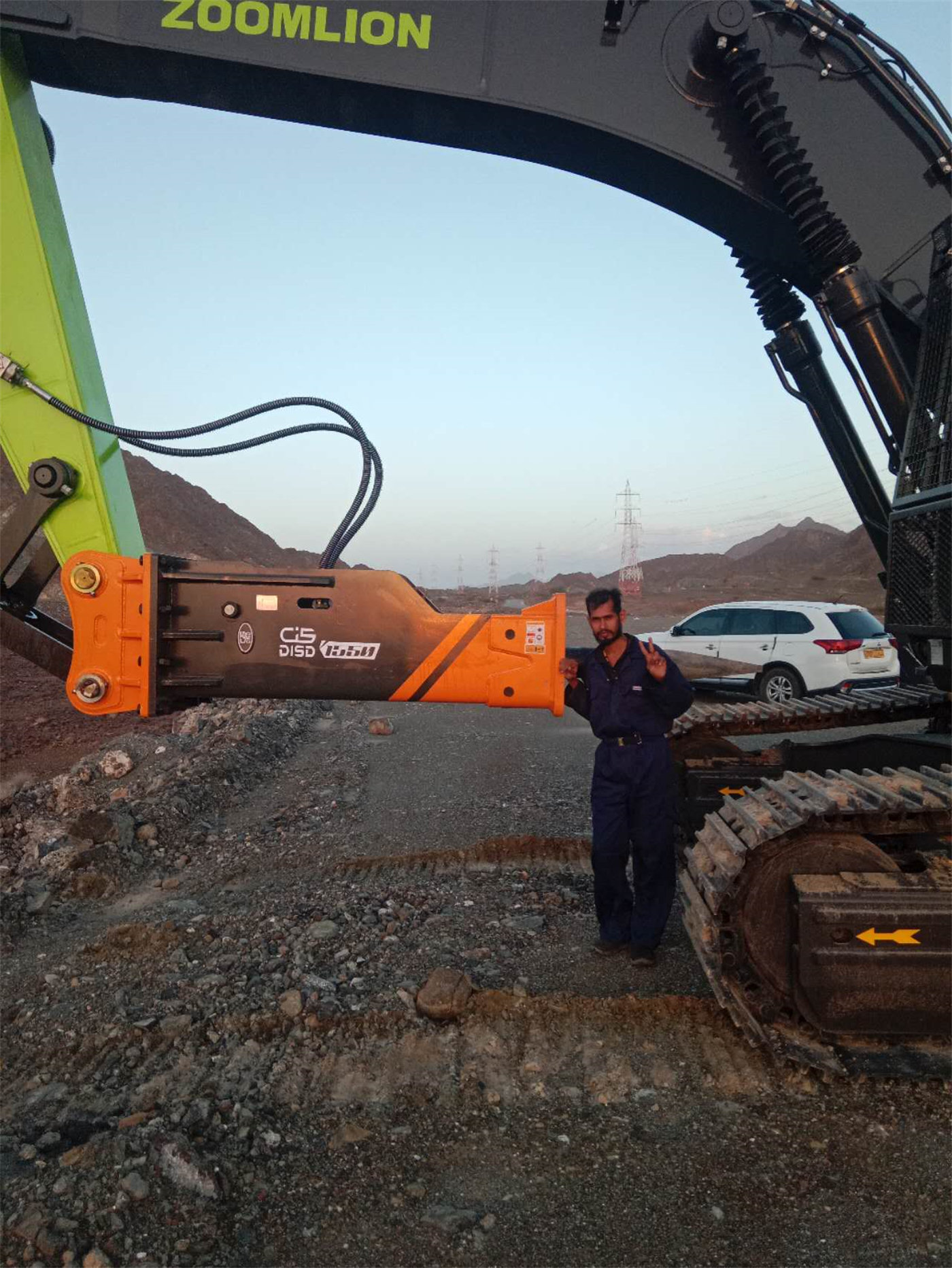
What is easily overlooked: the carrier tonnage falling within the range does not mean the hydraulic system can stably deliver output. During procurement, it is necessary to compile the carrier's operating weight, hydraulic pump flow, working pressure, number of spare valve circuits, and pipe diameter, and then compare them with the breaker documentation. Simply providing a tonnage to the manufacturer for a quotation often yields a "generally usable" reply rather than a practical matching confirmation.
Flow and pressure: the two figures must be considered together
The ME1750 documentation gives a hydraulic flow range of 220–290 L/min and a working pressure of 210–230 kg/cm². These two values constrain different things: flow relates to the amount of hydraulic oil that can be supplied to the breaker per unit time, while pressure relates to whether the impact energy can reach the design level. Looking at only one of them easily leads to a one-sided judgment.
- If the carrier flow is below the lower limit in the documentation, the breaker may not reach the nominal impact frequency, appearing as "it can hit but lacks power."
- If the carrier flow is above the upper limit in the documentation, it is necessary to confirm whether the overflow manifold system can handle it and how hydraulic oil temperature will be managed.
- If the carrier working pressure is below 210 kg/cm², impact energy may be insufficient; if above 230 kg/cm², the impact on the breaker's internal seals and accumulator needs to be assessed.
The documentation mentions that this breaker is equipped with an overflow manifold system and a large-capacity nitrogen accumulator, intended to maintain impact rhythm during flow fluctuations. This reminds buyers: do not simply copy the maximum flow and maximum pressure from the carrier nameplate; it is also necessary to understand the commonly used set values during actual operation. Whether the carrier hydraulic system has been adjusted and whether valve circuits have been reserved specifically for breaking operations are items that need confirmation.
Connections and piping: the parts the documentation will not confirm for you
The connection between the breaker and the carrier involves pin diameter, pin spacing, connection lug form, as well as hydraulic hose interface specifications and length. The ME1750 operating weight is 3950 kg, and this weight directly affects the load-bearing of the carrier arm front end and connection components. The documentation does not list all connection dimensions item by item, so this part should be obtained from the manufacturer as interface drawings or a matching table before procurement and compared with actual carrier measurements.
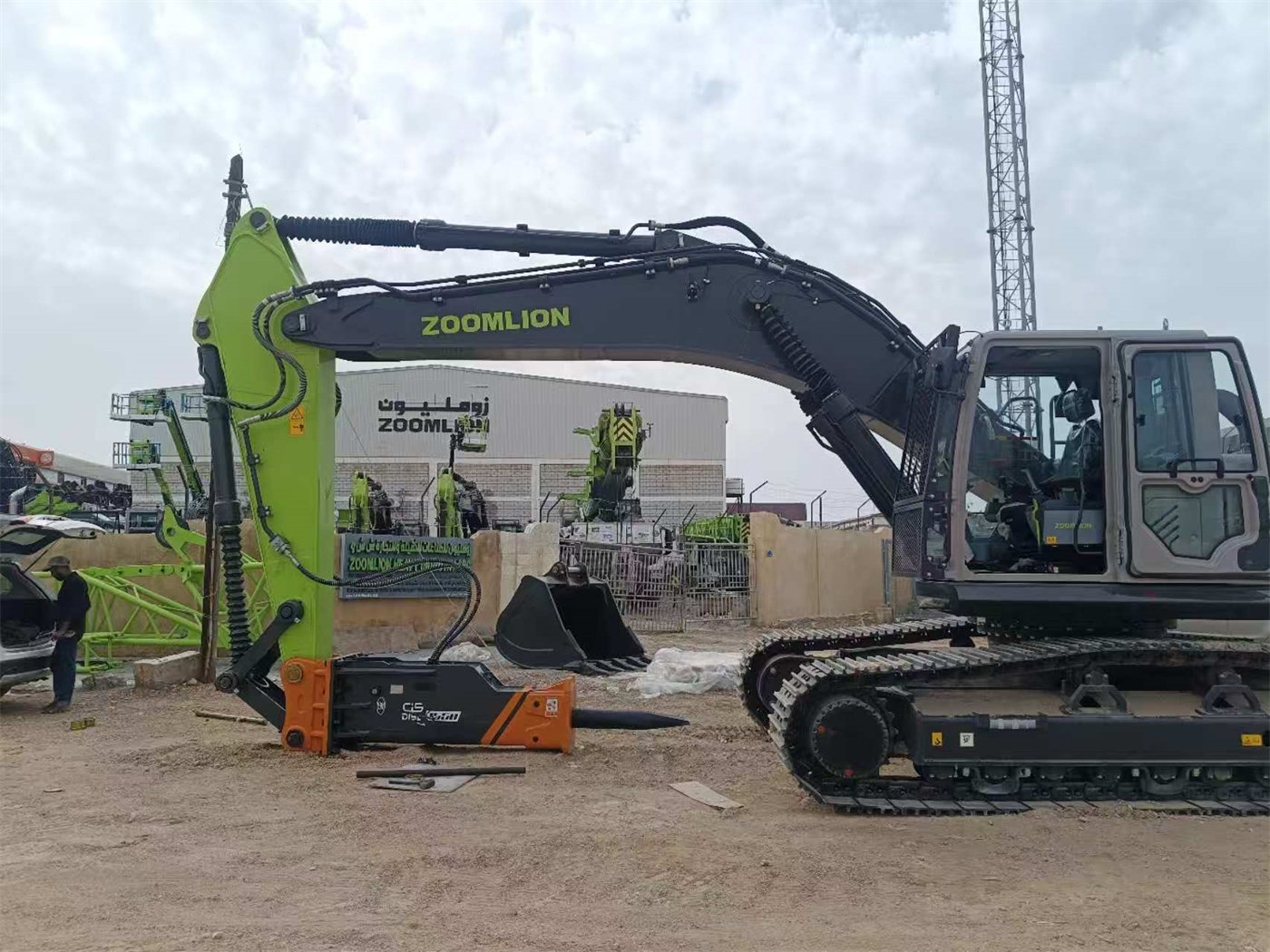
What is easily skipped is piping layout. During breaking operations, hydraulic hoses are subjected to pulsating pressure; if the routing is unreasonable or the length is insufficient, wear or joint leakage may occur during continuous operation. When requesting a quotation, the location of the carrier auxiliary valve circuits and the current piping condition should be stated, and the manufacturer should confirm whether matching piping components are required. This does not constitute any operating advice; it only points out that this is an item requiring separate confirmation when reading the documentation.
Supporting conditions under continuous operation also count as matching
The documentation describes the ME1750 as a heavy breaker designed for 24/7 stable operation, using a giant frame, large-diameter through bolts, armored front head, and recoil cushioning design. These structural descriptions correspond to high-load continuous breaking scenarios. However, "the breaker itself is designed for continuous operation" does not mean "the entire operation chain is suitable for continuous running."
Buyers should also verify: the carrier's hydraulic oil cooling capacity during continuous breaking, operator rotation arrangements, chisel spare parts supply, and whether material transport after breaking can keep up. If the front-end breaking rhythm is very fast but the downstream loading and transport capacity is insufficient, the breaker's capability cannot be converted into overall output. This layer of matching is not in the breaker documentation, yet it directly determines the actual usage state after the equipment is purchased.
Which conditions need written confirmation from the manufacturer
Based on the existing public information, the following items are recommended to be confirmed one by one before procurement, rather than judged solely by the tonnage range:

- Brand, model, operating weight, and year of manufacture of the intended carrier;
- Actual flow and pressure setting range of the carrier hydraulic pump in breaking mode;
- Number of carrier spare valve circuits, interface specifications, and current piping condition;
- Arm front-end pin diameter, pin spacing, and connection lug dimensions;
- Main types of materials to be broken and duration of a single continuous operation;
- Supply and replacement conditions for wear parts such as chisels and through bolts.
Connection dimensions, specific compatible carrier lists, and performance under different materials that are not given in the documentation cannot be inferred from the information available on this site. These should be confirmed by the manufacturer based on actual carrier measurements and cannot be replaced by "tonnage is within the range."
Clearly state site conditions when requesting a quotation
When requesting a quotation from a manufacturer or dealer, it is recommended to provide along with carrier information: types and approximate strength of materials to be broken, single-shift operating duration and continuous breaking periods, site space and transport conditions, hydraulic parameters and connection dimensions of existing carriers, and the planned number of excavators and shift arrangements. The more complete this information is, the easier it is to obtain a verifiable matching conclusion rather than a vague "it can be used."
Matching a heavy breaker is essentially not a matter of matching a single parameter, but the superposition of four aspects: carrier hydraulics, connection interfaces, material conditions, and operation organization. The value of reading the documentation lies precisely in identifying in advance these easily skipped items beyond tonnage.