




















In primary crushing at quarries or demolition work planning, the striking performance of a hydraulic breaker is often reduced to whether the hammer is large enough. However, in actual operation, when the same breaker encounters hard granite and ordinary concrete, if the striking rhythm does not adjust to the material, hard rock may not break while soft material may be over-crushed. The intelligent frequency modulation and dual-chamber nitrogen buffer mentioned in the ME1400 heavy-duty hydraulic breaker documentation are directly related to such differences in operation. This article first explains the meaning of these two concepts, then clarifies the operating conditions they correspond to and the information that needs to be verified before purchase.
What frequency modulation refers to
The striking frequency of a hydraulic breaker is usually understood as the number of reciprocating impacts of the piston per minute. A high or low frequency itself does not indicate good or bad: a higher frequency means relatively smaller single-impact energy and a faster rhythm, suitable for materials with lower hardness or where the crushed fragment size needs to be controlled; a lower frequency means more powerful single impacts, suitable for hard rock or conditions requiring deep penetration.
The dynamic frequency modulation control system described in the ME1400 documentation means that the hydraulic control system automatically adjusts the striking frequency according to material hardness, rather than the operator manually switching between fixed gears. The corresponding relationship given in the documentation is: a shorter, faster stroke for concrete, and a slower, more powerful impact for solid granite. The operating requirement this description corresponds to is that the same machine needs to handle materials of different hardness, reducing downtime caused by frequent adjustments when the material changes.
What energy recovery refers to
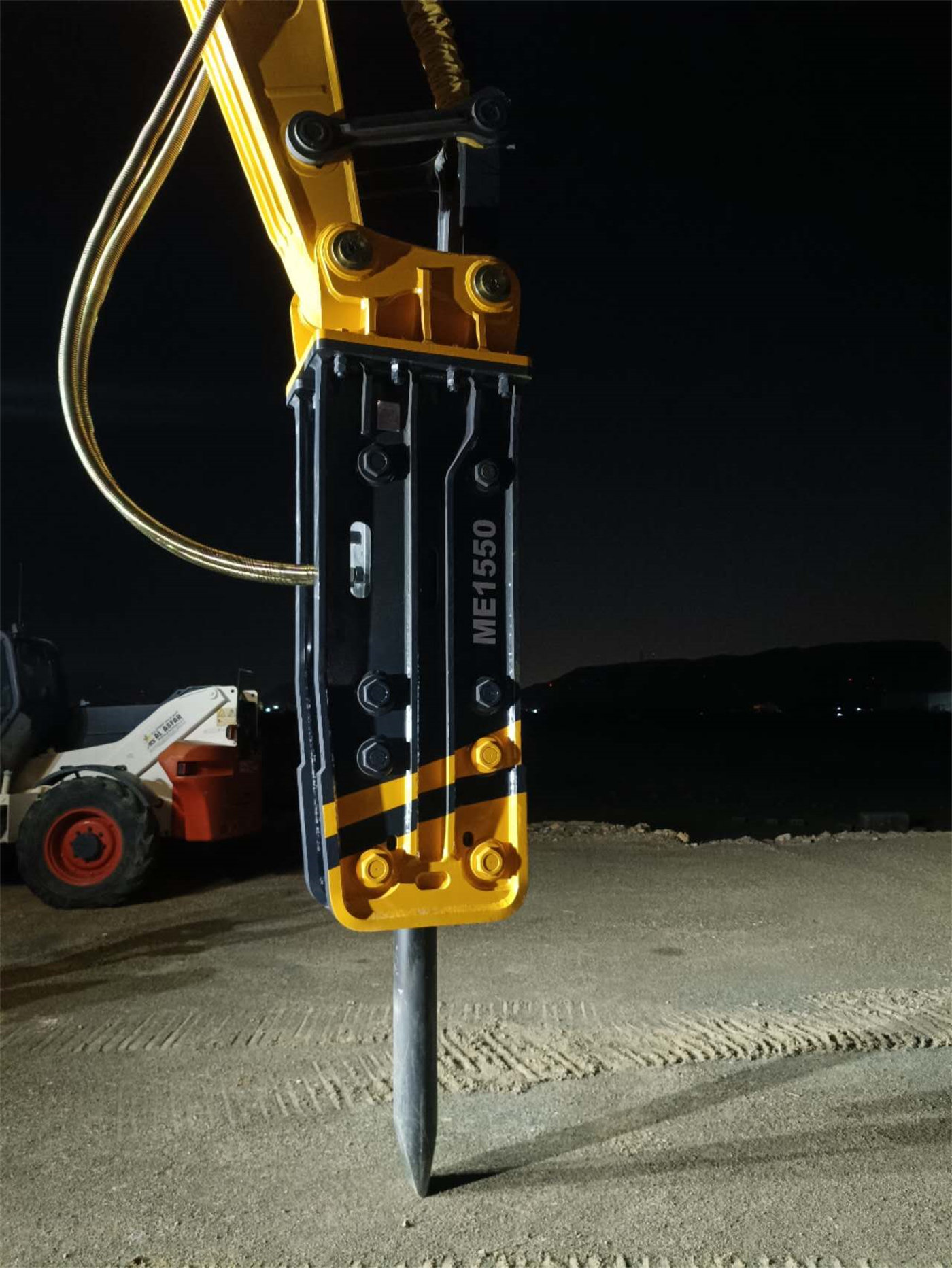
A hydraulic breaker needs to store energy during the upward return stroke of the piston and release it during the downward impact. Common accumulator solutions use nitrogen compression for buffering and energy storage. The dual-chamber nitrogen buffer system in the ME1400 documentation is a variant of this type of solution; the documentation describes its function as rapidly storing energy during the upward stroke of the piston and releasing it during the downward impact, thereby improving the utilization of hydraulic input energy.
It should be noted that the product documentation does not provide a specific recovery ratio or energy-saving value for energy recovery, so it is not possible to calculate how much fuel or power consumption is reduced. A more accurate understanding is: through nitrogen buffering, energy waste and pressure fluctuations in the hydraulic system are reduced, making the impact force output closer to the level corresponding to the hydraulic input.
What operating requirements these two features correspond to
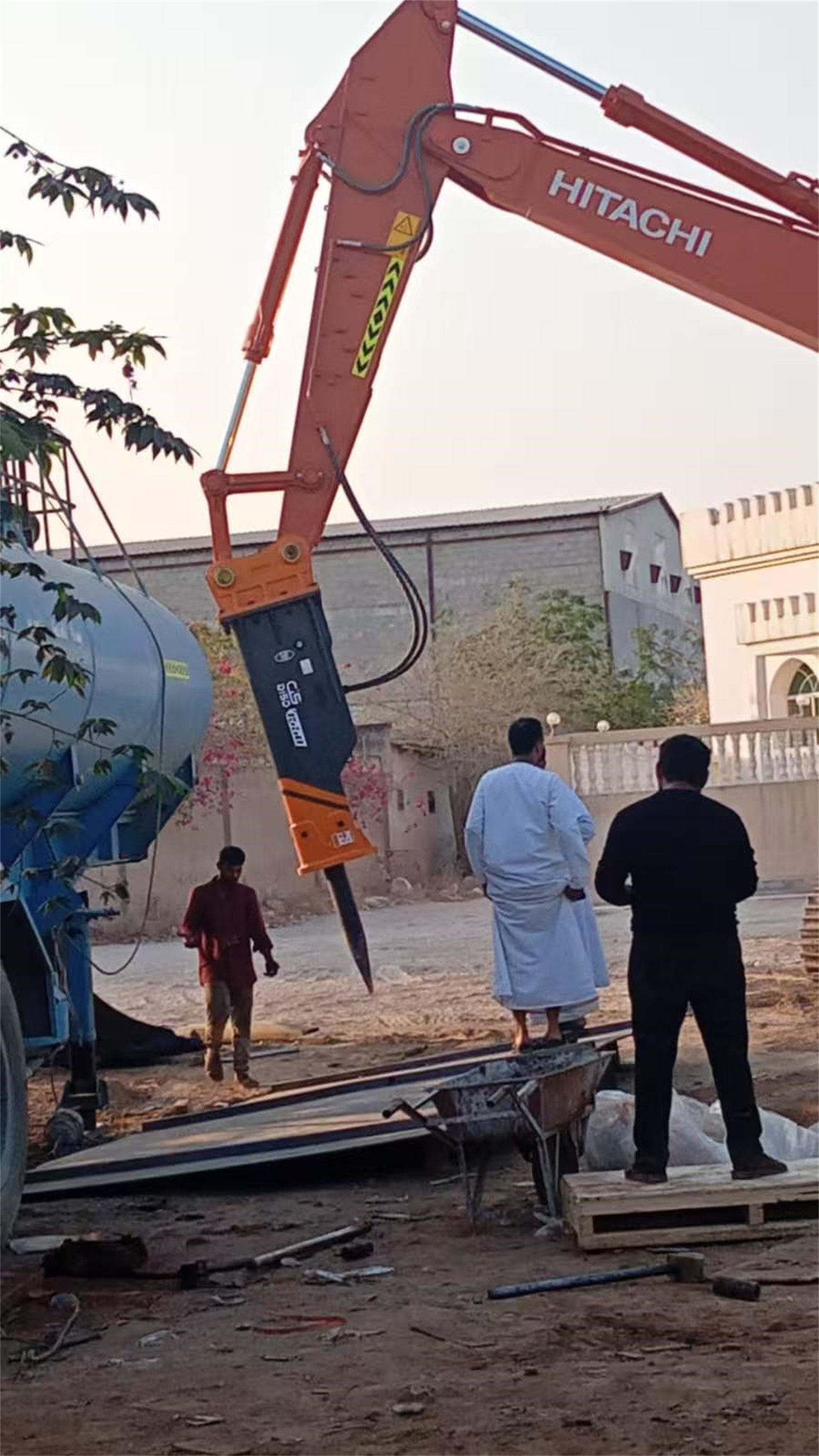
- Sites with frequently changing material hardness: For example, a quarry processing rock layers with different degrees of weathering, or a demolition project facing both concrete and reinforced concrete components. The value of frequency modulation lies in reducing manual intervention.
- Continuous multi-shift operation: The documentation mentions thermally stable seals and internal cooling channels, corresponding to the issues of hydraulic oil temperature rise and seal degradation under long-term high-pressure operation.
- Carrier tonnage in the 19–26 t range: The ME1400 documentation states compatibility with 19–26 t excavators, an attachment weight of 1800 kg, and a chisel diameter of 140 mm. If the carrier tonnage is below or above this range, compatibility cannot be judged solely by the frequency modulation feature.
What else to check on the carrier side
Frequency modulation and energy recovery are hydraulic control designs of the breaker itself. Whether they can be brought into play depends on whether the carrier can provide a stable hydraulic supply. The documentation gives the ME1400 flow range as 120–180 L/min and the working pressure range as 160–180 kg/cm². Before purchase, the carrier's hydraulic pump flow, system pressure, breaker hose interface, and connection dimensions need to be checked item by item against the manufacturer's documentation. These data are not within the parameter range of this breaker and need to be provided by the carrier side.
The documentation also mentions integrated recoil management, used to isolate impact feedback and protect the excavator boom and arm. However, the protection effect is related to the structural condition of the carrier, pin clearance, and operating habits, and this description should not be understood as meaning that any carrier can be exempt from wear.

When frequency modulation should not be used as a selection reason
If the contractor's main operation involves a single rock type with stable hardness, and the carrier's hydraulic system flow and pressure are already fixed, then the adjustment range provided by frequency modulation may not be needed. In this case, more attention should be paid to matching the chisel specifications and impact energy with the material strength, as well as the effect of the breaker weight on carrier stability. In addition, if the carrier tonnage is significantly below 19 t, the ME1400's 1800 kg weight and 140 mm chisel may exceed the carrier's load-bearing and hydraulic capacity, and frequency modulation and energy recovery would be irrelevant.
Checklist recommended before purchase
| Check item | Content to confirm |
|---|---|
| Carrier tonnage | Whether it is within the 19–26 t range, and the hydraulic parameters of the specific carrier model |
| Hydraulic flow and pressure | Whether the carrier can stably provide 120–180 L/min and 160–180 kg/cm² |
| Connection dimensions | Pin diameter, connection lug dimensions, hose interface type |
| Working material | Hardness and fragment size requirements of the main rock or concrete |
| Work shifts | Continuous operation duration and hydraulic oil temperature management conditions |
When requesting a quotation, it is recommended to provide: material type and hardness description, carrier model and hydraulic parameters, planned work shifts, whether the site requires frequent relocation, and the interface conditions of the existing breaker hose. Only then can the manufacturer judge whether the ME1400 matches the carrier and whether the frequency modulation feature corresponds to actual material changes.