




















Bridge pier demolition and reinforced concrete structure breaking are usually not problems that can be solved by simply mounting a breaker on a carrier and then operating continuously. The work face may be under a bridge, near the pier body, or between existing structures, with limited space; the material contains rebar, concrete, and possibly residual hard aggregate, so the impact rhythm and tool wear are completely different from ordinary earthwork. What the contractor needs to determine is not "whether there is a breaker," but whether the carrier, attachment, and site conditions can form a set of coordinated conditions for sustained operation.
This article focuses on this decision process, using the public information on the ME1000 heavy-duty hydraulic breaker from this site as a reference, to explain its applicable boundaries under 15–20 ton excavator matching conditions, as well as matters that still need to be confirmed with the manufacturer and the site before purchase. Parts not covered by the information can only be raised as conditions to be verified, and no conclusions are drawn on the reader's behalf.
First break down the operational constraints at a bridge pier demolition site
The objectives of bridge pier and reinforced concrete breaking usually fall into several categories: breaking open the pier body concrete for lifting or removal, treating the foundation area, or performing pre-breaking before large-scale demolition. Different objectives impose different requirements on the breaker.
- Material condition: plain concrete, reinforced concrete, and concrete containing hard aggregate have different requirements for impact energy and chisel type. When rebar is dense, the tool is prone to jamming, and the impact position needs to be adjusted.
- Working space: clearance under the bridge, access around the pier body, and carrier positioning will limit the excavator's swing angle and the breaker's direction of entry.
- Continuous operation intensity: when the demolition schedule is tight, breaker heat dissipation, structural component fatigue, and carrier hydraulic system stability all come into consideration.
- Removal coordination: the fragment size after breaking affects loading and removal efficiency, and the breaker's impact rhythm indirectly affects subsequent steps.
Only by laying out these constraints first can one determine which parameters of a given breaker are worth attention and which parameters are not decisive at a specific site.
Several items in the ME1000 information that correspond to breaking sites
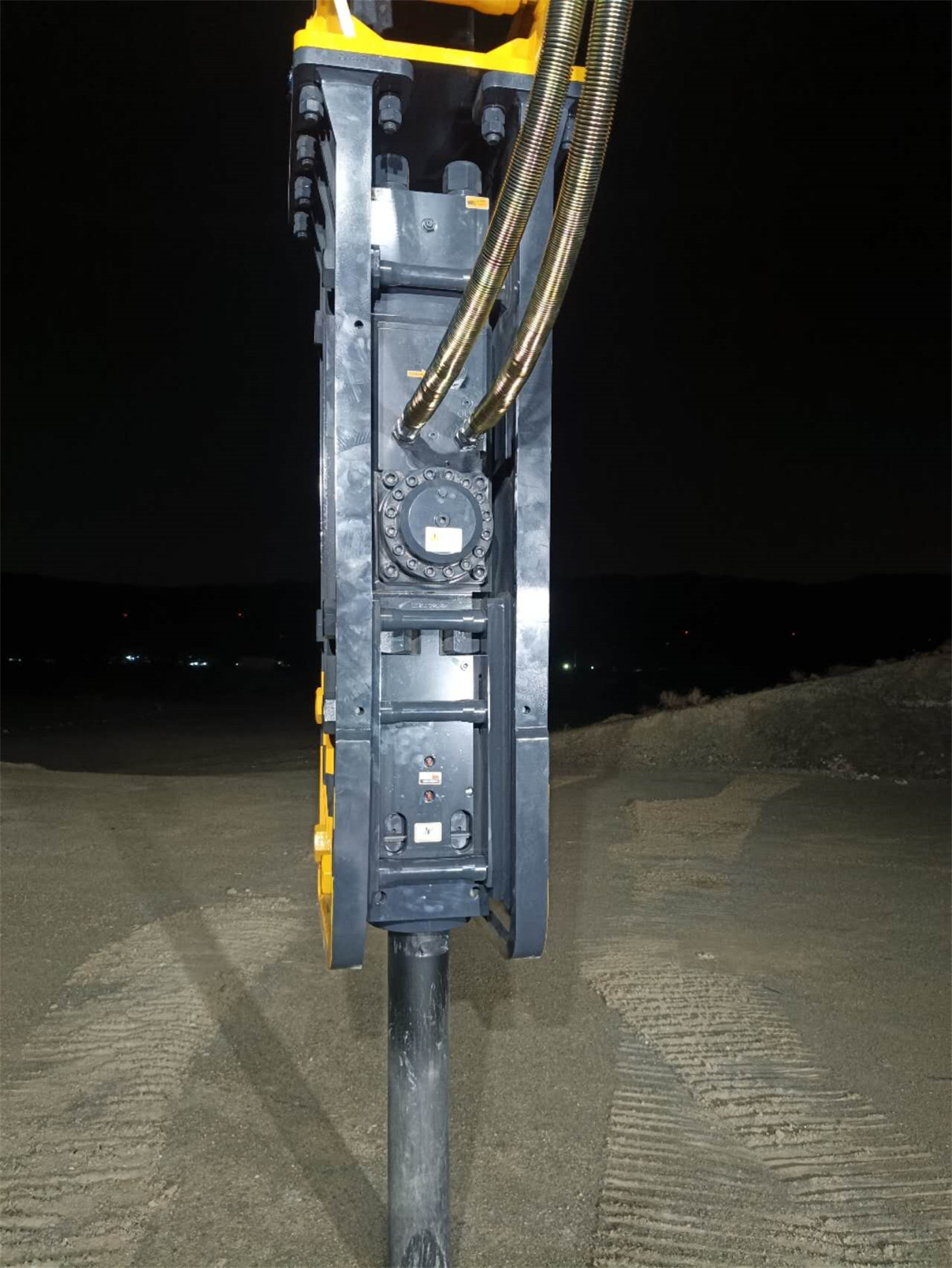
The ME1000 is a heavy-duty hydraulic breaker on this site for 15–20 ton excavators. The main parameters given in the public information include: 100 mm heat-treated alloy chisel, overall weight 850 kg, supported hydraulic flow 80–110 L/min, working pressure 150–170 kg/cm², high-strength through bolts, precision valve system, large-capacity accumulator, and low-friction cylinder core. The application scenarios listed in the information include quarry rock breaking, bridge demolition, reinforced concrete breaking, foundation excavation, bedrock trenching, and large construction site cleanup.
Comparing these parameters with the operational constraints of bridge pier demolition reveals several points of connection.
Chisel diameter and concrete fracture
A 100 mm chisel is a relatively large-diameter tool, and the information describes it as used for deep-hole penetration and concrete splitting. For large-volume reinforced concrete structures such as bridge piers, a larger-diameter chisel helps form a deeper fracture at a single point and reduces repeated repositioning. However, the information does not provide a recommendation for matching chisel type (pointed or wedge-shaped) to specific materials for bridge piers, so it must be confirmed at purchase according to actual concrete strength and rebar layout.
Flow and pressure: the first threshold on the carrier side
The flow range of 80–110 L/min and working pressure of 150–170 kg/cm² are the basis for determining whether the carrier can supply stably. If bridge pier demolition involves continuous operation, hydraulic oil temperature rise and flow fluctuation will be more pronounced than in short-duration breaking. The information mentions that the precision valve system is used to maintain impact rhythm under temperature fluctuations, but this is a product description; actual performance still depends on the condition of the carrier hydraulic system and piping configuration. Before purchase, it should be checked whether the excavator's actual flow and pressure settings fall within the same range as the breaker requirements, rather than only checking whether the tonnage is within the 15–20 ton range.
850 kg weight and carrier matching
Breaker weight affects the load on the excavator boom and the stability of the whole machine. The ME1000's 850 kg is a heavy-duty configuration in this tonnage range. The information mentions that the large-capacity nitrogen accumulator is used to absorb recoil and protect the carrier's main pump and boom. However, "protection" does not mean "no verification is needed"; on the carrier side, it is still necessary to confirm connection dimensions, pin specifications, piping interfaces, and changes in the center of gravity of the whole machine after the breaker is installed. These contents are not in the public parameter table and are part of what must be confirmed in writing with the manufacturer.
Structural design and continuous operation
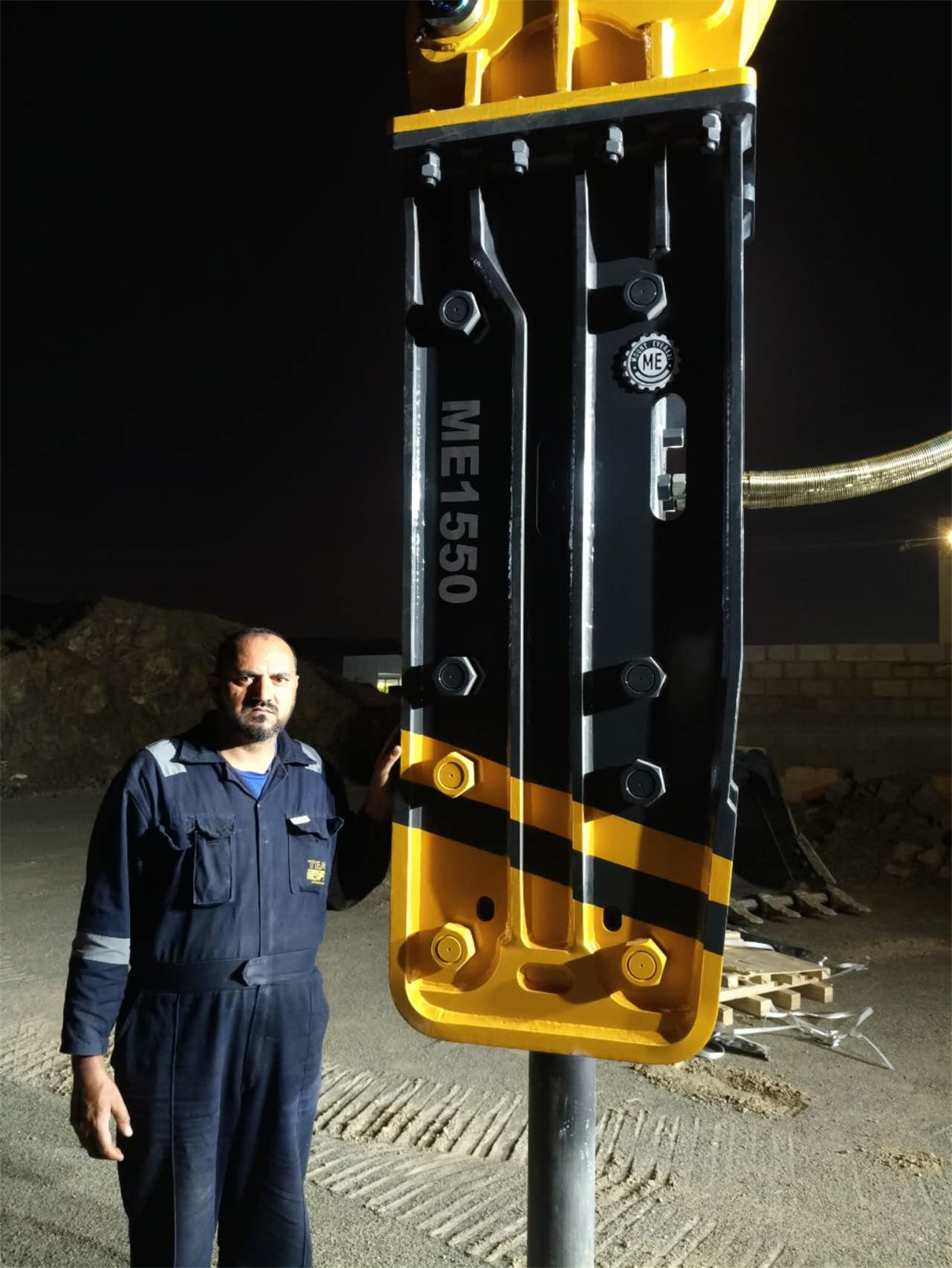
The information mentions high-strength through bolts, mining-grade shock-resistant structure, and low-friction cylinder core, which correspond to structural stability and heat control under high-impact cycles. Bridge pier demolition is often not a short single-point operation; under continuous impact, structural component fatigue and seal service life are practical concerns. These descriptions can serve as a basis for understanding the product's design direction, but they cannot replace service life judgment under actual site conditions.
Conditions under which this matching approach needs to be reassessed
The ME1000 information points to matching with 15–20 ton excavators, but when the following conditions occur, matching cannot be considered established based solely on the tonnage range:
- The carrier's actual hydraulic flow or pressure is lower than the range given in the information, or the hydraulic system is aging and oil temperature control is unstable.
- The bridge pier rebar is extremely dense, the 100 mm chisel jams frequently, and the tool type needs to be adjusted or the breaking process changed.
- The working space prevents the excavator from entering at a suitable angle, limiting the breaker's impact direction and affecting efficiency and safety.
- Continuous multi-shift operation is required, but the carrier's cooling capacity, hydraulic oil heat dissipation, and attachment maintenance conditions have not been arranged accordingly.
- The demolition site has risks of vibration, flying debris, or structural instability, and the breaking sequence and protective measures must first be determined by the construction plan.
These are not limitations unique to the ME1000, but conditions that attachment matching plans generally need to face at demolition sites. The information does not provide specific handling methods for the above situations, so they should be confirmed separately with the manufacturer and the construction technical manager before purchase.
Beyond the attachment, carrier selection still requires separate judgment
The breaker is a matching attachment, and carrier selection still must return to the excavator's own operational needs: removal after bridge pier demolition, site clearing, and foundation excavation may simultaneously require bucket work, so the carrier's bucket capacity, digging force, swing range, and travel conditions must be judged according to these combined operations. The ME1000 information covers only the breaker side and cannot be used to infer that a given excavator is suitable for all demolition stages. If the carrier also handles loading and breaking, hydraulic system distribution and attachment changeover time should also be included in work organization.

Checklist recommended before purchase
- Carrier model, operating weight, actual hydraulic flow, and pressure settings.
- Whether breaker connection dimensions, pin diameter, and piping interface type correspond to the carrier.
- Bridge pier concrete strength grade, rebar layout density, and required broken fragment size.
- Working space dimensions, excavator positioning, and swing limitations.
- Planned shifts, continuous operation duration, and on-site maintenance conditions.
- Chisel type and spare parts supply arrangements.
- Construction plan requirements for demolition sequence, vibration control, and flying debris protection.
Among the above items, connection dimensions, piping interfaces, and actual carrier hydraulic output cannot be confirmed for the reader from public information and must be verified in writing after providing carrier information to the manufacturer. Material and space conditions should be verified by on-site technical personnel and then written into the inquiry document.
Site information to explain when requesting a quotation
When requesting a quotation from a manufacturer or dealer, it is recommended to provide: carrier brand and model with operating weight, measured or calibrated hydraulic flow and pressure values, type and strength of the material to be broken, approximate bridge pier dimensions and rebar conditions, working space and excavator positioning diagram, planned shifts and continuous operation duration, whether bucket work is also required, and the condition of existing piping and connectors. The more specific the information, the better the manufacturer can determine whether the ME1000 falls within the matching range and which accessories need separate confirmation.
Attachment matching is not the independent purchase of a tool, but a match among the carrier, attachment, and on-site work organization. The ME1000 public information provides a starting point for judgment, but whether matching is established still depends on measured carrier data and written confirmation from the manufacturer.