



















Many contractors reading a mid-size excavator data sheet start directly with engine power or bucket capacity. The result is that they end up comparing which machine is "bigger" rather than answering whether it can do their job. The reading order should actually be driven by the work objective: first confirm whether the machine's working range covers the digging and dumping points, then judge whether digging force and bucket capacity match the material, then check the undercarriage, travel and power configuration, and only then look at maintenance and delivery conditions. The following uses the verified specifications of the SH220 mid-size crawler excavator on this site to explain why this order makes sense and which sections cannot be judged from numbers alone.
First confirm whether the machine can reach the work face
The first threshold for earthmoving and loading is geometry, not power. Trench depth, dumping height and how far away the truck is parked determine whether the machine's maximum digging depth, maximum digging height and maximum digging radius are sufficient. The SH220 has a maximum digging depth of 6490 mm, maximum digging height of 10950 mm, maximum dump height of 7190 mm, maximum digging radius of 9860 mm, maximum ground-level digging radius of 9675 mm and minimum working radius of 2970 mm.
These figures should not be reduced to a single maximum value. For example, the maximum digging radius is usually achieved with a shallower digging depth and a specific boom position; when loading, you also need to know whether the bucket can be raised to the truck bed height at that radius and dump cleanly. The data sheet does not provide specific working curves for each radius-depth combination, so for projects involving deep trenches or high dumping, treat these figures as preliminary screening criteria and ask the supplier for working-range diagrams for the relevant boom and arm combinations.
Then check whether digging force and bucket capacity are in the same class
Once the working-range figures are acceptable, the next question is whether the material can be dug and loaded efficiently. The SH220 has a maximum bucket digging force of 146 kN, arm digging force of 140 kN, and a matched 1.06 m³ bucket with a width of 1254 mm and 5 teeth. There is a trade-off between digging force and bucket capacity: at the same power, a larger bucket tends to dilute the penetration force per tooth; in hard soil, gravelly ground or rock surfaces requiring pre-treatment, looking only at bucket capacity will overestimate productivity.
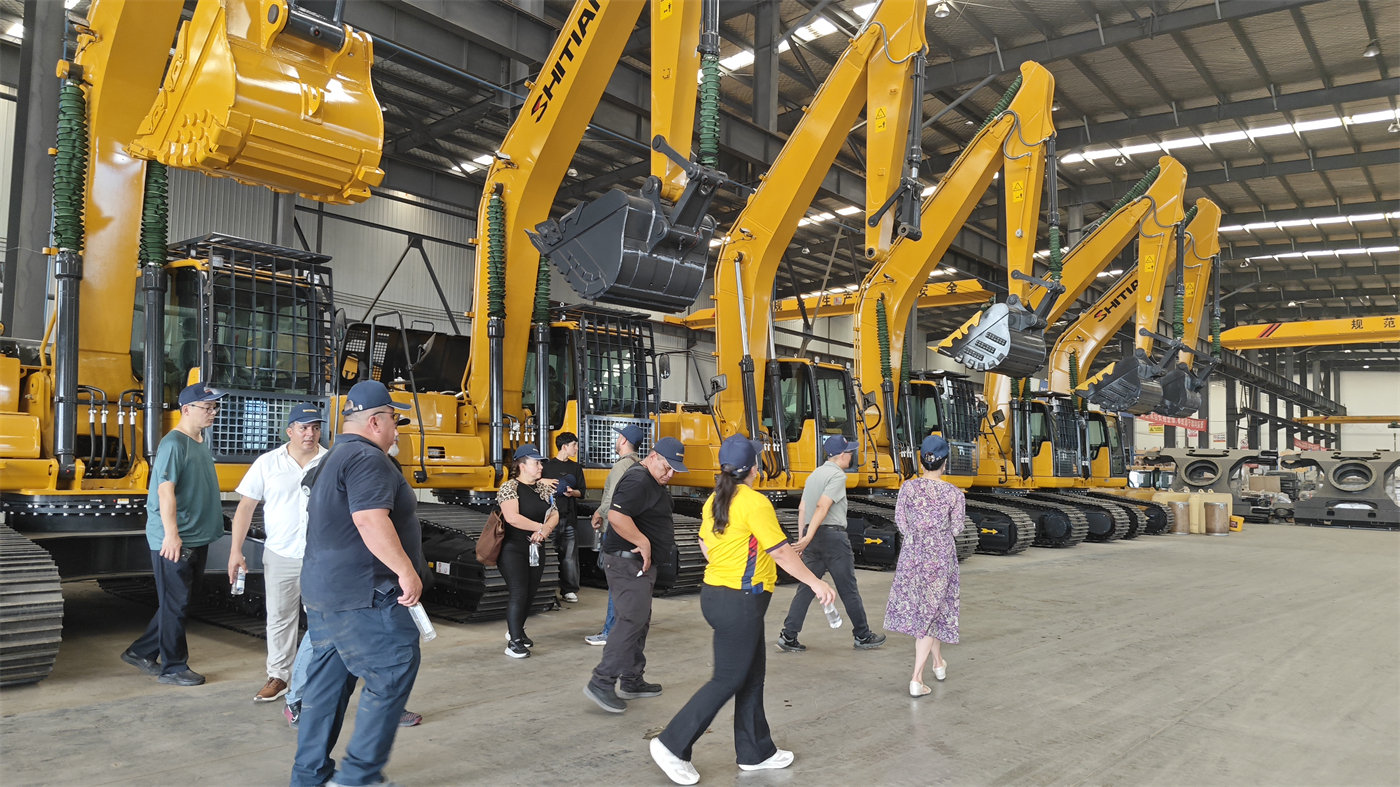
The digging force shown on the data sheet is a maximum value; how much is actually available also depends on hydraulic flow and pressure distribution, operating mode and tooth condition. The SH220's hydraulic system uses variable displacement twin piston pumps with a maximum flow of 2×224 L/min, travel system pressure of 34.3 MPa, swing system pressure of 25.5 MPa, and three adjustable working modes. These figures show that there is room for power adjustment under different conditions, but they cannot be used to infer specific output in a given stratum; that requires separate assessment based on material properties and shift arrangements.
Undercarriage and ground pressure determine whether it can enter and move on site
On many sites the problem is not digging but whether the machine can stand safely and get itself out. The SH220 has an operating weight of 21200 kg, track shoe width of 600 mm, ground pressure of 49.8 kPa, track length of 4260 mm, track gauge of 2380 mm and minimum ground clearance of 468 mm. For backfilled areas, soft ground or sites after rain, ground pressure is more informative than tonnage, but it still needs to be compared with the site's bearing capacity and moisture condition.
For the travel system, the SH220 uses a variable displacement piston motor, with travel speeds of 5.1/3.1 km/h, traction force of 214 kN and gradeability of 70% (35°). These figures can be used for a preliminary judgment of on-site movement and ramp access, but gradeability is a test value under specific conditions; actual ramp gradient, surface grip and load condition will change the result, so it should be calculated separately on site.
Look at power and hydraulic configuration fourth
Engine specifications are often read too early, but they usually explain "whether it can deliver sustained output" rather than "whether this machine suits this job." The SH220 uses a Cummins 6BTAA5.9 engine with a displacement of 5.9 L, rated power of 133 kW/2000 rpm, maximum torque of 708 N·m/1500 rpm, and a Linde hydraulic system. Fuel tank capacity is 330 L; hydraulic tank 250 L, system 400 L.
For long periods of heavy loading or continuous digging, torque reserve and hydraulic system stability matter more than peak power, but the data sheet does not provide measured data on fuel consumption, temperature rise or continuous operating time, so shift costs cannot be estimated from it. During procurement, the power configuration should be assessed together with planned shifts and fuel supply conditions.
Finally, look at maintenance and operating conditions
The maintenance information at the end of the data sheet also affects whether the machine can remain serviceable over the long term. The SH220's filters and maintenance points are designed for ground-level servicing, it has an auto-idle function, and the cab is fully sealed and low-noise. These design features can reduce climbing and downtime for routine maintenance, but specific service intervals, filter element part numbers and spare parts availability are not covered by the data sheet and need separate confirmation during the inquiry stage.

Check items easily missed when reading a data sheet
- Working-range curves: the actual reachable area for each radius-depth combination, not just a single maximum value.
- Bucket capacity and material matching: 1.06 m³ is the standard configuration; the data does not state whether a different bucket type is needed for sticky soil, gravel or lightweight materials.
- Transport conditions: overall transport dimensions, weight and split-transport requirements are not given on the data sheet; whether the 600 mm track shoes and 2800 mm overall width meet road or site access limits also needs separate verification.
- Attachment compatibility: if a hydraulic breaker is to be fitted later, compatibility must be verified against operating weight, hydraulic flow and pressure, attachment weight and connection dimensions—not judged by tonnage alone.
- Electrical and safety configuration: specific clauses are not listed on the data sheet and should be requested from the supplier according to the access requirements of the project region.
Job information to provide when requesting a quotation
To enable the supplier to give a verifiable configuration recommendation, the inquiry should include: main material type and condition, digging depth and dumping height, truck bed height and parking distance, site ground conditions and ramps, planned shifts and continuous operating time, whether a hydraulic breaker or other attachments are needed, transport access limits and local access requirements. It is difficult to judge whether the SH220's working range and undercarriage configuration match actual conditions based only on "I need a 20-tonne excavator."
It should be noted that this article is based on the SH220 product specification data on this site and does not include customer feedback, measured productivity or fuel consumption comparisons. A data sheet can help narrow the selection range, but it cannot replace working-range calculations and confirmation of supporting conditions for a specific site.