




















When purchasing equipment for a quarry, bucket capacity is often the first number discussed. But bucket capacity is a configuration result, not the starting point of requirements: the same 1 m³ bucket does not perform at the same pace when loading soft soil versus secondary breaking of hard rock. Discussing bucket capacity first easily pushes the real constraints—working face, bench height, loading height, and rock conditions—to the back.
This article follows this order: first clarify the constraints to be settled before entering the quarry, then see which requirements the verified data of the SH200, a 21-ton class crawler excavator, can correspond to, and finally list items outside the data that need confirmation. The text does not assume that any customer has adopted this model, nor does it promise specific output.
Define constraints first, then bucket capacity
The difference between a quarry and an ordinary earthwork site lies mainly in the material and the working face. The fragment size of blasted rock is uneven, and the height of the loading point, the truck bed height, and the equipment parking position all affect a single loading cycle. Only when these constraints are put first can bucket capacity have a premise for discussion.
Questions worth answering before entering the site
- Working face width and bench height: whether there is enough space for the tail during slewing, and whether the dumping height covers the truck.
- Material state: mainly loading blasted rock, or containing large blocks that require secondary breaking.
- Truck matching: bed height and capacity determine the number of bucket loads and the lifting height requirement.
- Site conditions: ground bearing capacity, slope, and access routes determine the ground contact and passage requirements of the crawler undercarriage.
- Shift arrangement: whether continuous operation duration and refueling/maintenance intervals leave downtime windows.
Without answers to these questions, discussing bucket capacity is just guessing. Conversely, if the working face is narrow, the bench is low, and the truck is small, blindly pursuing a large bucket capacity will instead lead to limited slewing and overshooting during loading.
Which SH200 data features correspond to quarry requirements
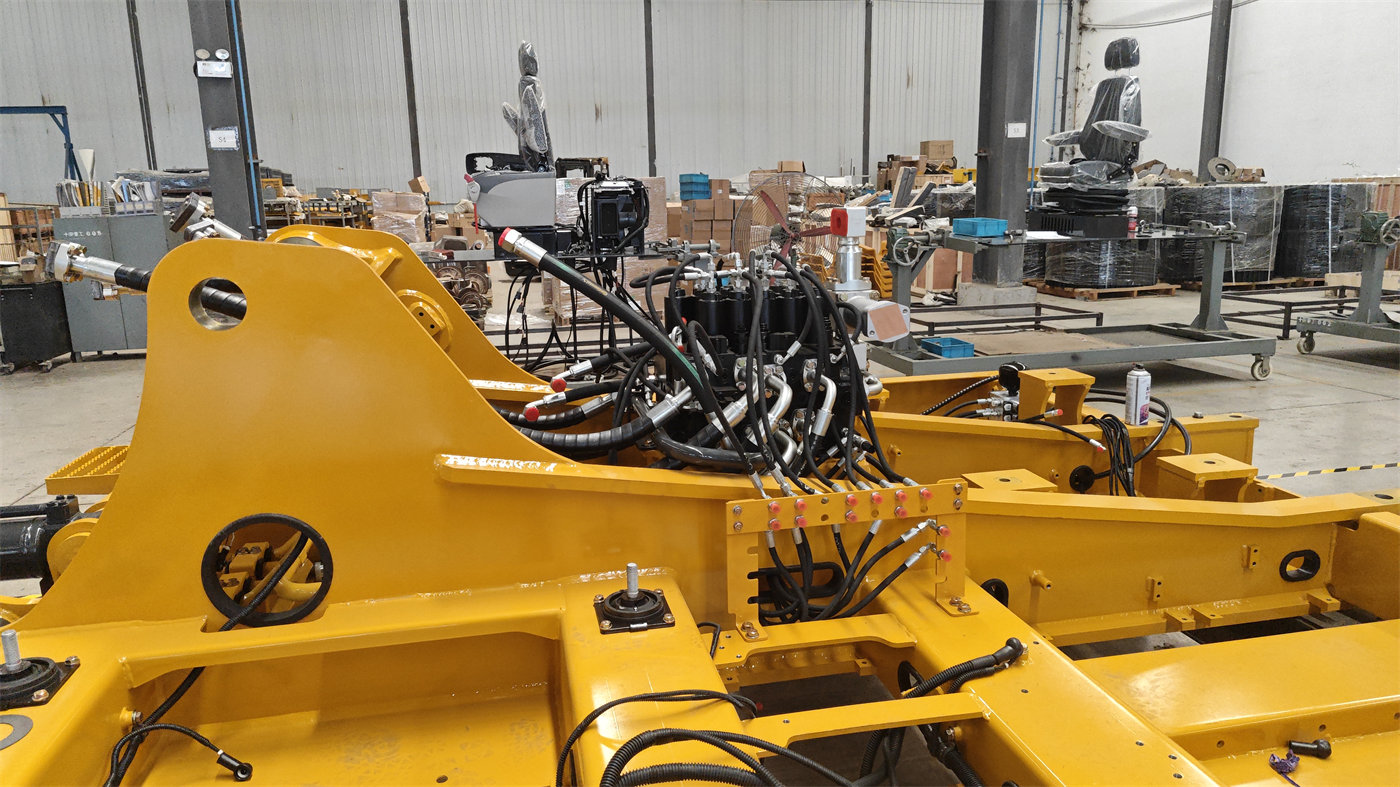
The SH200 is a 21-ton class mid-size crawler excavator in this site's data, equipped with a 1 m³ standard bucket, a 129 kW (173 HP) WP6 engine, rated speed 2200 rpm, system pressure 32 MPa, maximum bucket digging force 140 kN, and stick digging force 99 kN. The data lists its applicable scenarios as municipal engineering, earthwork, quarry mining, and heavy construction engineering. Below, these parameters are put back into specific requirements.
Cutting and rock breaking, and the loading cycle
When loading in a quarry, the bucket must overcome the resistance caused by blocky rock. The 140 kN bucket digging force and 32 MPa system pressure are a basis for judging whether this machine can handle the given material; the 99 kN stick digging force relates to the dragging capability at a larger digging radius. The slewing speed of 11-13 rpm, and the smoothness of movement transitions, affect loading positioning. However, these are capability indicators given in the product data and do not equal the actual cycle time under specific rock and bench conditions; the latter requires on-site calculation.
Working range and bench height
The working range given in the data can be used for preliminary screening: maximum digging height 9410 mm, maximum dumping height 6730 mm, maximum digging depth 6480 mm, maximum digging radius 9850 mm, minimum slewing radius 3555 mm. If the loading point requires a higher dumping height, check the 6730 mm figure against the truck bed height first; when the bench or stockpile requires digging downward, the 6480 mm digging depth determines the ability to reach it in one pass. The minimum slewing radius relates to the tail space when the equipment is positioned on a narrower working face.
Site passability
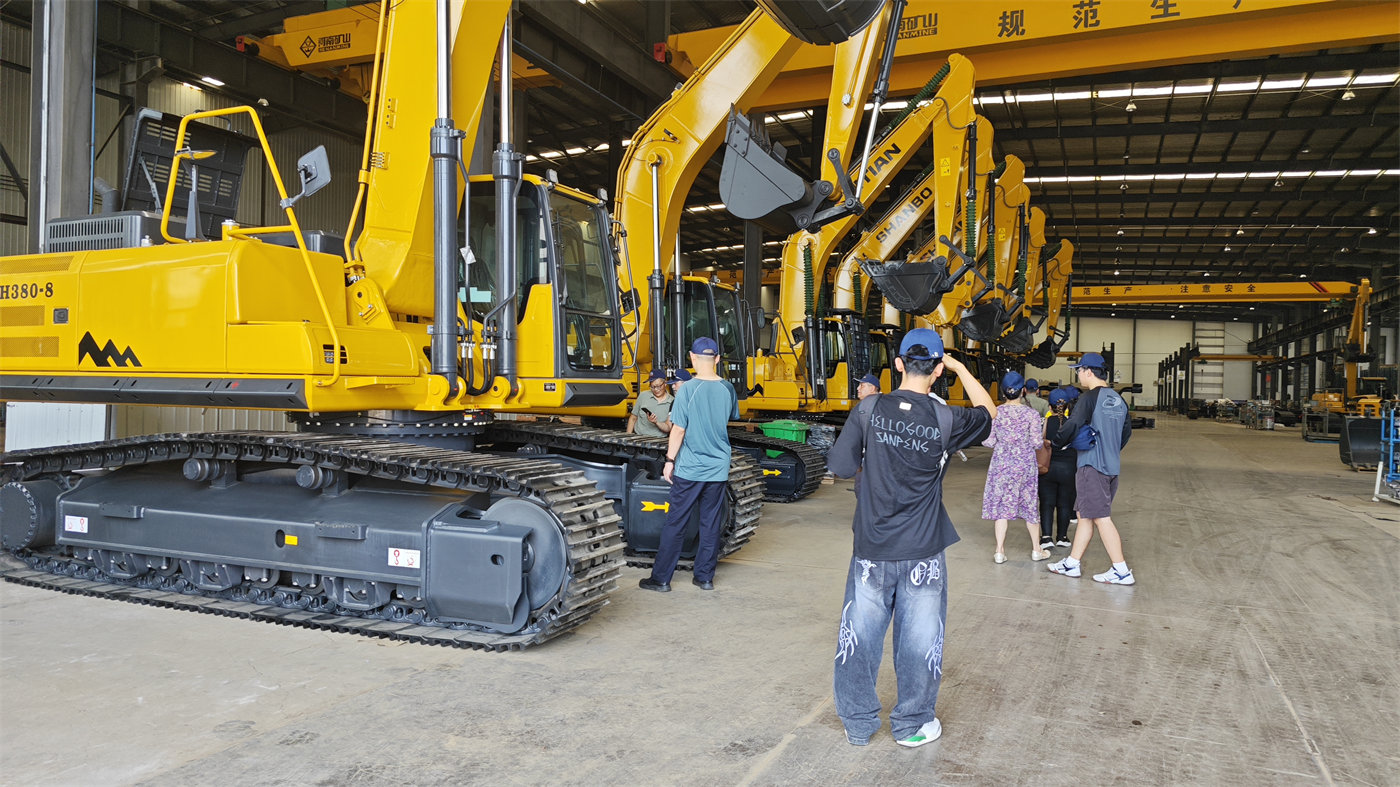
Overall dimensions are 9590×2980×3185 mm, tail slewing radius 2880 mm, minimum ground clearance 470 mm, maximum gradeability 30°, and track gauge 2380 mm. Quarry roads often have slopes and crushed stone; these data can serve as check items for the entry route and parking position. Ground clearance and gradeability do not mean the machine can pass freely over soft or slippery surfaces; actual bearing capacity still needs on-site confirmation.
Supporting conditions for continuous operation
The data mentions that the WP6 engine is turbocharged and can operate in high-altitude and low-temperature environments; the electronic throttle and auto-idle function enter idle after 5 seconds of no operation to reduce fuel consumption and noise; maintenance filters are arranged in ground-reachable positions, and the large-capacity fuel tank supports long continuous construction. These descriptions correspond to operational and maintenance convenience during continuous work shifts and can serve as a reference for shift planning, but specific fuel consumption and maintenance intervals must be confirmed according to on-site working conditions and the manufacturer's maintenance manual.
Directions for which this 21-ton class model is and is not suitable
From the data, the SH200 is positioned as a mid-size crawler excavator, suitable for loading, stripping coordination, and on-site earthwork in medium-scale quarries, as well as earthwork excavation in municipal and general heavy construction engineering. Its working range and power configuration provide some coverage for common quarry loading heights and benches.

However, the data does not give conclusions about its capability in direct excavation of extremely hard intact rock, secondary breaking of oversized blocks, or ultra-large-scale continuous loading. In such conditions, suitability should not be inferred solely from bucket capacity and digging force; rock strength, fragment size distribution, truck specifications, and shift targets should be checked together. If the material requires a hydraulic breaker, whether the carrier and attachment match must be verified based on operating weight, hydraulic flow and pressure, attachment weight, connection dimensions, and piping data; the existing data on this site is insufficient to directly confirm the compatibility relationship.
Information to prepare before inquiry and entry
Organizing the following information before discussing configuration is more useful than quoting a bucket capacity number first:
- Material type and fragment size range, and whether large blocks requiring secondary breaking are included.
- Working face width, bench height, loading point, and truck bed height.
- Daily and per-shift workload targets, and continuous operation duration.
- Site slope, ground bearing capacity, and entry route conditions.
- Whether attachments such as a hydraulic breaker are needed, and existing hydraulic piping data.
- Local altitude, temperature, and other environmental conditions, used to check the engine adaptability description.
Once these conditions are clear, parameters such as 1 m³ bucket capacity, 140 kN digging force, and 6730 mm dumping height can be compared item by item to judge whether they are sufficient, tight, or have margin. Without on-site data, only conditional judgments can be given, and conclusions cannot be made on behalf of the site.