



















Earthwork excavation in road and municipal projects is rarely a single process from start to finish. A roadbed section must first have its surface layer stripped, then pipe trenches excavated, and backfilling and rough leveling are also required; on the same work face there is excavation and truck loading, as well as a level surface left for subsequent processes. The equipment selection question is often not "how big to buy," but "which processes one machine must cover, and to what extent." Starting from this trade-off, this article explains the positioning of medium crawler excavators in such projects, and which judgments the SH150 information on this site can support and which still need verification.
Objectives and Site Constraints of Road and Municipal Work
Assume a scenario requiring evaluation (not an actual project): a construction company undertakes an urban road renovation involving earthwork removal after old pavement breaking, storm and sewage pipe trench excavation, and rough leveling of local areas. Equipment constraints in such scenarios mainly fall into three categories:
- The work face is distributed linearly along the road, and the machine needs to move forward with the work face; relocation depends on flatbed trailers or self-propelled travel.
- Excavation depth mostly falls within the range of conventional pipe trenches and roadbeds; the requirements for maximum digging depth and working radius are not extreme values, but the equipment must handle excavation, truck loading, and short-distance leveling.
- Urban construction constraints on noise, emissions, and working hours come more from local management; during equipment selection, local requirements should be treated as verification items rather than looking only at machine capability.
These constraints show that medium crawler excavators play a "multi-process coverage" role in such projects, rather than being single high-volume truck loading equipment. Positioning judgments should be developed around this role.
Why Structural Dimensions and Working Range Come First
The excavation depth and swing radius of road projects directly determine whether the machine can complete movements between existing pavement, pipelines, and enclosures. The SH150's overall dimensions are 7,737 × 2,500 × 2,847 mm, with a tail swing radius of 2,389 mm and a minimum swing radius of 2,770 mm. For work with dense roadside pipelines where tail sweep must be controlled, these dimensions provide a calculable basis: whether the tail will cross the boundary at a given position and whether the machine can work close to the edge must be calculated according to actual site boundaries, not judged only from the dimensions of a single machine.
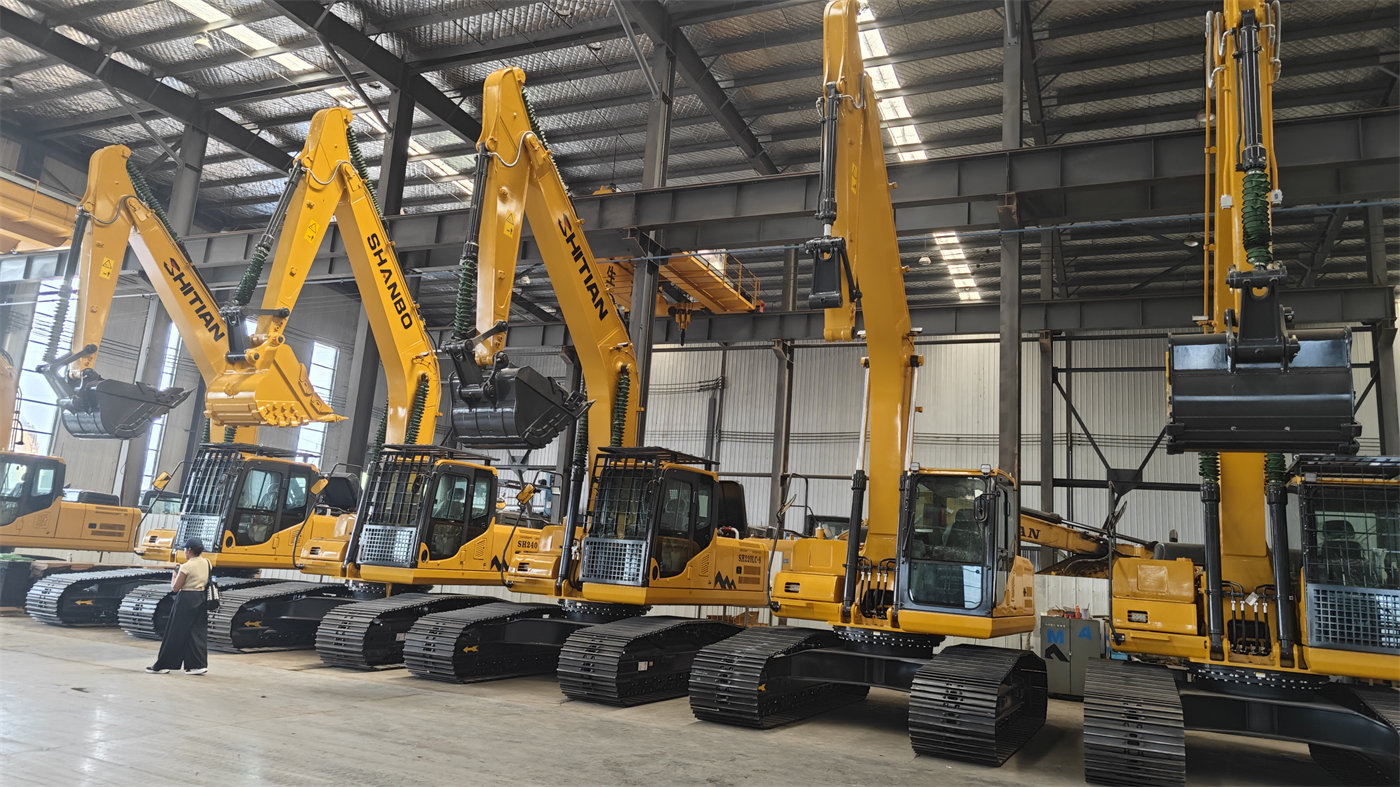
In terms of working range, the SH150 has a maximum digging depth of 5,343 mm, maximum vertical digging depth of 4,790 mm, maximum digging height of 8,627 mm, maximum dumping height of 6,025 mm, and maximum digging radius of 8,198 mm. Whether pipe trench excavation requires vertical digging capability depends on the trench wall support method; whether the dumping height is sufficient depends on the transport truck sideboard height and the material pile position. The correspondence between these values and the processes is one basis for judging whether this model can cover the work in that section.
What Pace Does the 0.6 m³ Bucket and 110 kW Power Correspond To
The SH150 has a bucket capacity of 0.6 cubic meters, rated power of 110 kW (148 hp), and operating weight of 15,000 kg. In the positioning of road and municipal projects, this set of parameters indicates how single-load capacity and power reserve work together: bucket capacity determines the load per bucket, while power and the hydraulic system determine the continuity of the cycle movements.
A bucket digging force of 91 kN and arm digging force of 55 kN are references for judging whether the machine can penetrate hard compacted soil layers. When encountering old roadbeds, compacted backfill, or soil containing crushed stone, whether the bucket can fill smoothly and whether there will be stalls where it cannot dig depends on both digging force and tooth condition; efficiency cannot be inferred from bucket capacity alone. The dual-pump confluence technology and built-in buffer structure of the main cylinder mentioned in the materials indicate hydraulic response and impact absorption, but these are manufacturer descriptions, and actual performance still needs to be verified during machine trials or on-site operation.
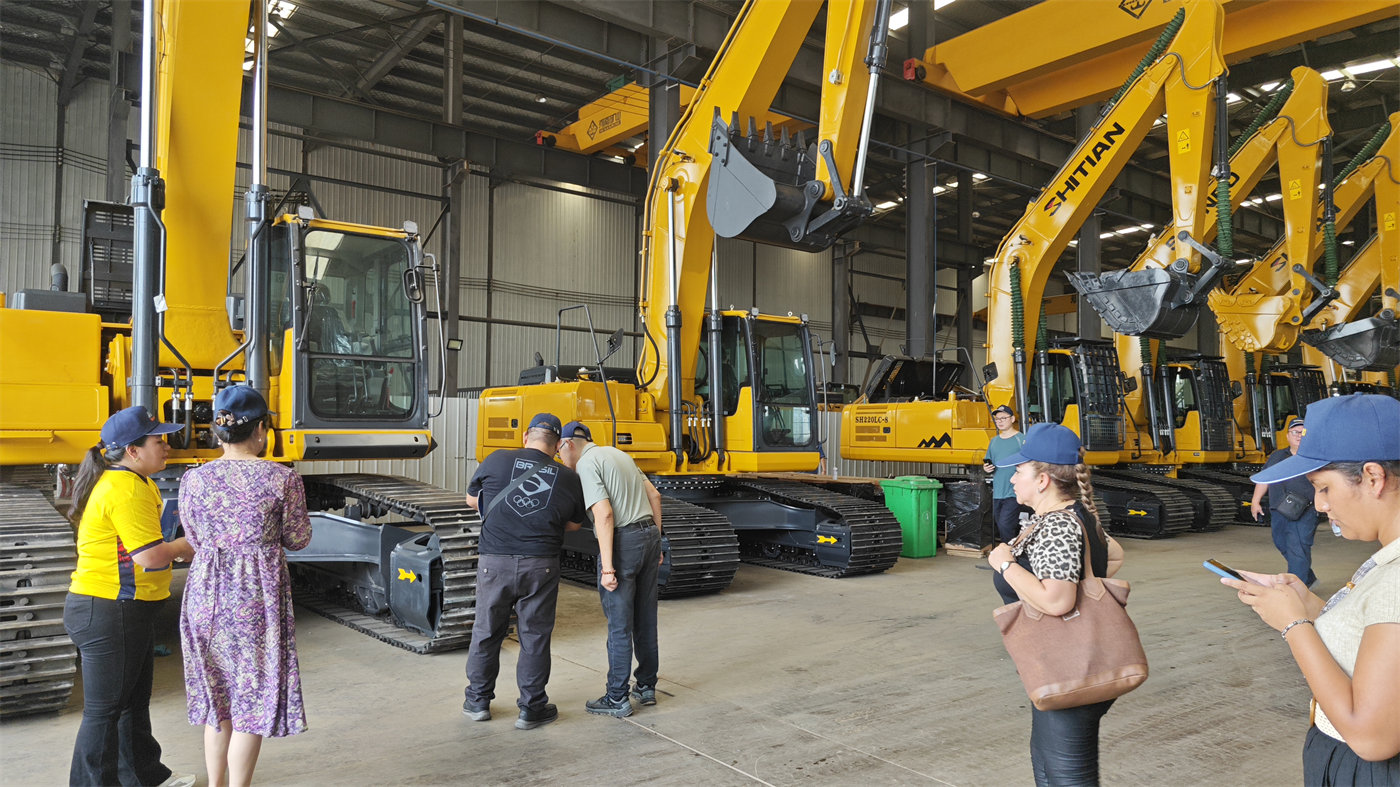
Which Structural Features Does Fine Leveling Depend On
Municipal projects often require a usable level surface after pipe trench backfilling and before base course construction. The flat-bottom bucket design mentioned in the SH150 materials points precisely to the fine leveling stage—the flat-bottom structure helps form an even bottom surface when trimming the surface. But this is only part of the working capability: fine leveling results also depend on operator feel, swing control precision, and machine stability on soft ground. The materials mention improvements to the swing control system for vibration absorption and precise stopping; this can be a key movement item to observe during on-site machine trials, rather than being treated directly as a promised result.
Plateau Environmental Adaptability: What the Materials Support and Do Not Support
The SH150 uses turbocharging technology, and the materials explicitly mention high-altitude adaptability. For organizations undertaking road or municipal projects in plateau regions, this item is worth including in the evaluation. However, "plateau adaptability" does not mean that no adjustment is needed at any altitude, nor does it mean that overall machine performance at the same altitude is comparable to that of lower-power equipment. How altitude, temperature, diesel quality, and cooling conditions each affect hydraulic oil temperature and engine output are conditions that need to be confirmed item by item with the supplier before purchase; the materials in this article are insufficient to provide specific applicable altitudes or power correction values.
Daily Operation and Maintenance and Personnel Conditions
Road and municipal projects usually have scattered work points, and maintenance convenience affects downtime. The SH150 materials mention that the oil filter, pilot filter, fuel filter, and water separator are arranged at ground level, and that the large-capacity fuel tank is used to extend operating time. These are convenience conditions at the configuration level; whether they can reduce downtime also depends on on-site spare parts inventory and maintenance arrangements. The cab with air conditioning, LCD display, and GPS remote diagnostic function corresponds to long-shift operation and equipment management needs; during purchase, it should be confirmed whether the local service network can support remote diagnostics and fault response.

Checklist to Verify Before Mobilization
Turn the above judgments into verification items for selection evaluation:
- Work content: whether the main processes in the contract section are excavation, truck loading, fine leveling, or a combination, and the approximate proportion of each.
- Dimension boundaries: the relationship between existing road width, pipeline positions, enclosure and structure limits, and the machine's overall width of 2,500 mm and tail swing radius of 2,389 mm.
- Excavation depth: whether conventional pipe trench and roadbed excavation depths fall within the maximum digging depth of 5,343 mm, and whether vertical excavation sections require the 4,790 mm vertical digging capability.
- Transport matching: whether the sideboard height of the matched dump truck and the material yard position connect smoothly with the maximum dumping height of 6,025 mm and maximum digging radius of 8,198 mm.
- Environmental conditions: local altitude, temperature, and environmental management requirements; the supplier must be asked to confirm the actual performance of this configuration under these conditions.
- Supporting conditions: attachment requirements, spare parts supply, service radius, and operator staffing.
Applicable Boundaries and Matters Still to Be Confirmed
Medium crawler excavators are suitable for multi-process road and municipal earthwork, but they are not the answer for every stage. Tasks such as high-volume continuous truck loading, ultra-deep foundation pit excavation, and hard rock breaking exceed their single-machine coverage and require separate equipment or attachment solutions. For the SH150, the parameters cited in this article all come from the product materials on this site and do not involve actual project performance; descriptions such as plateau adaptability, fuel economy, and cycle time are product statements, and selection should be based on machine trials or written confirmation from the supplier. If hydraulic breakers or other attachments are involved, information such as operating weight, hydraulic flow and pressure, and connection dimensions must also be verified; compatibility should not be assumed directly.
When requesting a quotation, it is recommended to provide: work processes and quantities, site dimensions and limits, excavation depth and soil description, matched transport vehicle type, shift arrangements, local altitude and environmental requirements, and attachment needs. The more specific this information is, the better the supplier can judge whether this model covers the work requirements or whether the configuration needs adjustment.