





















Preparing for a mid-size excavator to arrive on site is not just about transporting the equipment to the job site. What really affects subsequent work continuity is often whether site conditions, working objectives, and supporting information have been organized clearly in advance. When documentation is incomplete, it may only be discovered after the equipment arrives that the working range is insufficient, ground bearing capacity is inadequate, or the transport vehicles and loading pace do not match. This article breaks down the site documentation needed before entry into a verifiable checklist, and uses verified data from a 23.2-tonne mid-size tracked excavator to explain what each piece of information is used to determine.
First, clarify the working objectives this equipment must achieve
The first item in the pre-entry documentation is to clearly state what the equipment is to do. Even for the same mid-size excavator, whether it is used for earthmoving excavation and loading, road construction, municipal excavation, or auxiliary work at a quarry, the requirements for working range, bucket configuration, and undercarriage passability are not the same. The documentation should at minimum include:
- Main work type: excavation, loading, clearing, backfilling, or other;
- Expected work face location and range, including the actual requirements corresponding to maximum digging depth and maximum dump height;
- Material type: ordinary soil, hard soil, loose material, or material containing rock;
- Supporting equipment: the body height and parking position of transport vehicles, or other interface equipment.
This information does not need to be written as a formal report, but it should be able to answer three questions: "how far the equipment needs to reach, where the material needs to be placed, and who it works with." Without this content, equipment specifications can only be estimated by experience and are difficult to verify.
Site ground and access conditions must be verified in advance
After a tracked excavator enters the site, ground conditions directly affect standing stability and travel safety. Documentation to be prepared includes:
- The ground type of the work face and travel route, whether soft soil, backfill area, or muddy road surface;
- Whether there are slopes, and approximately what the gradient and slope length are;
- The width, bearing capacity, and turning space of the access road;
- Whether there are trenches, underground pipelines, or temporary facilities near the work face.
Taking the SH240-8 as an example, its operating weight is 23200kg, ground pressure is 49.8kPa, gradeability is 70% (35°), and travel speed has two ranges of 5.1km/h and 3.1km/h. These data can be used to compare against site conditions: if the ground is soft, ground pressure is one of the parameters to watch; if the access route has slopes, gradeability and traction data can serve as a basis for communication. However, the parameters themselves cannot replace a site survey; actual ground bearing and slope conditions still need to be confirmed on site.
Working range and transport interface documentation
Whether loading operations run smoothly depends not only on the excavator itself but also on work face layout and transport vehicle coordination. Before entry, prepare:
- The distance from the excavator standing position to the excavation face, and to the transport vehicle parking position;
- The sideboard height and parking method of the transport vehicle;
- Whether work requires reaching across trenches or obstacles;
- Whether there are buildings, power lines, or other restrictions within the swing range.
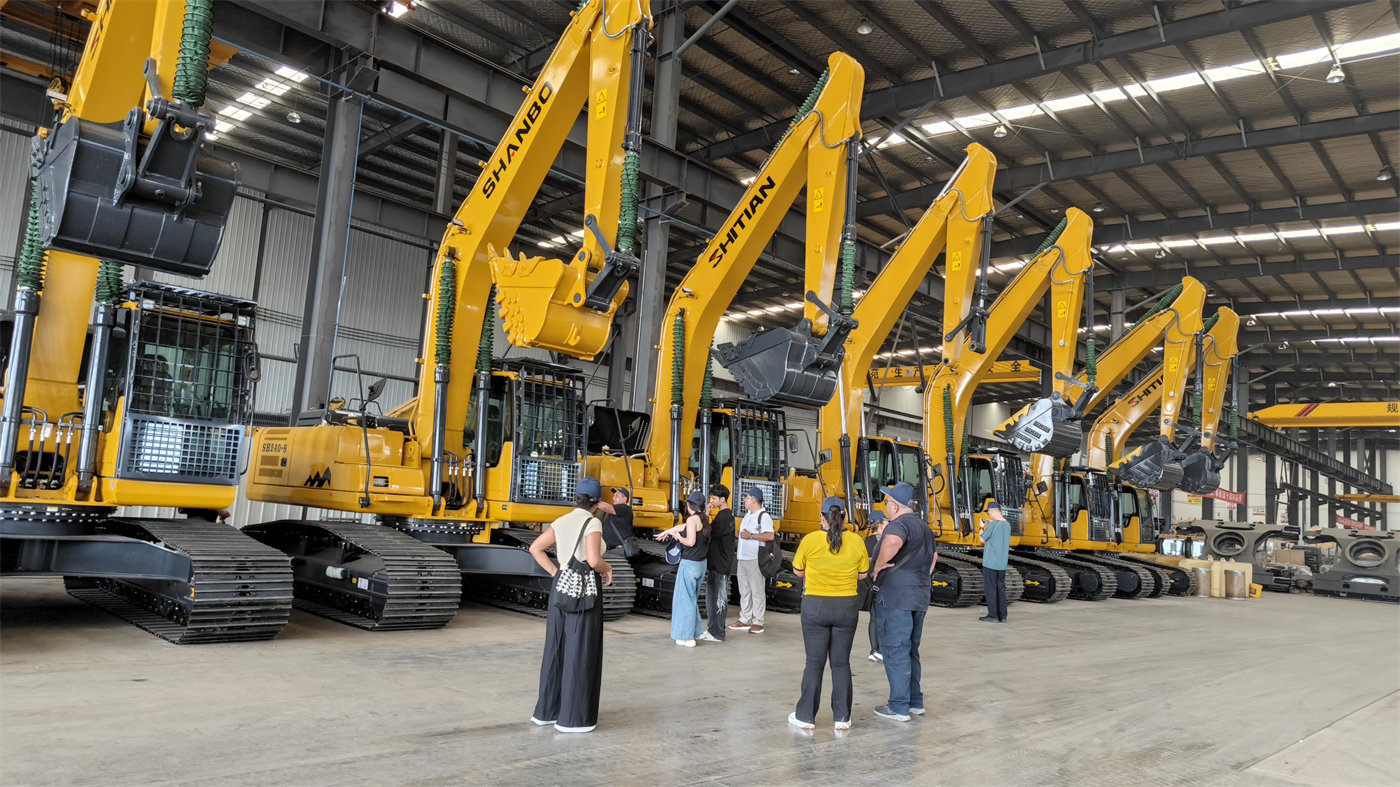
SH240-8 data shows a maximum digging height of 10095mm, maximum dump height of 7190mm, maximum digging depth of 6490mm, maximum horizontal digging reach of 9860mm, and minimum swing radius of 2970mm. These values can be used to compare against loading point layout: whether the dump height covers the transport vehicle sideboards, whether the horizontal reach is sufficient to reach the excavation face, and whether the swing radius conflicts with surrounding obstacles. It should be noted that these are equipment working range parameters; actual operations are also affected by standing position, ground, and operating method, and loading pace cannot be judged from the specification table alone.
Hydraulic and attachment compatibility information
If the work requires a breaker or other attachments, the host machine's hydraulic conditions and attachment interface information should be organized together before entry. The SH240-8 is equipped with variable displacement piston main pumps, with a maximum working flow of 2×224L/min, travel circuit pressure of 34.3MPa, swing circuit pressure of 25.5MPa, and control circuit pressure of 3.9MPa. These data are basic information for verifying attachment compatibility, but they alone are not enough to determine whether a particular attachment can be installed directly.
Items requiring further confirmation include: the flow and pressure range required by the attachment, return oil method, connection dimensions, whether additional piping is needed, and whether the cooling system meets continuous operation conditions. If the attachment documentation provided by the supplier is incomplete, verification should be requested before entry rather than handled temporarily after arrival.
Fuel, maintenance, and continuous operation arrangements
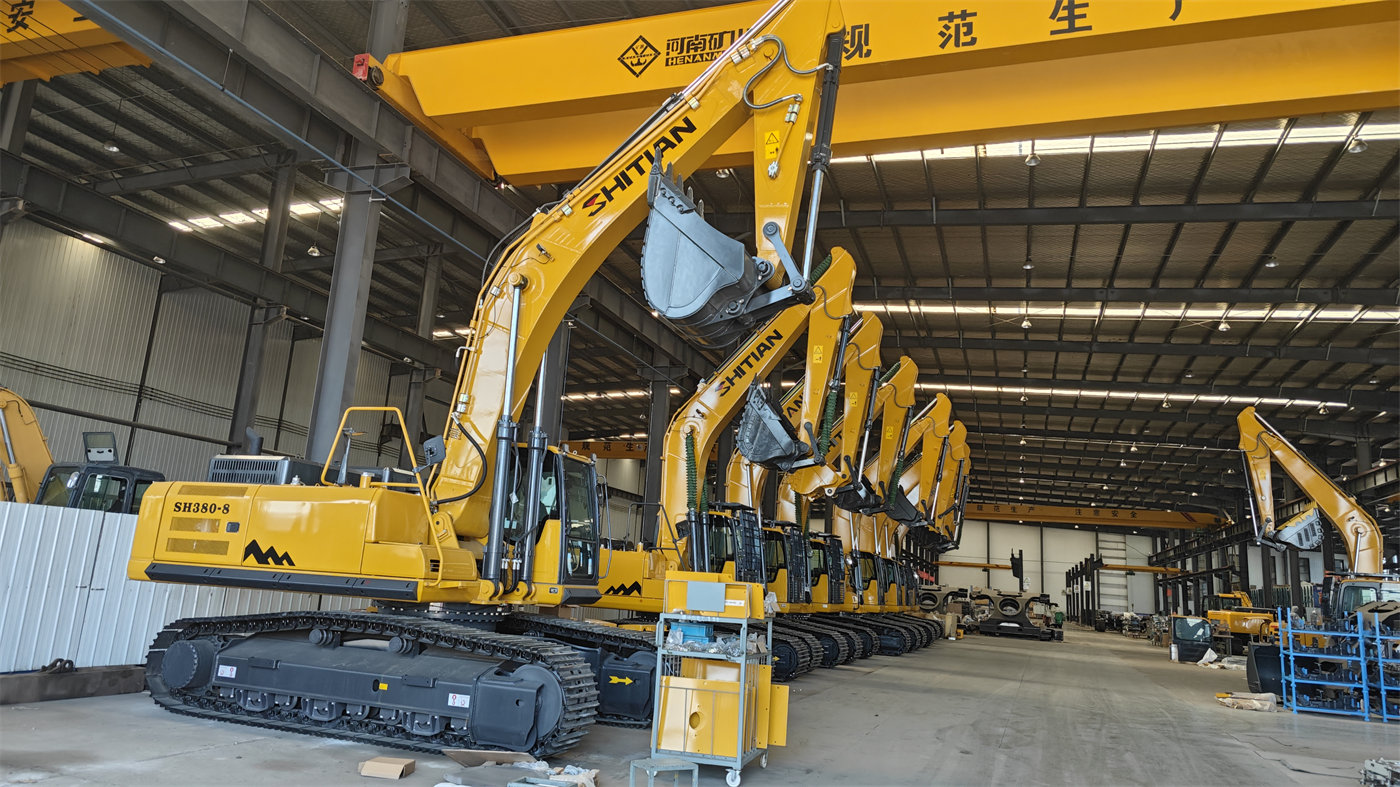
During continuous operation of a mid-size excavator, fuel supply and maintenance convenience are also part of pre-entry preparation. The SH240-8 has a fuel tank capacity of 330L, hydraulic oil tank capacity of 250L, cooling system capacity of 28L, and engine oil capacity of 23.7L. These capacity data can help plan on-site fuel storage and supply, but actual refueling frequency also depends on work intensity, shifts, and on-site supply conditions, and cannot be calculated from capacity alone.
Before entry, also confirm: whether there is a safe refueling location on site, whether maintenance access is clear, and whether a temporary parking area needs to be set up near the work face. These are site organization matters; the documentation does not provide specific operating steps and should be arranged by the construction party according to site conditions.
Pre-entry documentation checklist
Organizing the above content into a verifiable checklist helps identify obvious mismatches before the equipment arrives. The table below lists the content to be prepared and its purpose by documentation category:
| Documentation category | Content to prepare | What it is used to determine |
|---|---|---|
| Working objectives | Work type, material, digging depth, and dump location | Whether the equipment working range covers the main work face |
| Site and access | Ground type, slope, access road width and bearing capacity | Whether ground pressure, gradeability, and travel conditions match |
| Loading interface | Transport vehicle position, body height, swing space | Whether dump height and swing radius meet the layout |
| Attachment compatibility | Attachment flow and pressure requirements, interface dimensions, piping conditions | Whether host hydraulic conditions provide a basis for verification |
| Continuous operation | Shift arrangements, fuel supply, maintenance access | Whether fuel tank capacity and on-site supply conditions align |
Situations requiring further confirmation
The above checklist helps organize basic pre-entry information but cannot replace project-specific compatibility verification. The following situations require further confirmation with the supplier or construction party before the equipment arrives:

- No measured data on ground bearing capacity, or the work face is in a backfill or soft foundation area;
- The distance between the loading point and the excavation face is close to the boundary of the equipment working range;
- A breaker or other attachment is required, but the attachment's flow, pressure, and interface documentation is incomplete;
- Work shifts are long, and on-site fuel supply and maintenance arrangements are not yet clear;
- The coordination method between transport vehicles and the excavator working range has not been determined.
These matters have no uniform answer and need to be judged based on actual project documentation. When documentation is insufficient, it is not appropriate to directly conclude that a certain model is suitable or unsuitable; instead, list the missing items and confirm them one by one.
Documentation to provide when requesting a quote
If you are preparing to request a quote for a mid-size excavator entry plan, providing the following information helps the other party give a more targeted response:
- Work type and main materials;
- Site ground conditions, slope, and access road conditions;
- Expected workload or shift arrangements;
- The body height and parking method of supporting transport vehicles;
- Whether a breaker or other attachment is required, and known flow, pressure, and interface requirements;
- On-site fuel supply and maintenance conditions.
This documentation does not need to be complete all at once, but the more missing items there are, the greater the uncertainty in equipment compatibility judgment. Confirming what can be confirmed before entry and clearly marking remaining conditions as pending verification is more controllable than making adjustments after arrival.