



















In equipment discussions for heavy earthmoving projects, a simplified judgment often appears: heavy work and large volumes mean a high-horsepower dozer. This holds true for some mine stripping and large-area pushing, but it skips over haul distance, material condition, site slope and downstream transport interface, making "is there enough power" the only question.
This article addresses selection misconceptions for fuel-powered crawler dozers, using only the SD46-6 from our product materials as the basis. It is not a universal answer for all heavy earthmoving, but a 600-horsepower large crawler dozer whose investment value depends on specific operating conditions.
Where the misconception comes from: equating "heavy load" directly with "high horsepower"
Heavy earthmoving usually means high single-shift workload, dense material or continuous pushing, so operators naturally favor higher-power equipment. But a dozer performs digging, pushing and rough grading, and its specifications must match haul distance, material and site. When the push distance is very short, high power may not be fully utilized; when material is loose and the distance is longer, traction and blade capacity may become another set of constraints.
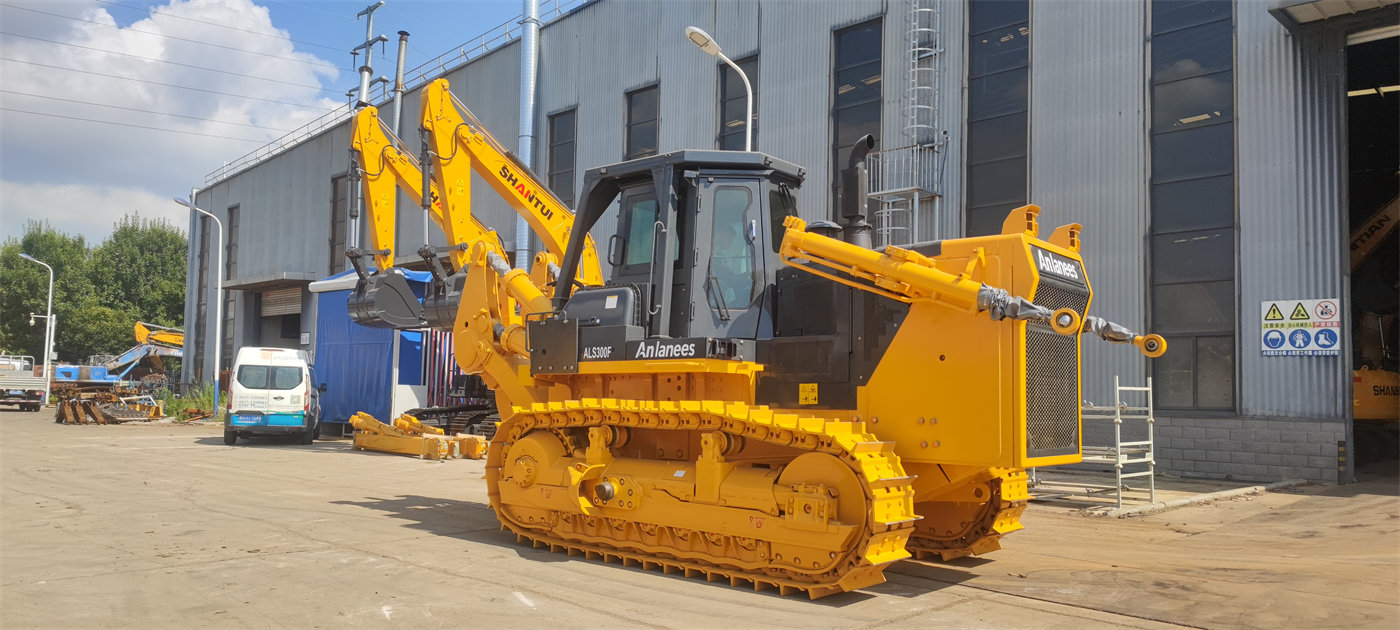
In the materials, the SD46-6 is positioned for heavy earthmoving, rock stripping and mountain leveling in large mining and major infrastructure projects, equipped with a 16m³ semi-U blade and an adjustable-angle single-shank heavy-duty ripper. These configurations point to scenarios with clear heavy-load pushing and ground-breaking needs, not a default option for all earthmoving work.
Check haul distance and material first, then decide on high horsepower
In dozer operation, the push distance from the cut point to the dump point directly affects the value of equipment specifications. Long-distance heavy pushing relies more on sustained traction and single-pass blade capacity; for short-distance transfer with frequent turning, the focus is whether the site allows enough room and whether turning and passing conditions permit it.
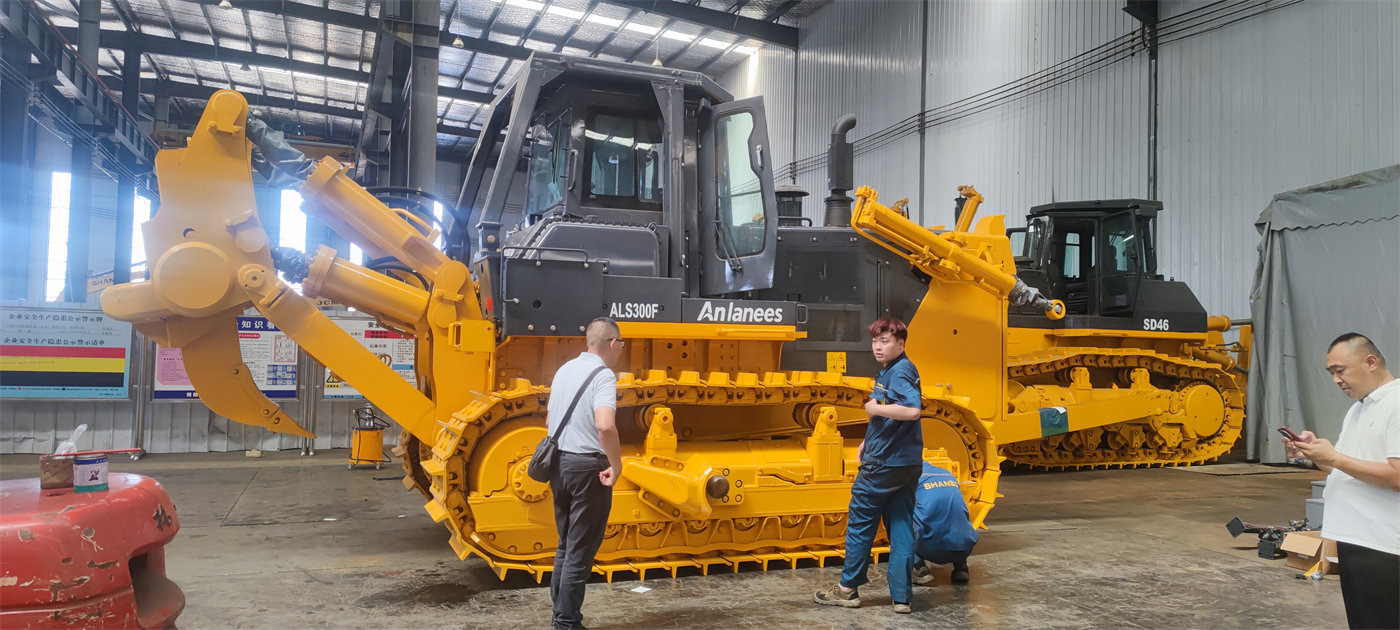
Material condition must also be considered separately. Loose stockpiled material and hard compacted ground that requires pre-ripping place different demands on equipment. The SD46-6 is equipped at the rear with an adjustable-angle single-shank heavy-duty ripper, described in the materials for deep ripping, rock breaking and hard-ground ripping; if the on-site material is already loose, the necessity of this configuration decreases.
| Site condition | Questions to confirm first | Relationship to high-horsepower machines |
|---|---|---|
| Long push distance, high single-shift volume | Fixed haul distance between cut and dump points, cycle organization | Sustained traction and large-capacity blade have more room to perform |
| Hard compacted material requiring pre-ripping | Whether ripper operation is permitted, hard-layer thickness | Rear ripper can be checked as a supporting condition |
| Narrow site or frequent turning | Working face width, passing and turning space | Large equipment layout is constrained and requires separate assessment |
| Fine grading required after pushing | Acceptance requirements for rough vs. fine grading | Dozers mainly handle rough grading; fine grading needs separate arrangements |
The table is not a conclusion on applicability but breaks "heavy load" into checkable site conditions. When conditions do not match, conclusions should not be drawn on horsepower alone.
Which SD46-6 features correspond to heavy-load pushing needs
If the site is indeed dominated by long-distance, high-volume heavy pushing, the SD46-6 materials can be checked item by item as a selection basis.
Power and transmission
This model is powered by a Cummins KTA19-C525 turbocharged and intercooled diesel engine, rated at 340 kW/600 hp, rated speed 2000 rpm, displacement 18.9 L. The materials also state it uses a hydraulic power-shift transmission with planetary final drive, with a built-in hydraulic cushioning structure to absorb power transmission shocks. For continuous heavy pushing, power output and the transmission's ability to withstand shocks are basic information for judging whether the equipment can operate stably over the long term.
Blade and ripper
The standard configuration is a large-capacity semi-U dozer blade with 16m³ capacity, 4314 mm width, 1841 mm height and 700 mm maximum cutting depth. The semi-U blade suits large-area earth-rock stockpiling and bulk material handling; maximum cutting depth relates to the ability to penetrate material in a single pass. The rear ripper is an adjustable-angle single-shank heavy-duty structure, suitable for hard compacted ground requiring pre-ripping.
Undercarriage and site adaptability
The SD46-6 uses a K-type floating undercarriage, with operating weight 54000 kg, ground pressure 0.123 MPa and gradeability 30°. The materials state the K-type suspended floating drive structure cushions travel and working shocks, suitable for mountain, rocky and mining conditions. Ground pressure and gradeability are parameters that must be combined with on-site measurements when judging soft-ground and slope operation; passability cannot be determined from the figures alone.
Safety and operation
The machine comes standard with ROPS rollover protection and FOPS falling-object protection structures; the cab is fully enclosed and large, equipped with shock absorption, air conditioning and a PPC pilot proportional control system. For long-duration heavy work, the operating environment and safety structures are supporting conditions but do not directly equate to construction efficiency.
Scenarios not suited to direct high-horsepower machine arrangements
The following judgments hold only within the scope of the materials; specific projects still require on-site verification:

- Very short push distances and scattered working faces: the site layout pressure from large equipment may exceed the power benefit.
- Material mainly loose backfill that does not need ripping: the rear ripper will be used very infrequently.
- Unclear site bearing conditions or obvious soft ground after rain: confirm ground pressure and travel conditions first; do not judge by track width alone.
- Work target mainly fine grading: dozers are better suited to rough grading, and fine grading requires other equipment or processes.
- Transport roads, bridge/culvert weight limits and access routes not verified: the 54000 kg operating weight and 4314 mm blade width affect mobilization arrangements.
These are not a rejection of high-horsepower machines but show that "heavy load" must be broken into four categories—haul distance, material, site and mobilization—before judgment.
What else to verify before purchase
If preliminary assessment suggests site conditions are close to the SD46-6's applicable range, at least the following information should be prepared for quotation and solution verification:
- Material type, density, whether pre-ripping is needed, and distribution of hard layers or rock.
- Haul distance between cut and dump points, single-shift push volume, work shifts and continuous operating duration.
- Site slope, soft-ground sections, working face width, passing and turning space.
- Grading requirements after pushing, and how the boundary between rough and fine grading is defined.
- Weight and width limits on mobilization roads, transport method, and conditions for removing/installing blade and ripper.
- Local fuel supply, maintenance conditions and spare parts availability.
- Whether ROPS/FOPS upgrade guards, safety warnings and reverse alarms are required.
The materials do not provide actual production efficiency, fuel cost figures or payback periods under various conditions, so no return can be promised on that basis. Whether the equipment is suitable must ultimately be confirmed through on-site measurements, work organization and the manufacturer's technical data.