






















When arranging earthmoving equipment for an urban site, projects often run into a sequencing problem: they first decide to "go electric," then look for a machine, only to find before mobilization that distribution capacity, charging positions and shift arrangements do not line up. To judge whether a battery-electric bulldozer can run continuous shifts on a specific site, you must first separate two lines of inquiry—power supply conditions and work shifts—rather than looking only at horsepower.
Why urban sites include electric equipment in their comparisons
Projects in built-up areas, or near residences, schools or office districts, are typically more sensitive to exhaust emissions and noise. A battery-electric bulldozer has no diesel exhaust and runs noticeably quieter than fuel-powered equipment, so it is discussed as one option for such sites. The application areas given in the E22 materials include urban municipal construction, environmental protection projects, green mining and low-noise demolition work; what these scenarios share is that emission and noise constraints are more direct than on ordinary earthmoving sites.
But "zero emissions and low noise" describes only the power form, not whether a site can actually use the machine. The next step is to look at where the electrical energy it needs will come from, when it will be replenished, and how long that takes.
First check: can the on-site power supply support charging?
The E22 uses a 272HP permanent-magnet synchronous main motor and a 614.2V, 690Ah, 423.94kWh lithium iron phosphate battery pack, supporting 2×300kW battery interfaces and 2×250A DC fast charging. These figures show that its recharging is not at the level of an ordinary household socket but requires specially planned DC charging conditions. If an urban site has only temporary construction power, first confirm whether distribution capacity, charging equipment interfaces and site layout can meet the requirement, rather than looking for a power source after the machine arrives.
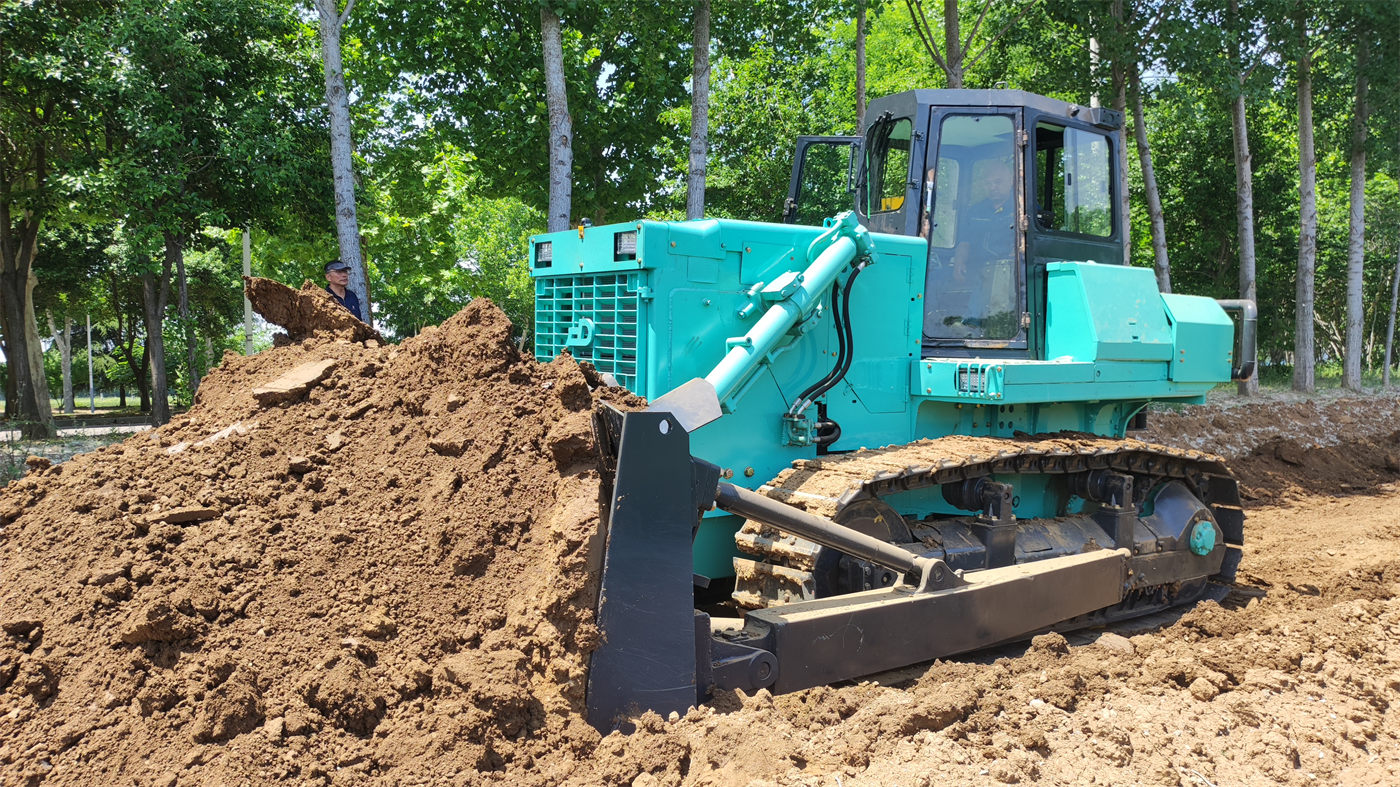
The materials also mention support for multiple auxiliary power supplies, used for battery heating and stable low-voltage circuit operation. This means that in cold seasons or after long shutdowns, auxiliary power supply also needs to be included in site planning. The existing materials do not give specific charging times, grid capacity requirements or supporting facility parameters; these are matters to confirm jointly with the equipment supplier and the site's electrical responsible personnel.
Second check: do shift length and recharging rhythm fit together?
Bulldozers usually work continuous shifts in earthmoving and rough grading. For battery-electric equipment, the work plan cannot look only at how long one charge lasts; it must also consider whether there is enough recharging window between shifts.
- Single-shift or double-shift continuous operation: with double shifts the charging window is shorter, placing higher demands on charging power and shift-change coordination.
- Distance between charging positions and the work face: travel to and from charging takes up working time, so site layout must be planned in advance.
- Whether backup equipment or staggered scheduling exists: the materials do not give range or charging time, so shift coverage cannot be calculated from them.
If the project runs only one shift and can charge at night, matching power supply and shifts is relatively easier; if the equipment must run continuously across multiple shifts, charging capability and backup plans need to be checked more explicitly. Working hours cannot be calculated directly from battery capacity figures, because actual consumption depends on the working conditions, pushing resistance and site conditions, and the materials do not provide this data.
Third check: does the work content fall within the scope the materials support?
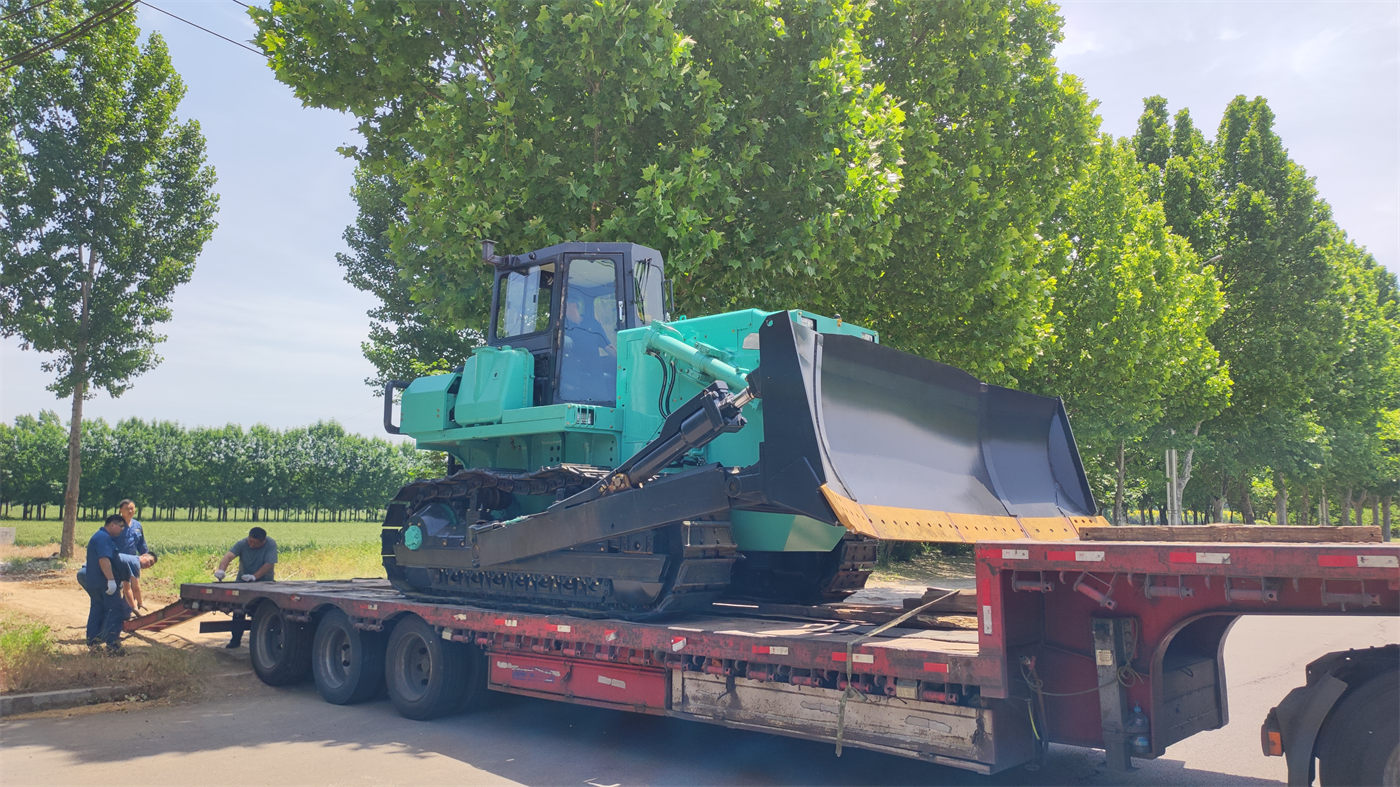
The application areas listed in the E22 materials include urban municipal construction, environmental protection projects, green mining, low-noise demolition work and rental business. Its hydraulic system uses an independently driven 50kW permanent-magnet synchronous hydraulic motor and is equipped with a 100+65+25 three-section gear pump at a standard working pressure of 30MPa; the materials state that this configuration can provide hydraulic power for dozing, lifting and ripping. This information helps judge whether the equipment covers pushing, rough grading and ripper-equipped work, but it cannot be used to infer pushing efficiency in a specific soil type.
If an urban site involves hard compacted ground, piled construction waste or continuous heavy-load pushing, the material properties, pushing distance and blade configuration still need to be checked item by item. The electric power form does not change a bulldozer's basic requirements for ground conditions.
Whole-machine and site conditions to check at the same time
| Check item | What needs to be confirmed |
|---|---|
| Power supply conditions | On-site distribution capacity, DC fast-charging interfaces, charging position layout and auxiliary power supply |
| Shift arrangements | Single or double shift, recharging windows, whether backup equipment exists |
| Work content | Material to be pushed, pushing distance, rough grading or ripping requirements |
| Low and high temperatures | On-site applicability of battery heating and thermal management systems |
| Maintenance and monitoring | Service conditions for modular power and hydraulic sections, remote monitoring and fault response arrangements |
The E22 is equipped with a custom VCU controller, an 8kW compressor thermal management system, a liquid cooling system and a CAN-communication insulation monitor; the materials state that it can operate stably in extremely high and low temperature regions. These configurations show that the equipment has dedicated temperature management design, but the specific applicable temperature range and the local availability of charging facilities still need to be verified for the project location.

Information to provide when requesting a quotation
If you plan to include this type of battery-electric bulldozer in an urban site plan, it is advisable to provide the following information at the inquiry stage so the supplier can assess supporting conditions rather than quote only the machine:
- Type and location of the construction site, and whether it is municipal, environmental protection or demolition work;
- Planned work content: pushing, rough grading, ripping or a combination;
- Daily shift arrangements and expected number of consecutive working days;
- Available on-site distribution capacity, number and location of charging positions;
- Local climate conditions, especially low- and high-temperature periods;
- Power form of existing equipment and the site's specific noise and emission requirements.
The existing product materials do not contain complete data on power supply capacity, charging equipment specifications, actual range or charging time, so conclusions cannot be drawn on the project's behalf. A more reliable approach is to confirm the power supply and shift lines first, then judge whether a battery-electric bulldozer is suitable for inclusion in the site's equipment comparison.