



















When fitting a breaker to an excavator, the first step is not choosing the hammer but establishing what hydraulic conditions the host can provide. The breaker manual states the flow, pressure and return conditions it needs; the host documentation states the values it can deliver. If the two do not line up, questions of weight, chisel and connections cannot be addressed. This article uses published specifications for a 23.2-tonne mid-size crawler excavator to explain how to read host-side hydraulic data, which figures can be used directly for comparison, and which must still be obtained from the breaker supplier.
Which host specifications matter for a hydraulic breaker
Machine specification tables usually cover the engine, bucket capacity, digging force, hydraulic system and dimensions. Focusing only on digging and loading performance when matching a breaker can lead you astray. The section to mark out first is the hydraulic system: main pump type, maximum working flow, circuit pressures and hydraulic tank capacity. These determine whether the breaker can receive a continuous, stable oil supply and whether there is headroom for oil temperature management during continuous operation.
Take the SH240-8 as an example. Its hydraulic system uses variable displacement piston pumps with a maximum working flow of 2×224 L/min; travel circuit pressure is 34.3 MPa, swing circuit pressure 25.5 MPa and control circuit pressure 3.9 MPa; hydraulic tank capacity is 250 L and fuel tank capacity 330 L. These values are not in themselves breaking capability, but they are the reference baseline for checking breaker-side requirements.
Maximum working flow: distinguish total machine flow from single-pump flow
“2×224 L/min” means the output of each of the two main pumps and cannot be treated directly as a single flow path to the breaker. A breaker is usually supplied from one of these paths or after flow distribution; which path is used and whether flows are combined depends on the host piping layout and the breaker installation requirements. The check should therefore place three figures side by side: the host's maximum single-pump flow, the breaker's rated flow range, and the bore and valve settings of the actual supply line. Comparing the machine's total flow with the breaker's rated flow will overestimate the available oil supply.
What verification problems arise from flow mismatch
- If the breaker requires more flow than the host can stably deliver through a single path, confirm whether the supply method can be adjusted rather than simply raising pressure.
- If the breaker requires significantly less flow than the host can supply, confirm whether throttling or flow limitation is provided to avoid prolonged operation away from rated conditions.
- Maximum working flow is the pump's capability limit; actual working flow is also affected by engine speed, control method and hydraulic system settings. Where documentation does not give a dedicated breaking-condition flow, it cannot be applied directly.
Circuit pressure cannot be treated directly as breaker working pressure
The 34.3 MPa in the specification table is travel circuit pressure and the 25.5 MPa is swing circuit pressure; neither is the breaker supply pressure setting. The breaker's working pressure, opening pressure and allowable back pressure must come from the breaker supplier's documentation, while on the host side the relief setting of the corresponding circuit, return back pressure and cooling capacity must be confirmed. Comparing travel circuit pressure directly with breaker working pressure mixes data from different circuits.
The recommended sequence is: first obtain working pressure and maximum back pressure from the breaker supplier; then check the valves and piping settings reserved on the host for the breaking circuit; finally confirm whether the return path meets the back pressure requirement. If documentation is missing at any stage, the item can only be listed as pending confirmation, and no conclusion of “ready to install” can be drawn.
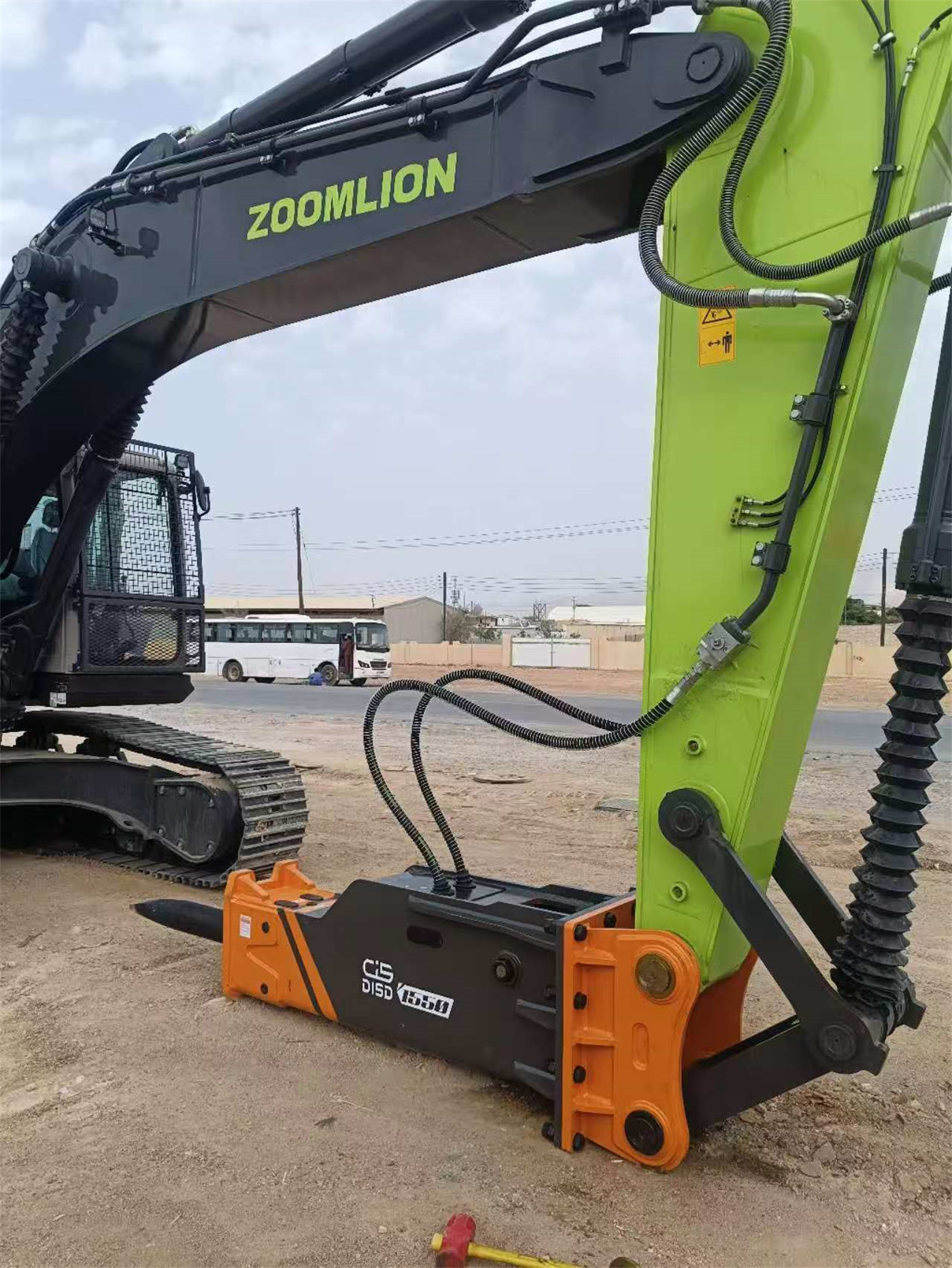
Tank capacity and cooling define the limits of continuous operation
The 250 L hydraulic tank, 28 L cooling system capacity and 330 L fuel tank reflect the fluid and heat-dissipation margin the machine reserves for long working periods. Breaking differs from digging and loading: hydraulic oil does reciprocating work inside the breaker, so heat generation is more concentrated. Continuous operating duration, ambient temperature and shutdown cooling arrangements must all be considered together. The documentation does not give oil temperature curves or continuous operating duration for breaking conditions, so it can only be said that the tank and cooling system have a certain capacity base. Whether they can support a given shift of continuous breaking still needs confirmation against actual ambient temperature, work pace and oil temperature monitoring.
Machine tonnage is only a starting point; weight and connections must also be checked
A 23.2-tonne operating weight, 600 mm track shoes and 49.8 kPa ground pressure indicate a mid-size crawler excavator; the description of suitability for hard soil, rock excavation and heavy material handling comes from the machine documentation. However, the breaker's compatible weight range, connection dimensions, pin diameter and quick-coupler interface type must all come from the breaker supplier's documentation. They cannot be inferred from host tonnage, nor can the compatible range be guessed from the breaker's model number. Attachment weight also affects front-end stability and must be checked together with the host's work equipment configuration.

| Check item | Verified host-side data | Breaker-side data to confirm |
|---|---|---|
| Flow | Variable displacement piston pumps, maximum working flow 2×224 L/min | Rated flow range, number of supply paths and flow-combining method |
| Pressure | Travel 34.3 MPa, swing 25.5 MPa, control 3.9 MPa | Working pressure, opening pressure, allowable back pressure |
| Oil and cooling | Hydraulic tank 250 L, cooling system 28 L | Continuous-operation oil temperature requirements and cooling match |
| Weight and connections | Machine 23.2 t, work equipment and undercarriage specifications | Attachment weight, pin and interface dimensions |
When not to match directly from the specification table
If the breaker supplier's documentation only states compatibility with smaller host tonnages, it cannot be assumed to fit simply because the host is in the 23.2-tonne class. If the breaker's required flow and pressure exceed the adjustable range of the corresponding host circuit, the relief valve must not be forced to compensate. Where back pressure, return oil and cooling data are missing, these must first be listed as conditions to be completed before purchase. The documentation contains no measured results from breaking work, so this article does not assess breaking efficiency, suitable rock types or productivity.
Information to provide when requesting a quotation
- Host model and hydraulic system specifications: pump type, maximum single-pump flow, circuit pressures, hydraulic tank capacity.
- Material type to be broken, size range, site conditions and planned daily work shifts.
- Breaker-side data: rated flow, working pressure, maximum back pressure, attachment weight, connection dimensions and interface type.
- Existing piping and quick-coupler arrangements, and whether a breaking circuit and valve configuration are already fitted.
- Continuous operation arrangements and ambient temperature, for assessing cooling and oil temperature management conditions.
Host hydraulic data is the first gate to pass, but host-side data alone is not enough to complete a matching decision. Only by giving the items above to the supplier for item-by-item comparison can you know which conditions are met, which require piping changes or setting adjustments, and which still lack documentation.