














Pushing work on soft ground and at landfills often runs into an awkward situation: the machine has plenty of horsepower, but once on site it sinks, slips, or the blade digs straight into the material pile. The problem is usually not the engine but whether ground pressure, track ground contact length, blade type and material characteristics match up. Using public data on a 320-hp class crawler dozer as a reference, this article explains under what conditions this class of machine can be considered for such working conditions, which configurations must be confirmed first, and which conclusions cannot be drawn directly from a spec sheet.
First distinguish two types of work: soft-ground dozing and landfill material pushing
The two are often discussed together, but their constraints are not the same.
- Soft-ground dozing: the concern is whether the machine will sink, whether it can maintain a straight pushing line, and whether mud easily packs into the tracks. The core indicators are ground pressure, track shoe width and undercarriage ground contact length.
- Landfill material pushing: the concern is blade capacity versus material looseness, pushing distance, site leveling requirements, and undercarriage mobility under alternating conditions of household waste and cover soil. Landfill material has low density and compacts easily, so blade type and the precision of hydraulic control affect the work rhythm.
The same machine may appear in both scenarios, but the configuration priorities differ. Before selecting a model, writing down clearly "what is being pushed, how far, and what the ground bearing capacity is" is more useful than looking at horsepower first.
Ground pressure: the first value to check for soft-ground conditions
On soft ground, whether a machine can work normally depends first on ground pressure, not rated power. Taking the standard version of the 320-hp class crawler dozer in this site's data as an example, the operating weight is 40,200 kg (with single-shank ripper and ROPS), ground pressure is 97.7 kPa, track shoe width options are 560, 610, 660 and 710 mm, and track ground contact length is 3,150 mm. The coal version has an operating weight of 40,500 kg and ground pressure of 98.4 kPa.
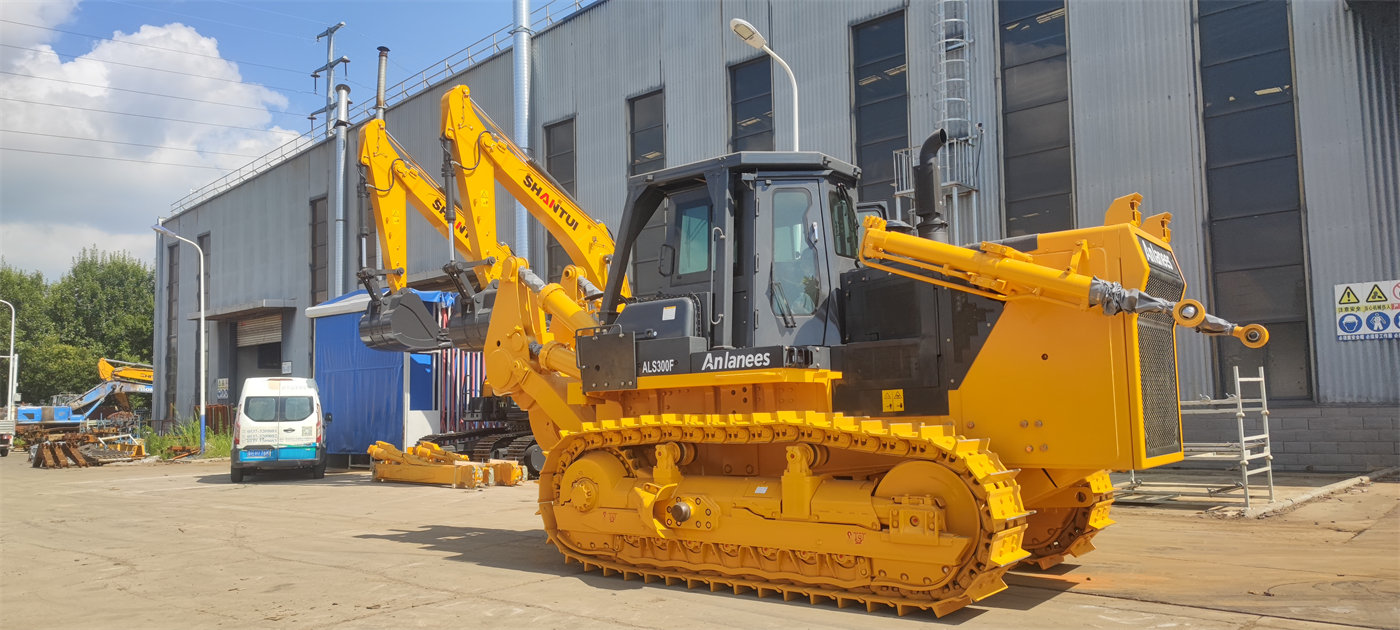
This set of data shows two things. First, the ground pressure of this class of machine is on the order of one hundred kilopascals; whether it suits a given soft-ground site must be compared against on-site foundation bearing data, and cannot be judged merely from the words "crawler type." Second, there are multiple track shoe width options; choosing wider shoes changes the ground contact area and ground pressure, but the data does not give ground pressure values for each width, so the specific ground pressure under a given configuration should be confirmed with the supplier before purchase and cannot be directly copied from the standard version's value.
If the site is ground with long-term standing water, a thick silt layer, or backfill that has not consolidated, whether widening the track shoes alone is sufficient cannot be judged from the data and requires separate assessment together with a foundation treatment plan.
Undercarriage and mobility: what to look at more closely at a landfill
Landfill ground is uneven, with waste and cover soil alternating, and the machine must turn frequently and push over short distances. The undercarriage information given for this model includes: ground clearance 500 mm, track gauge 2,140 mm, track pitch 228.6 mm, 2 track rollers per side, 7 carrier rollers, and minimum turning radius 3,800 mm. Long track ground contact length and high ground clearance are listed as structural features for adapting to harsh construction environments.
These data help judge the basic conditions for the machine to turn on the surface of a waste pile and cross local depressions, but they cannot replace verification of the actual pile stability and working face width at the landfill. In particular, where the working face is narrow and frequent spot turns are needed, the minimum turning radius and site layout must be calculated together.
The blade is not chosen at random: the material determines the blade type
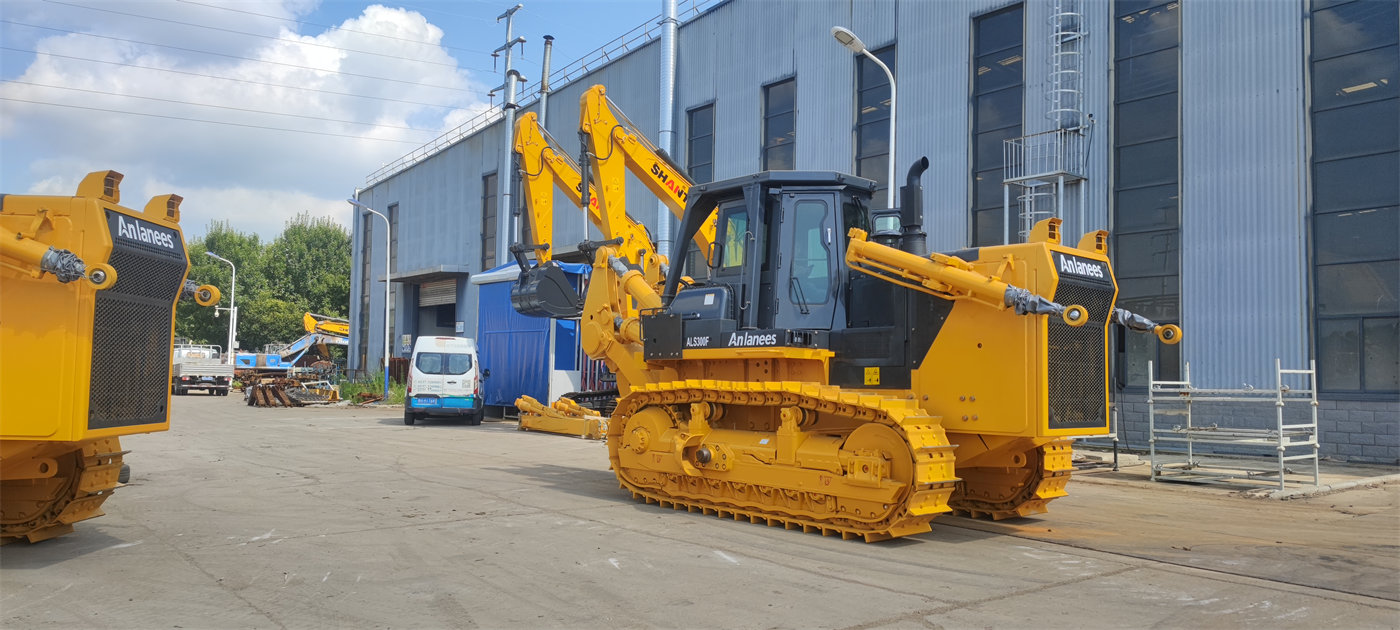
The working attachments listed for this series include straight blade, semi-U blade, U-blade, angle blade, coal pushing blade, rock blade, sanitation blade, ripper, drawbar, and others. The standard version's straight blade is 4,130 mm wide and 1,590 mm high; the angle blade is 5,000 mm wide and 1,140 mm high; the semi-U blade is 4,130 mm wide and 1,710 mm high. The coal version is equipped with semi-U or U-shaped coal blades, 4,806 or 4,520 mm wide.
For landfill material pushing, where the material is loose and low in density, blade capacity and shape affect the volume pushed per pass; for soft-ground dozing, blade penetration depth and lift height affect whether the material can be pushed away without digging into the ground. The data only gives blade type names and dimensions, not the pushing capability of each blade type with different materials, so it cannot be asserted on that basis that a particular blade type is "best suited" to landfills. The actual configuration should be confirmed item by item with the supplier according to the material being pushed, pushing distance and site leveling requirements.
Power and transmission are only basic conditions, not proof of soft-ground suitability
The model data shows the engine is WP12 or QSNT-C345, rated power 257 to 258 kW at 2,000 rpm, with emissions meeting China III standards; the transmission is an independently developed assembly. There are three forward speeds, ranging from 0 to 11.5 km/h, and three reverse speeds, ranging from 0 to 13.5 km/h; fuel tank 640 L, hydraulic tank 97 L.

These are conventional power and transmission details. It must be made clear that horsepower cannot prove the machine will not sink on soft ground, nor prove pushing efficiency in landfill material. Treating power parameters as the basis for soft-ground suitability is a common misjudgment in model selection. Power only shows that the machine has the basis to complete heavy-load pushing; whether it suits a given site still comes back to ground pressure, undercarriage and blade configuration.
Situations where this specification should not be advanced directly
- Where the site's bearing capacity is clearly below the machine's ground pressure and there are no measures beyond foundation treatment or widening the tracks, the machine should not be scheduled to enter the site directly.
- For landfill zones with an extremely narrow working face and limited turning radius, the relationship between the 3,800 mm minimum turning radius and the working face dimensions must be calculated first.
- Where the material is mainly household waste and long periods of work on the pile are required, blade type, undercarriage protection and cooling conditions must all be confirmed separately; the data does not cover special explanations for these configurations and they cannot be assumed to be universal.
- For conditions requiring frequent scarifying or ripping, this series offers single-shank or three-shank rippers with maximum ripping depths of 1,250 mm and 842 mm respectively, but this is another type of work requirement and should not be confused with the pushing configuration.
Information to prepare before requesting a quote
Only when the questions are stated clearly can the supplier give a well-founded configuration recommendation. The following should be prepared:
- Site information: ground type (soft soil, backfill, waste pile), foundation bearing conditions, working face dimensions, slope.
- Material information: type of material to be pushed, loose density, whether it contains large debris, proportion of cover soil.
- Workload information: average daily pushing volume, single pushing distance, shift arrangements, whether night work is required.
- Configuration requirements: preferred blade type, track shoe width, whether a ripper or towing device is needed, safety protection structure requirements.
- Machine and supporting information: existing fleet situation, transport and site entry conditions, maintenance support arrangements.
Selecting equipment for soft-ground and landfill pushing is essentially a matter of checking site bearing capacity, material characteristics and machine ground contact conditions together. The data for this 320-hp class crawler dozer gives ground pressure, undercarriage dimensions, blade types and power configuration, which can serve as a basis for checking; however, the ground pressure under a specific configuration, the matching effect between blade type and material, and adaptability to soft-ground sites still need to be confirmed item by item against on-site data, and conclusions cannot be drawn from the spec sheet alone.