


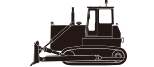
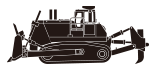
















When arranging dozer dozing on soft ground, wetlands or sites with high moisture content, readers usually check horsepower first, then price, and only last turn to the ground pressure column. In reality, what first limits work on soft ground is the weight borne per unit of ground contact area, not engine output. If a machine's ground pressure and track shoe width do not match the site conditions, even high horsepower may just mean it gets stuck sooner. Using the full specs of a 260 hp crawler dozer as an example, this article explains how to read the data fields in order, judge whether it meets the basic conditions for soft-ground and wetland dozing, and which information still needs to be verified with the supplier.
Which fields really matter for soft-ground dozing
There are many fields in the machine specs, but for soft-ground dozing the following directly determine whether the machine can enter the site and travel continuously:
- Operating weight: determines the total load the machine places on its tracks.
- Ground pressure: the weight borne per unit area, the core field for soft-ground judgment.
- Track shoe width: affects ground contact area and the degree of surface disturbance.
- Ground contact length and number of track shoes: together determine the actual ground contact area.
- Blade capacity and width: determine the volume moved per pass and also affect the machine's center of gravity and travel resistance.
These fields must be read together; a single item is not enough to judge soft-ground suitability. For example, low ground pressure but very light overall weight may mean insufficient dozing capacity for large-scale work; wide track shoes but short ground contact length will also affect travel stability.
How the spec fields of this 260 hp dozer correspond
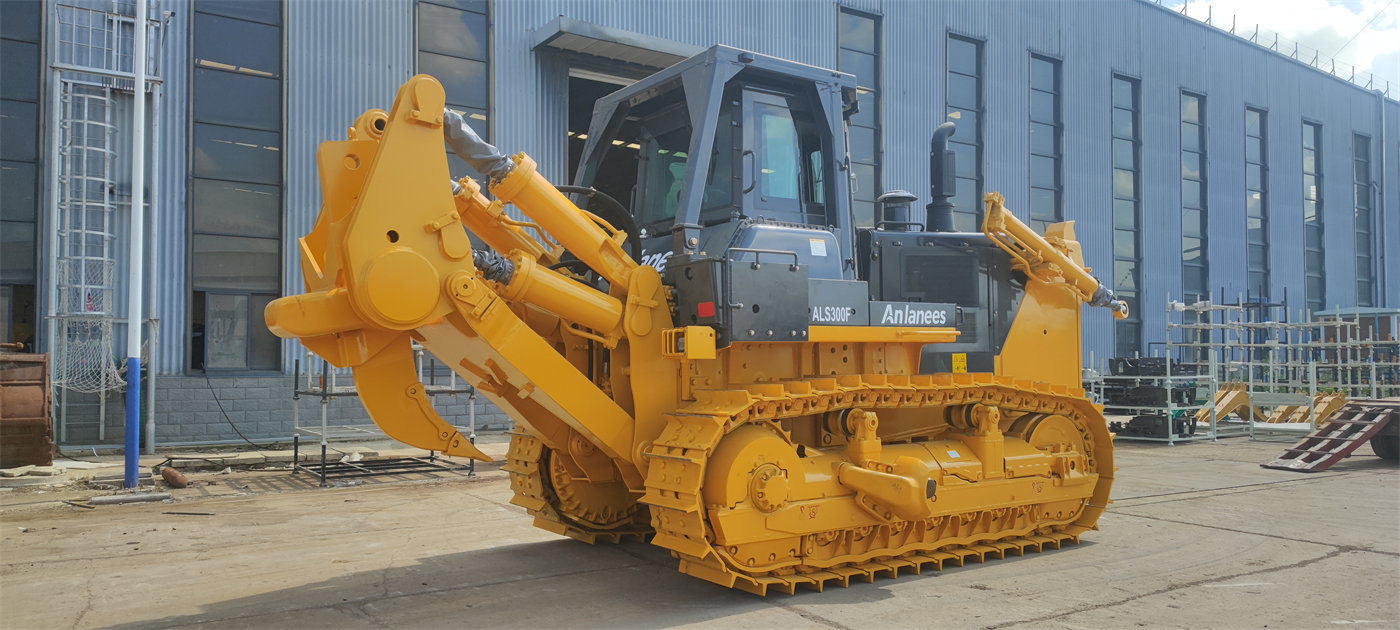
In the specs of this 260 hp crawler dozer associated with this site, the wetland type and standard type listed share the same series undercarriage base, but track shoe width offers three configurations: 560 mm, 610 mm and 660 mm. This configuration difference is the key entry point for judging soft-ground dozing suitability.
| Field | Spec value | Significance for soft-ground dozing |
|---|---|---|
| Operating weight | 23450 kg | Base load of the machine, determines the lower limit of ground pressure |
| Ground pressure | 66 kPa | Core reference value for soft-ground judgment |
| Track shoe width | 560 / 610 / 660 mm | Wider configurations expand ground contact area and reduce surface disturbance |
| Ground contact length | 2872 mm | Together with track shoe width, determines actual ground contact area |
| Ground contact area | 28727 cm² | Basis for calculating ground pressure |
| Blade capacity | 4.6 m³ | Reference for volume moved per pass; also affects travel resistance |
| Blade width | 3725 mm | Works with track shoe width to affect dozing coverage |
| Engine net power | 194 kW (260 hp) | Power reserve for dozing |
Note that the 66 kPa ground pressure given in the specs corresponds to one track shoe width configuration, not the same value across all three widths. Fitting wider track shoes changes the ground contact area and therefore the ground pressure. The specs on this site do not list the corresponding ground pressure for each width, so it cannot be directly asserted that 660 mm track shoes reduce ground pressure to a specific value. This is the omission most easily overlooked when reading the specs.
In what order to read the machine specs so soft-ground judgment stays clear
The recommended reading order is as follows, starting from load-bearing capacity and moving toward working capacity:
- First check operating weight and ground pressure: confirm the machine's pressure level on the surface.
- Then check track shoe width and ground contact length: confirm the room for adjustment through configuration.
- Then check blade capacity and width: judge whether the dozing scale matches the project pace.
- Finally check engine power and undercarriage structure: confirm whether the power and travel system support the matching load.
The point of this order is that on soft ground, talking about efficiency before the machine can stay afloat is meaningless. If ground pressure does not match site conditions, neither engine power nor blade capacity has room to perform. Conversely, if ground pressure is suitable but blade capacity is on the small side, the project pace must be reassessed.
How far the wetland-type specs go, and what still needs asking
This series' specs explicitly list a wetland type and state that the dedicated undercarriage with widened tracks can adapt to wet, soft ground. What can be confirmed from the specs is that the wetland type offers wider track shoe configurations and room to expand ground contact area. What cannot be directly confirmed from the available specs is:
- The specific ground pressure value corresponding to each of the three track shoe widths;
- What specific differences the wetland type has from the standard type in undercarriage structure, sealing or mud protection;
- Whether this model can work continuously on soft ground with a specific moisture content, and what site preparation would be needed;
- Whether the wetland type affects blade configuration and ripper options.
These matters must be confirmed with the supplier before selection. A spec saying "suitable for wetland" does not mean any wetland condition can be entered directly; site moisture content, bearing capacity and access routes must all be assessed separately.
Beyond soft ground, what supporting conditions to check
Even if the machine spec fields appear to match, soft-ground dozing must also consider the following:

- Transport and site access: wider track shoes increase overall machine width; check whether transport vehicles and access roads allow it;
- Bearing capacity of the work surface: the wetland type lowers ground pressure, but the bearing capacity of the work surface itself still needs on-site judgment;
- Dozing distance and spoil method: resistance and surface disturbance in long-distance dozing on soft ground differ from firm ground;
- Ripper configuration: the specs list a three-shank ripper with maximum ripping depth of 666 mm; whether it is needed in soft-ground sections depends on the specific material.
These conditions cannot be fully answered by the machine specs and must be checked one by one with the supplier after a site survey.
What information to submit when requesting a quote
If you plan to request a quote for soft-ground and wetland dozing scenarios, it is advisable to provide the following information so the supplier can judge whether the configuration matches:
- Description of site type and moisture conditions, including the length of soft-ground sections and access routes;
- Type of material to be dozed, dozing distance and per-shift workload;
- Preferred track shoe width and ground pressure data for that configuration;
- Blade type requirements (straight tilt, angle, U-blade, etc.) and whether a ripper is needed;
- Transport vehicle limits and access road width;
- Whether a wetland-type dedicated undercarriage is needed, and delivery and spare parts status for that configuration.
Reading the specs can only narrow the options; whether soft-ground and wetland dozing ultimately fit still must be confirmed against site conditions and the per-configuration data provided by the supplier. Before per-configuration ground pressure data is available, it is not appropriate to present any one track shoe width as a universal answer.