



















Mounting a breaker on an excavator looks like simply swapping a front-end attachment, but it actually involves a whole set of conditions: host tonnage class, hydraulic system supply capacity, return oil and heat dissipation, connection dimensions, and hose routing. A common question from contractors is: I have an excavator and want to add breaking work—can I just buy a breaker and mount it? The answer is not one-size-fits-all; host data and attachment requirements must be checked together.
Using verified specifications for a 21-ton crawler excavator, this article explains what machine data can provide for breaker matching decisions, which key items still need confirmation from the attachment supplier, and what information to prepare before purchase. It does not draw conclusions for any specific breaker model, only discusses the method of fitment verification.
First, a key concept: fitment is not just “the interface matches”
Breaker-to-excavator fitment is generally understood in the industry as the mutual compatibility of attachment and host in terms of working weight class, hydraulic output capacity, mounting interface, and operating conditions. It includes at least four layers:
- Weight class: attachment weight and working reaction forces must be within the range the host can stably carry and operate;
- Hydraulic supply: the flow and pressure the host can provide must match the attachment's working requirements, and the return path and back pressure must also be considered;
- Mechanical connection: mounting dimensions, pins, quick-coupler interface, and hose routing must connect properly;
- Operating conditions: continuous breaking versus intermittent breaking have different effects on heat dissipation and hydraulic oil temperature, requiring judgment based on shift arrangements.
Of these four layers, machine data can usually answer only part. Mistaking “it can be mounted” for “it can be used stably long-term” is the most common misunderstanding during fitment.
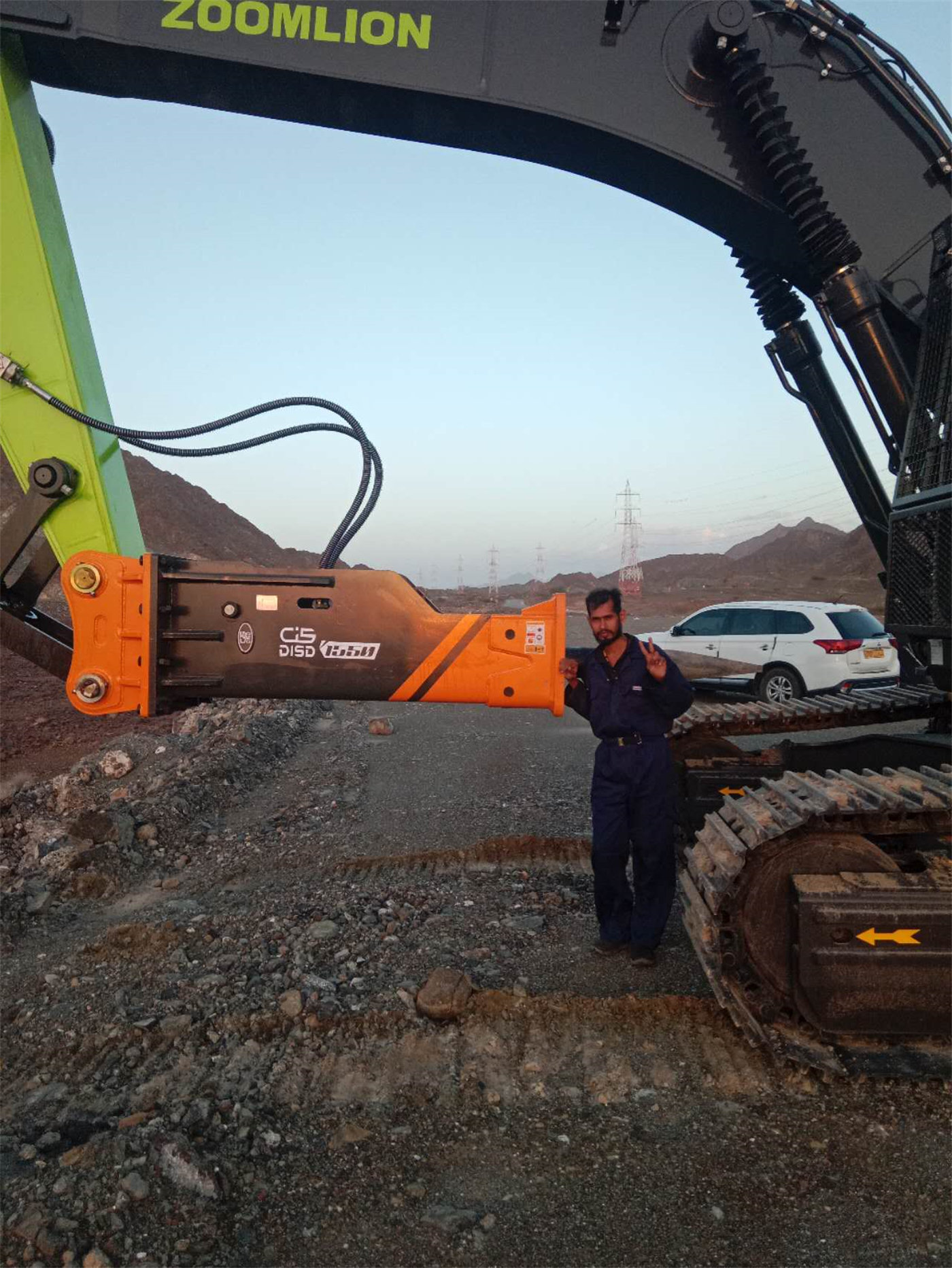
What machine data can answer: a 21-ton crawler excavator example
Our product data includes a 21-ton crawler excavator equipped with a 1.0m³ bucket, engine power 129/153kW (two engine options), hydraulic system pressure 34.3MPa, dual pump flow 2×231.7L/min, maximum digging depth 6.35m, and maximum digging radius 9.7m. These figures were originally used for whole-machine descriptions in earthmoving and infrastructure construction. In breaker fitment discussions, they provide baseline host-side conditions, not attachment compatibility conclusions.
| Machine data item | Reference significance in fitment verification |
|---|---|
| 21-ton operating weight | Indicates the host is a medium crawler excavator class, serving as a starting point for discussing compatibility range with the attachment supplier |
| Hydraulic system pressure 34.3MPa | Reflects the host hydraulic system pressure level, but whether it meets a specific attachment's requirements must be checked against attachment data |
| Dual pump flow 2×231.7L/min | Reflects hydraulic pump supply capacity; breakers typically require separate return and supply circuits, and actual available flow must be confirmed with hose configuration |
| Engine power 129/153kW | Together with the hydraulic system, affects power reserve during continuous operation; cannot be used alone as a compatibility basis |
It must be emphasized that the above parameters are machine data, not breaker compatibility parameters. They help contractors describe the host clearly when requesting quotes, but cannot be used to infer that a particular breaker can be directly installed or will guarantee breaking performance.
What machine data cannot answer
From an excavator's machine specifications alone, at least the following cannot be confirmed:
- Whether the host has pre-installed breaker piping, and whether hose diameter, valves, and return path meet attachment requirements;
- The heat dissipation margin of the host hydraulic oil cooling system under continuous breaking conditions;
- The specific weight of the attachment, and whether whole-machine stability and counterweight need adjustment after mounting;
- Whether mounting pin diameter, connection plate dimensions, and quick-coupler interface type match the attachment;
- The correspondence between the attachment's required flow and pressure range and the host's actual output.
When these items are missing, only verification items can be raised; “universal” or “direct installation” cannot be guaranteed. If contractors only take a machine brochure page to the attachment supplier, they often miss piping and cooling—the very items that affect stability during continuous operation.
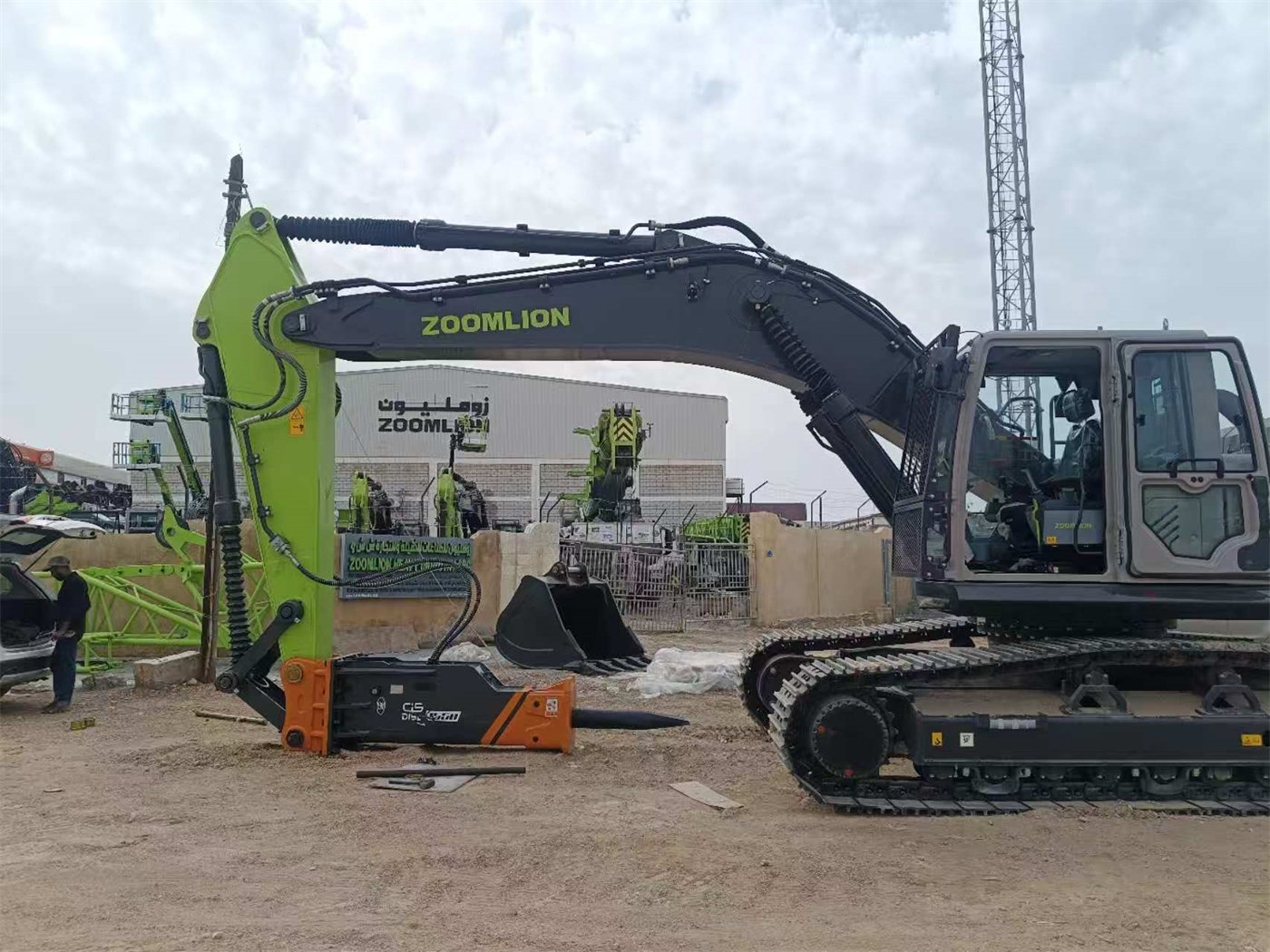
Host-side conditions to verify in advance
For a medium crawler excavator preparing for breaker fitment, it is recommended to organize host data in the following order:
- Operating weight and class: Confirm whether the host is medium or large class, avoiding use of attachments only suited to small tonnage on a larger host; this site does not discuss fitment for mini or compact models;
- Hydraulic pump flow and pressure: Record rated flow and system pressure, and note whether single or dual pump and whether the breaker circuit is independent;
- Return oil and back pressure: Confirm return filter, return lines, and back pressure limits; obtain hydraulic diagrams from the host service provider if necessary;
- Cooling conditions: Understand the hydraulic oil cooler configuration; oil temperature changes during continuous breaking need on-site observation;
- Mounting interface: Measure or obtain pin, connection plate, and quick-coupler dimensions;
- Piping and valves: Confirm whether a breaker piping kit is installed and the configuration of foot pedal or electronic control valves.
In the above checklist, flow, pressure, and operating weight can be obtained from machine data; return oil, cooling, interface, and piping require the host's actual configuration or service documentation. This is why the same excavator model under different configurations may yield different breaker fitment results.
Items to confirm with the attachment supplier
After organizing host data, at minimum confirm the following with the breaker supplier:
- The host weight range the attachment is suitable for;
- Required hydraulic flow and working pressure range;
- Allowable return back pressure and return line requirements;
- Attachment weight and mounting dimensions;
- Heat dissipation and operating precautions during continuous operation.
If the supplier's compatibility range differs from the machine's operating weight and hydraulic parameters, usability cannot be judged by “similar tonnage” alone. Numbers in attachment model names should not be directly treated as compatible tonnage; the supplier's written documentation must prevail.

Applicable boundaries and items to be confirmed
This article discusses verification approaches for fitting breakers to medium crawler excavators and does not address breaking capability, efficiency, or construction performance of specific breaker models. The following points describe conditions where data is insufficient:
- 21-ton machine data cannot prove that a particular breaker can be directly installed; without attachment-side parameters and interface data, it can only be listed as pending confirmation;
- Continuous versus intermittent breaking have different effects on hydraulic oil temperature; actual oil temperature performance requires on-site observation and cannot be inferred from machine parameters;
- If the host is not equipped with breaker piping, the retrofit plan and cost must be confirmed before discussing attachment selection;
- Whether machines with different engine configurations have identical actual hydraulic output should be based on that machine's factory documentation.
Information to prepare before requesting quotes
If preparing to fit a breaker to an excavator, state the following information clearly when requesting quotes to reduce back-and-forth confirmation:
- Host category, model, and operating weight;
- Hydraulic system pressure, flow, and pump configuration;
- Whether breaker piping, return lines, and quick-coupler interface are already present;
- Planned material type to be broken, site conditions, and approximate workload;
- Daily shift arrangements and continuous operation duration;
- Mounting interface dimensions or the connection method of existing attachments.
Only with these conditions clearly listed can fitment judgment have a basis. Breaker-to-excavator matching is essentially a two-way verification: the host states what it can provide, the attachment states what it needs, and only when both sides align can stable operation be discussed.