

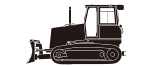
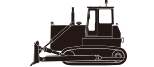
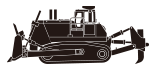












Dozing work on soft soil, wetlands and ordinary earthworks is often simplified to "choose a tracked bulldozer with enough horsepower." But the fact that the same 235 hp bulldozer is split into standard and wetland versions shows that what really sets them apart is not the engine but the part of the machine that contacts the ground: ground contact pressure, track shoe width, overall weight and blade configuration. This article compares these two configurations side by side, explains which direction to consider under which conditions, and what still needs on-site confirmation in the available materials.
First, distinguish the two ground conditions
The application scenarios of the standard bulldozer are stated in the materials as general road engineering, auxiliary mining construction, earthwork excavation and ordinary bulk material handling; the wetland version is listed as one version in the full series. In other words, the former faces conventional earthwork sites with some bearing capacity, while the latter targets situations where ground conditions are weaker and ground pressure must be reduced. The first step in selection is not comparing horsepower but judging whether the working surface can let the tracks stand stably and whether the machine will sink.
Note: the detailed parameters of the wetland version are not fully listed in this material, so the discussion of the wetland version below stops at "direction judgment" and "items to verify" and does not give specific numerical conclusions.
Difference 1: Ground contact pressure and track shoe width
The standard version has an operating weight of 23,450 kg, a ground contact pressure of 66 kPa, track shoe widths of 560, 610 and 660 mm, a ground contact length of 2,730 mm and a track gauge of 2,000 mm. These figures show that the standard version's ground contact pressure is obtained at a specific track shoe width; with different configurations, the pressure on the ground will also change.
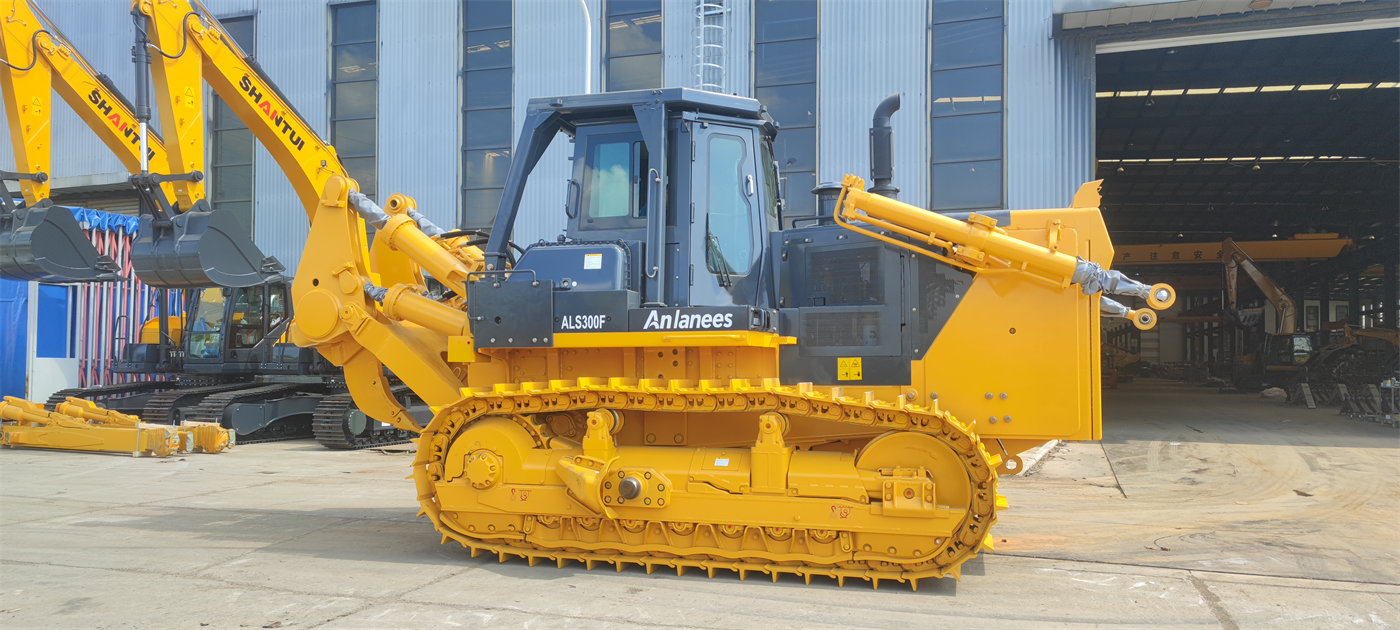
On soft foundations or in wetlands, whether dozing proceeds smoothly depends crucially on whether the machine can spread its weight over a sufficiently large contact area. Widening the track shoes and increasing the ground contact length are common ways to spread the load; but exactly how wide and to what level the ground contact pressure drops must be based on the parameter table of the corresponding version. The materials on this site give no data on the wetland version's track shoe width and ground contact pressure, so before purchasing, request the complete parameters of that version from the supplier rather than extrapolating from the standard version's figures.
Difference 2: Overall weight and blade configuration
In the same series, the coal version has an operating weight of 24,000 kg, a ground contact pressure of 57.5 kPa, a track shoe width of 660 mm and a 4,200 mm wide coal blade. This comparison illustrates a relationship: a wider blade and higher overall weight do not necessarily mean higher ground contact pressure, because the track contact area changes at the same time. So to judge adaptability to soft foundations, you cannot look only at "whether the machine is heavy"; weight, track shoe width and ground contact length must be considered together.
The standard version's optional blade types include straight, angle, U and semi-U blades, with widths of 3,725, 4,635, 3,800 and 3,725 mm and heights of 1,315, 1,055, 1,343 and 1,374 mm respectively; blade lift height is 1,210 mm and blade depth is 540 mm. A single-shank or three-shank ripper is also optional, with loosening depths of 695 mm for the single shank and 666 mm for the three shanks. The combination of blade and ripper changes the machine's overall forces and dozing method; whether ripper work is suitable on soft foundations and whether an angle blade is needed for slope trimming should be confirmed against the specific work process.
What routine work the standard version can cover
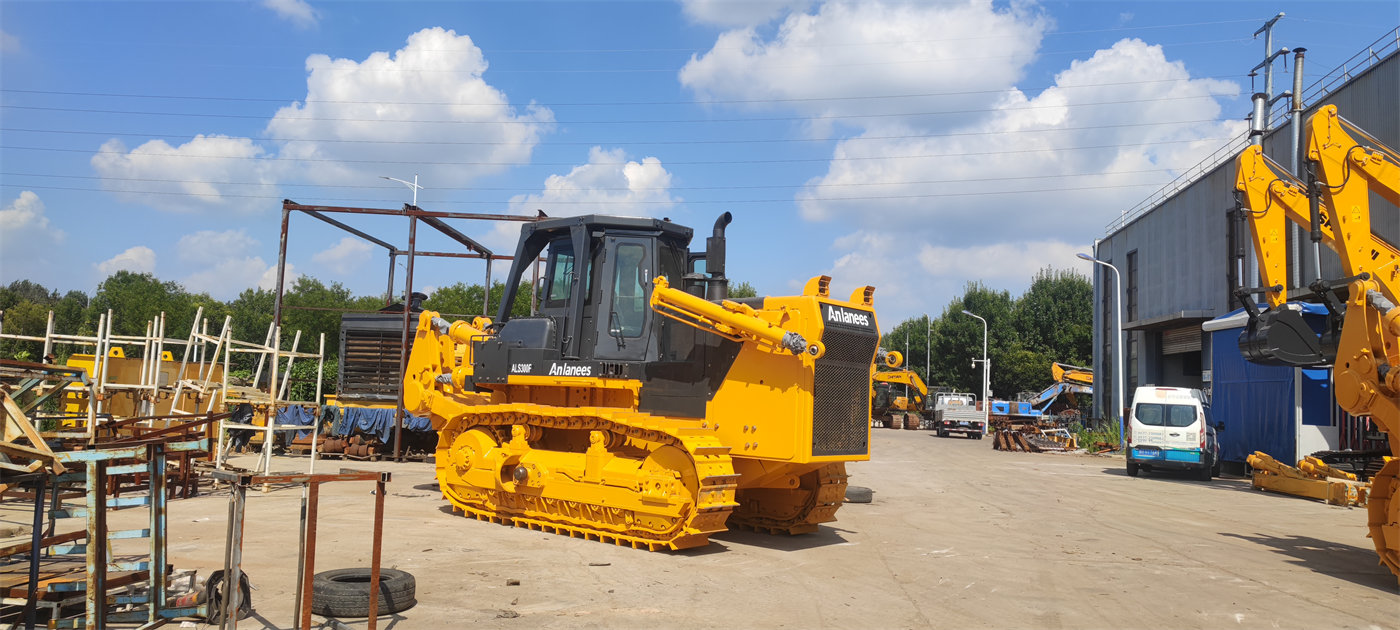
If the working surface is a treated site, an auxiliary mining road, general earthwork excavation or bulk material pushing, the standard version's configuration logic holds: rated power 175 kW (235 HP) at 1,800 rpm, with a WP12 or QSNT-C235 electronically controlled engine, forward speeds of 0–3.6, 0–6.5 and 0–11.2 km/h, reverse speeds of 0–4.3, 0–7.7 and 0–13.2 km/h, a 450 L fuel tank and 405 mm ground clearance. These parameters correspond to the routine rhythm of continuous dozing and rough site leveling.
Note that the above are all standard version data and cannot be applied directly to the wetland version. Sharing the same power class does not mean the undercarriage and work equipment are the same.
Selection verification sequence for soft foundations and wetlands
Without complete wetland version parameters, you can clarify the conditions in the following order before deciding whether to proceed to specific configurations:

- Site conditions: whether the working surface has long-term standing water and soft surface soil, or is only temporarily wet and soft after rain; whether continuous dozing is needed on ground with insufficient bearing capacity.
- Ground contact indicators: request the target version's ground contact pressure, track shoe width, ground contact length and overall operating weight, and look at all four together rather than substituting the standard version's figures.
- Process matching: dozing distance, material type, whether ripping is needed, whether an angle blade is needed for slope trimming, and on that basis determine the blade and ripper configuration.
- Mobility: whether ground clearance, climbing and turning conditions meet the site roads; the standard version's minimum turning radius of 3,300 mm should also be checked against site width.
- Support conditions: fuel supply, accessibility of maintenance points and the operators' familiarity with the electronically controlled hand and foot throttles.
When not to proceed directly with the standard configuration
If the working surface remains in a soft plastic state for long periods, the tracks sink noticeably, or repeated dozing is needed on ground with very low bearing capacity, judging solely by the standard version's 66 kPa ground contact pressure and 560 mm base track shoes is insufficient. In this case, obtain the wetland version's undercarriage and ground contact parameters first, then compare. Conversely, if the site's bearing capacity is normal and only occasional wet, soft conditions occur after rain, there is no need to consider the widest track configuration directly, because wider track shoes affect turning and routine dozing performance; the exact degree of impact still needs to be based on the corresponding version's materials.
Information to provide when requesting a quote
To let the supplier give a verifiable configuration, it is advisable to state together in the inquiry: material type and bulk density, dozing volume per shift and haul distance, site bearing and water accumulation conditions, whether ripping or slope trimming is needed, work shifts and fuel supply method, existing transport and access road conditions, and the ground contact pressure, track shoe width and blade type you wish to verify. If the target version is the wetland type, explicitly request the parameter table for that version's undercarriage and work equipment, and avoid substituting data from other versions in the same series.
Choosing between the standard and wetland types is essentially finding a balance between "routine dozing efficiency" and "mobility on low-bearing ground." This judgment must be based on the real parameters of the corresponding version; the same horsepower does not mean the same undercarriage.